

Jobe’s Tomato Fertilizer Spikes: In-Depth Review
Jobe’s Tomato Fertilizer Spikes are slow-release, pre-measured fertilizer sticks pushed directly into the soil at the plant’s root zone. Available in both a synthetic 6-18-6 formula and an OMRI-listed 2-7-4 organic blend, they provide continuous, mess-free nutrition to encourage heavy fruiting and robust root development in your vegetable garden.
Product overview (NPK ratio, ingredients, form)
When you are growing heavy-feeding crops like tomatoes, figuring out the exact amount of plant food to use can feel like a stressful guessing game. Jobe’s tomato spikes eliminate the measuring cup entirely. Instead of a messy, dusty powder or a concentrated liquid, this fertilizer is compressed into a solid, finger-sized stick that you press straight into the dirt.
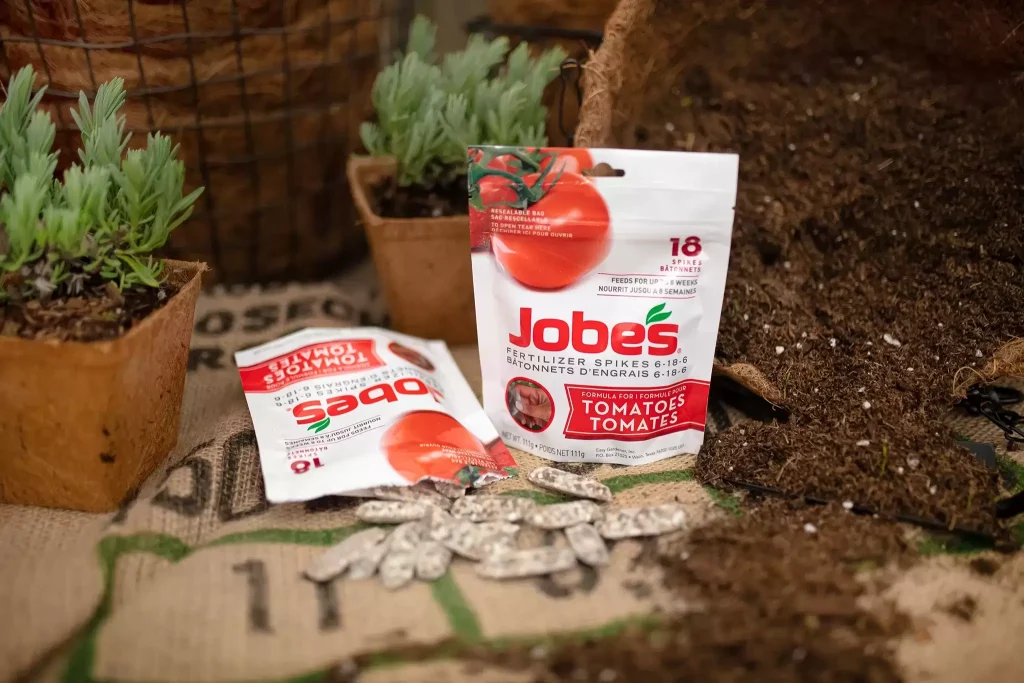
Before you buy, it is critical to understand that “Jobes tomato spikes” actually refers to two distinct product lines, representing the classic choice between organic vs. synthetic options:
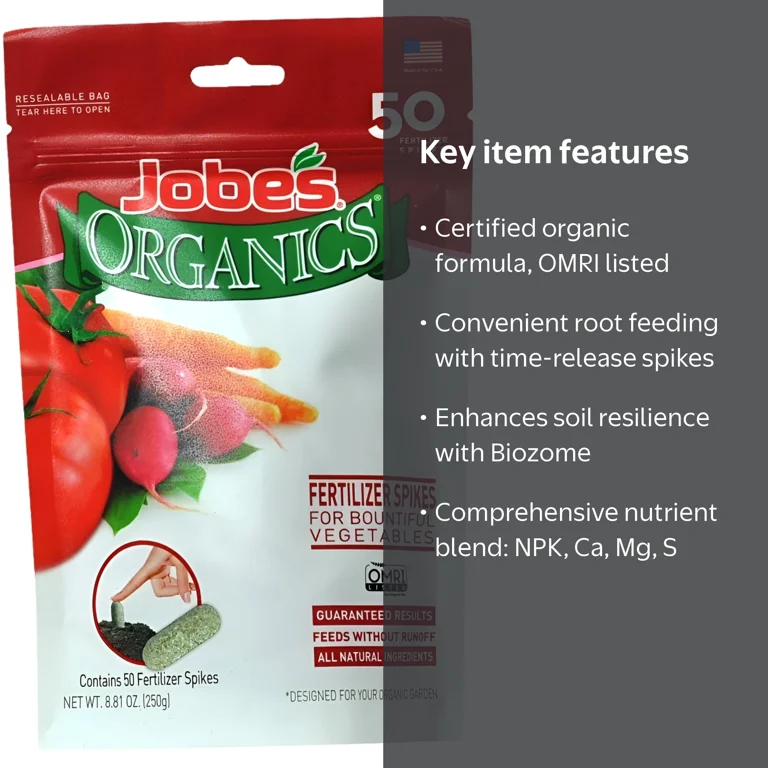
- Jobe’s Organics Vegetable & Tomato Fertilizer (NPK 2-7-4): This is the premium, eco-friendly option. It is officially OMRI listed for organic gardening. The NPK ratio of 2-7-4 means it is intentionally low in nitrogen (2%) to prevent your plants from growing excessive, leafy foliage at the expense of fruit. Instead, it is high in phosphorus (7%) and potassium (4%) to support massive root systems and abundant flowering. The ingredients rely heavily on nature: feather meal provides a slow-release nitrogen source, while bone meal acts as a powerhouse for phosphorus. This organic version also features Jobe’s proprietary “Biozome”—a living biological additive containing Archaea, mycorrhizal fungi, and beneficial bacteria that actively break down organic matter and improve long-term soil health.
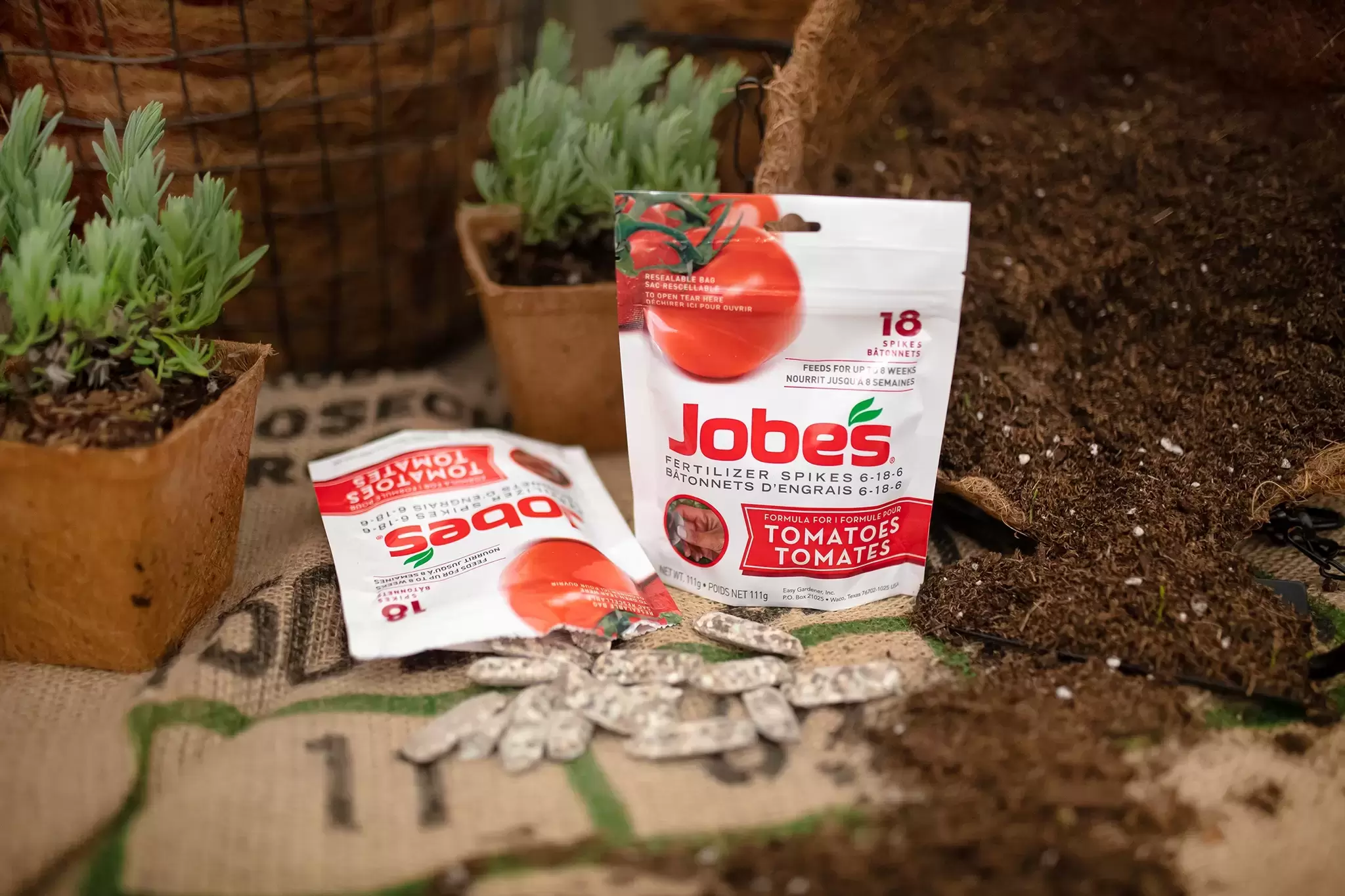
- Jobe’s Tomato Fertilizer Spikes (Synthetic 6-18-6): This is the traditional, synthetic version of the product, usually sold in blister packs. It boasts a much higher, chemically derived concentration of nutrients, particularly an 18% phosphorus content. While it will absolutely trigger a fast burst of blooms and fruit, it does not offer the soil-building biological benefits or the environmental safety of the organic line.
Key benefits
Why should you choose spikes over traditional granular or liquid plant feeds? The advantages go well beyond simple convenience.
Direct Root Zone Feeding
When you broadcast granular fertilizer over the top of the soil, a significant portion of it can wash away during a heavy rainstorm or blow away in the wind. Jobe’s tomato fertilizer spikes are pushed below the soil surface. This underground delivery system places the nutrients exactly where the active root hairs are growing, virtually eliminating wasteful surface runoff.
Prevention of Calcium Deficiency and Blossom End Rot
If you have ever excitedly watched a green tomato grow, only to discover a black, sunken, leathery patch on the bottom when it finally ripens, you have experienced blossom end rot. This heartbreaking condition is caused by a calcium deficiency in the developing fruit. The Jobe’s organic tomato fertilizer spikes contain a generous amount of natural bone meal. As the spike slowly breaks down in the soil, the bone meal provides a steady stream of calcium, helping to fortify plant cell walls and keep your tomatoes pristine. Preventing blossom end rot.
Liquid synthetic fertilizers can easily “burn” plant roots if mixed incorrectly, turning leaves crisp and brown. Because Jobe’s spikes are pre-measured and formulated for a slow, time-released nutrient delivery, the risk of accidentally over-fertilizing your tomatoes is practically zero.
Improved Soil Biology
If you opt for the Jobe’s organics vegetable & tomato fertilizer, you are not just feeding the tomato plant; you are feeding the earth itself. The inclusion of the Biozome microorganism blend helps establish a symbiotic relationship with your tomato’s roots, increasing the plant’s ability to uptake water and fend off soil-borne diseases naturally.
Drawbacks to consider
While highly convenient, fertilizer spikes are not flawless. You should be aware of a few horticultural drawbacks before switching your entire garden over to them.
Difficult to Insert in Hard Soil
The spikes are tightly compressed, but they can still be somewhat brittle. If you are gardening in heavy, compacted clay soil, trying to force a spike into the ground with your thumb will likely result in the spike snapping in half. You may need to use a screwdriver, a metal dibber, or a heavy stick to pre-drill a pilot hole before inserting the spike.
Moisture Dependent
For a fertilizer spike to release its nutrients, it must be in direct, continuous contact with moist soil. If you allow your garden beds or patio containers to dry out completely, the spike will remain hard and dormant, effectively starving your plants. Consistent watering is required to keep the breakdown process active.
Animal Attraction
Because the Jobe’s organic tomato and vegetable fertilizer relies on natural animal byproducts like feather meal and bone meal, it emits a distinct, earthy scent. While you might not notice it, your dog, local raccoons, or neighborhood skunks definitely will. It is not uncommon for opportunistic animals to dig at the base of your tomato plants trying to find the source of the smell shortly after application.
How to use it correctly (dosage & timing)
Using Jobe’s spikes correctly is incredibly simple, but placement is everything if you want to maximize your harvest.
Proper Placement
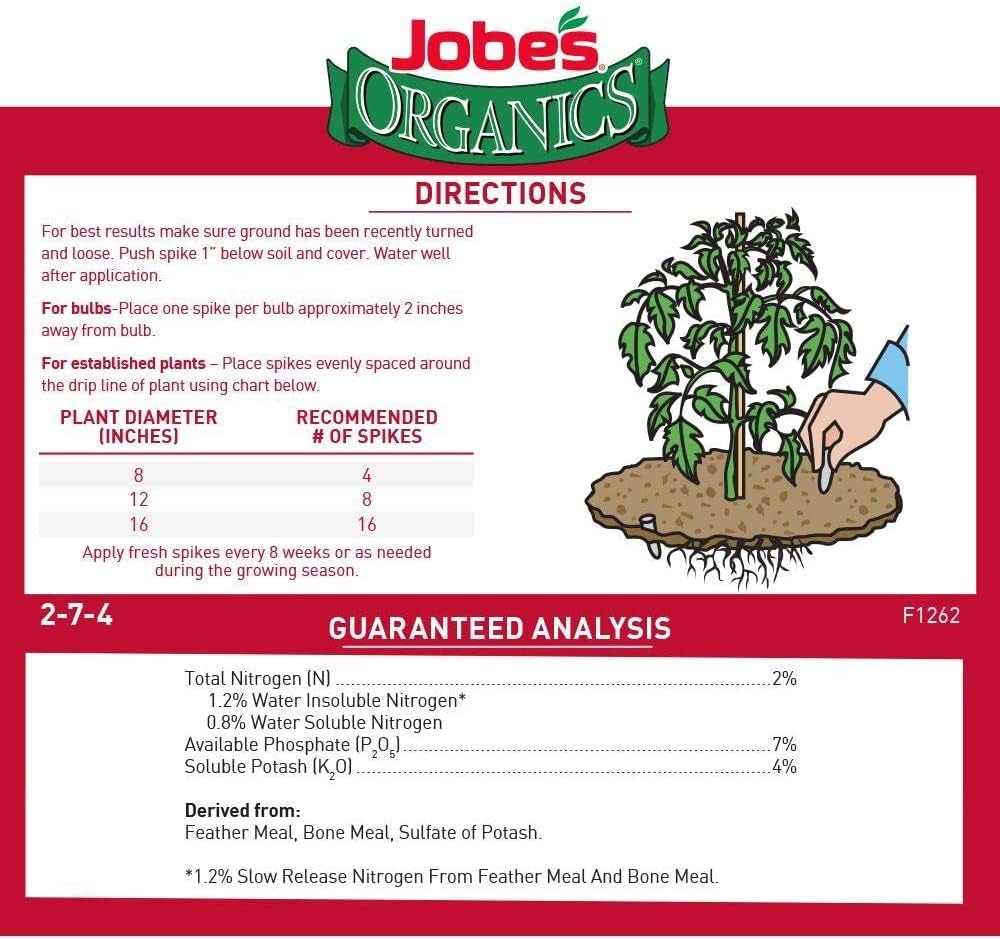
Never push a fertilizer spike directly against the main trunk of the tomato plant. Doing so can cause localized root damage and prevents the plant from absorbing the nutrients efficiently. Instead, locate the “drip line” of your plant. The drip line is the imaginary circle on the ground that aligns directly beneath the outermost tips of the plant’s branches. This is where the plant’s most active, nutrient-absorbing feeder roots live. Push the spikes into the soil along this circle.
Dosage
Always refer to the back of the package for exact measurements, as the dosage depends entirely on the size of the plant. However, a general rule of thumb for these spikes is to use two spikes per young tomato plant. As the plant grows into a large, mature, heavy-bearing vine, you will need to increase the dosage to three or four spikes, spaced evenly around the perimeter of the drip line.
Timing and Frequency
Insert your first round of spikes at the time of transplanting—right when you move your tomato seedlings into the outdoor garden bed or their final container. Push them at least one to two inches below the soil surface so they are completely buried. For sustained growth, you need to reapply a fresh set of spikes every 6 to 8 weeks throughout the active summer growing season.
How it compares to similar products
How do Jobe’s spikes stack up against other popular tomato feeding methods? By understanding the differences, you can choose the best methodology for your specific gardening setup.
| Feature | Jobe’s Organic Tomato Spikes | Jobe’s Synthetic Tomato Spikes | Granular Organic Fertilizer (e.g., Tomato-tone) | Liquid Fish Emulsion |
|---|---|---|---|---|
| NPK Ratio | 2-7-4 | 6-18-6 | 3-4-6 (Varies) | 5-1-1 |
| Delivery Method | Underground solid spike | Underground solid spike | Surface broadcast / scratched in | Soil drench / Foliar spray |
| Application Frequency | Every 6-8 weeks | Every 6-8 weeks | Every 2-4 weeks | Every 1-2 weeks |
| Soil Biology Benefits | Excellent (Biozome added) | Poor (Chemical salts) | Excellent (Contains microbes) | Good (Feeds existing microbes) |
| Ease of Use | Very High (Pre-measured) | Very High (Pre-measured) | Moderate (Requires measuring) | Low (Requires mixing/diluting) |
| Best Use Case | Busy gardeners wanting organic results with zero mess. | Gardeners wanting massive, rapid blooms regardless of soil health. | Large garden beds where bulk feeding is more economical. | Rescuing young, yellowing seedlings quickly. |
As the table illustrates, the organic spikes offer the perfect middle ground: the incredible ease of use of a synthetic spike, combined with the long-term soil health benefits of a traditional granular organic feed.
Price and where to buy
Jobe’s fertilizer products are highly accessible and widely distributed. You can find them at nearly any major home improvement store, local nursery, or online retailer.
The pricing is generally very affordable, making it a great entry point for beginner gardeners. The Jobe’s Organics Vegetable & Tomato spikes typically come in a 50-count resealable bag, which usually retails for around $13 to $16. Given that you only use a few spikes per plant every two months, a single bag is often enough to support a small backyard tomato patch for the entire summer.
The standard synthetic 6-18-6 spikes usually come in an 18-count blister pack and cost roughly $6 to $8. While the initial shelf price is lower, the organic 50-pack provides significantly better long-term value per spike.
FAQ
Is Jobe’s Tomato Fertilizer Spikes good for tomatoes specifically, or just vegetables in general?
- While specifically formulated with the exact high phosphorus and calcium levels that tomatoes crave, these spikes are excellent for all fruiting vegetables. You can successfully use them on peppers, eggplants, squash, and cucumbers to encourage heavy blooming and robust fruit development across your entire garden.
How often should I apply Jobe’s Tomato Fertilizer Spikes?
- For the best results, you should insert fresh fertilizer spikes at the time of planting and then reapply them every 6 to 8 weeks. This consistent schedule ensures your plants have a continuous, slow-release supply of nutrients throughout the entire growing and fruiting season.
Is Jobe’s Tomato Fertilizer Spikes safe for organic gardening?
- Yes, but you must ensure you purchase the correct version; the “Jobe’s Organics Vegetable & Tomato Fertilizer” spikes in the brown packaging are fully OMRI listed and verified safe for organic gardening. The standard Jobe’s tomato spikes sold in the small blister packs are synthetic and do not qualify for organic use.
Where can I buy Jobe’s Tomato Fertilizer Spikes at the best price?
- You can consistently find competitive pricing on Jobe’s spikes at major brick-and-mortar retailers like Lowe’s, Home Depot, and Walmart in their garden centers. However, buying online through Amazon often provides the best bulk pricing and the added convenience of having the heavy bags delivered directly to your door.
Jobe’s Organics Vegetable & Tomato Fertilizer Spikes
OMRI Listed • Pre-measured • Prevents Calcium Deficiency
The easiest, mess-free way to feed your tomatoes organically. These slow-release spikes are packed with bone meal to prevent blossom end rot and feature the proprietary Biozome blend to improve soil health and root mass.
✓ OMRI Listed & Easy to Use
