

How to Fix and Prevent Blossom End Rot in Tomatoes
To fix and prevent blossom end rot, immediately remove the affected tomatoes and establish a consistent watering schedule using a soaker hose or drip irrigation. Blossom end rot is a calcium deficiency usually triggered by erratic soil moisture, not a lack of calcium in the dirt. Apply a 2 to 3-inch layer of organic mulch to lock in moisture and stabilize the root zone.
What is Blossom End Rot?
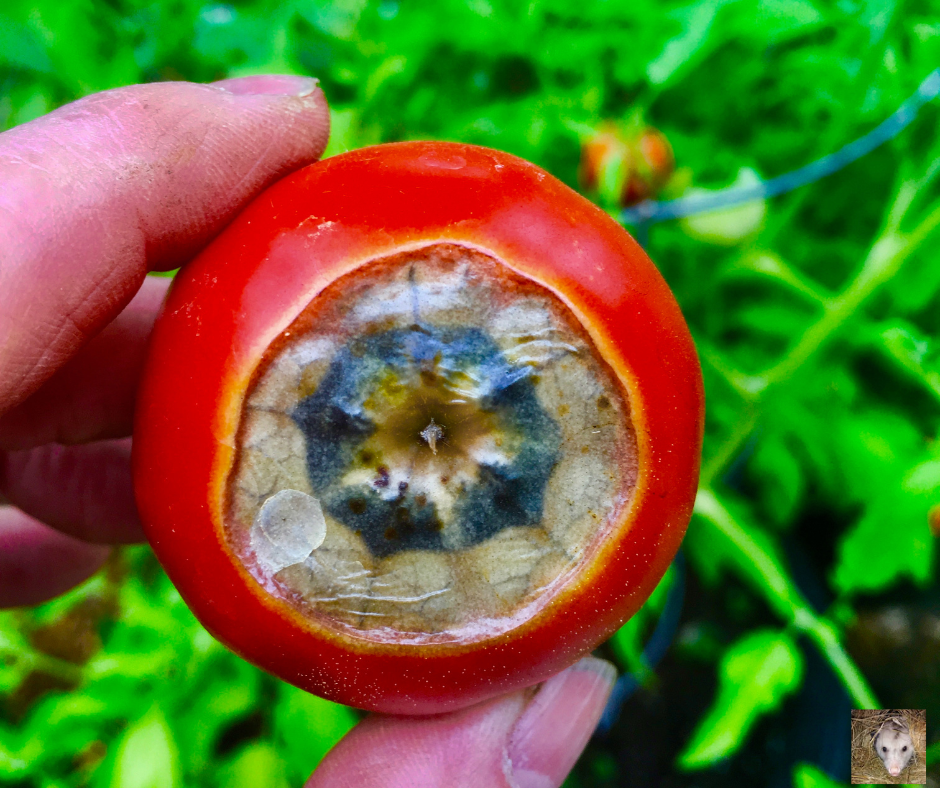
There are few things more gut-wrenching for a home gardener than watching a beautiful, green tomato grow, only to discover a dark, mushy, leathery lesion spreading across its bottom. It is easy to panic and assume a destructive fungus or pest has invaded your vegetable garden.
Fortunately, blossom end rot (BER) is not a disease. It is a physiological disorder, also known as an abiotic disease, meaning it is caused by environmental stressors like drought or extreme temperatures rather than bacteria or fungi. Because no pathogen is involved, you do not need to worry about it spreading from plant to plant. Instead, you need to look at how you are managing your garden’s soil and water.
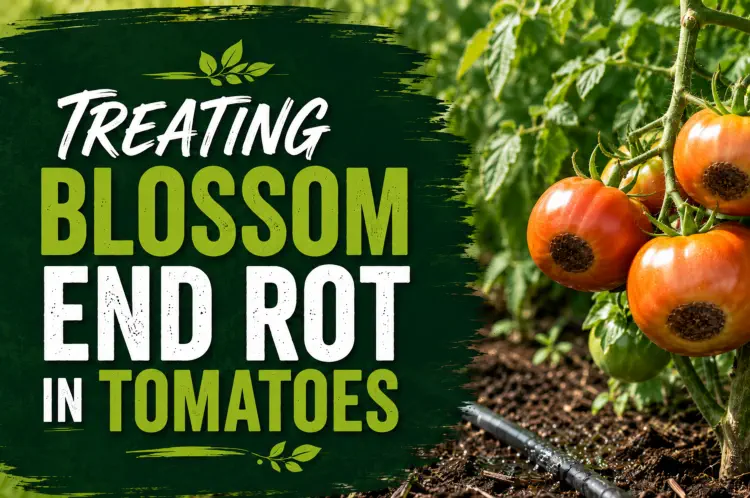
The Real Root Cause: It’s All About Calcium and Water
At its core, blossom end rot is a localized calcium deficiency inside the fruit itself. In a tomato plant, calcium acts like the cellular glue that binds cell walls together. As a young tomato expands rapidly on the vine, it requires a massive, steady stream of calcium to build healthy tissue.
However, calcium is not a “mobile” element within the plant. It cannot be easily reallocated from older leaves to new growth. It must be ferried continuously from the roots to the fruit via the plant’s water supply. If this internal plumbing system stalls—even for a brief period—the newly forming cells at the farthest point of the fruit (the blossom end) simply collapse. This cellular breakdown creates the sunken, rotten-looking black spot.
Most gardeners assume their soil lacks calcium, but this is rarely the true cause. Usually, there is plenty of calcium in the dirt, but the plant cannot absorb it. The most common triggers that interrupt calcium uptake include:
- Inconsistent Watering: The number one culprit. Allowing your soil to dry out completely and then flooding it stalls the root’s ability to pump nutrients.
- Root Damage: Digging or cultivating too aggressively near the base of the plant severs the delicate feeder roots responsible for nutrient absorption.
- Too Much Nitrogen: Applying heavy doses of high-nitrogen fertilizer pushes the plant to grow massive amounts of leafy foliage, which outpaces the roots’ ability to deliver calcium to the fruit.
- Soil pH Imbalance: Highly acidic or highly alkaline soil chemically locks up calcium, making it unavailable to the plant.
How to Fix Blossom End Rot Immediately
If you spot the dreaded black patch on your tomatoes, you need to take immediate action to save the rest of your harvest.
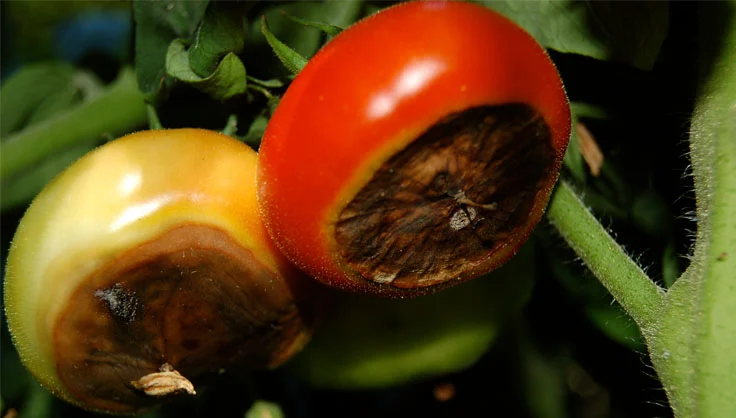
1. Pick and discard the affected fruit.
Once a tomato develops a lesion, it will not heal, regrow, or repair itself. Leaving it on the vine only wastes the plant’s energy and invites secondary fungal molds to rot the fruit completely. Remove it immediately so the plant can redirect its calcium and energy to the healthy, developing tomatoes.
2. Check your soil moisture.
Stick your finger about two inches into the soil. If it is bone dry, you need to water deeply. If it is sitting in standing water, you need to let it dry out. Fixing your watering schedule resolves the issue in the vast majority of cases.
3. Apply a fast-acting liquid calcium root drench.
If you are watering perfectly but still seeing BER, you may actually have depleted soil. You can mix a liquid calcium solution (like a calcium nitrate drench) and pour it directly into the soil. Avoid using foliar calcium sprays; research shows that calcium is poorly absorbed through tomato leaves and will not transport down into the fruit where it is needed.
How to Prevent Blossom End Rot in the Future
Because prevention is much easier than a cure, establishing a stable garden environment is your best defense against this frustrating disorder.
1. Set Up a Consistent Watering System
Consistency is everything. Your goal is to maintain a stable, predictable level of moisture deep in the root zone. Standing over your plants with a hose often leads to shallow watering and evaporation. Instead, install a drip irrigation system or snake a soaker hose through your tomato beds. These systems deliver water slowly and deeply, encouraging robust root systems while keeping the leaves dry to prevent blight. During peak fruiting, tomato plants need about 1.5 inches of water per week.
2. Use Mulch as Your Secret Weapon
Applying a 2 to 3-inch layer of organic mulch (like straw, shredded leaves, or wood chips) is one of the most effective ways to prevent BER. Mulch acts like a protective lid on your soil, drastically slowing down evaporation and preventing wild swings in soil temperature.
3. Fertilize Smartly
Avoid lawn fertilizers or heavily synthetic formulas with a high first number (Nitrogen). Too much nitrogen creates rapid, explosive leafy growth that lowers calcium uptake. Instead, use a specialized high phosphorus fertilizer once the plant begins setting blossoms to encourage healthy fruit development without inducing calcium stress.
4. Test and Adjust Your Soil pH
Tomatoes thrive when they can easily access soil nutrients. Aim for a soil pH between 6.0 and 6.5. If a soil test reveals your garden is highly acidic, incorporate a high-calcium dolomitic garden lime into the soil a few months before planting to raise the pH and add a slow-release source of calcium.
Common Myths About Curing BER
When panic sets in, gardeners often turn to internet myths that can actually make the problem worse.
- Myth: Epsom Salt cures it. Epsom salt contains magnesium and sulfur, not calcium. Adding excess magnesium to the soil actually forces it to compete with calcium for root absorption, which can trigger worse blossom end rot.
- Myth: Adding crushed eggshells at planting. While eggshells are made of calcium, they take months, if not years, to decompose fully in the soil. They are great for long-term compost, but they will not stop an active outbreak of BER.
- Myth: Spraying the leaves with calcium. Spraying foliar calcium solutions has virtually no effect on blossom end rot. The fruit needs the calcium, and the plant’s internal transport from leaf to fruit is exceptionally poor.
FAQ
Can you eat a tomato with blossom end rot?
- Yes, blossom end rot is not a disease and does not make the tomato toxic. You can simply cut the dark, leathery bottom off and eat the remaining healthy red flesh, though the tomato may ripen prematurely and lack optimal flavor.
Will blossom end rot go away on its own?
- If the environmental stressors correct themselves—such as a heatwave breaking or rainfall stabilizing—subsequent fruit higher up on the vine will often grow perfectly normal without any intervention. However, already affected fruit will never heal.
Do eggshells prevent blossom end rot?
- Not in the short term. While eggshells are a fantastic source of calcium, they must be broken down by soil microbes over several months or years before the tomato roots can absorb the nutrients. They are excellent for long-term soil health, but ineffective as a quick fix.
Can overwatering cause blossom end rot?
- Yes. While underwatering is the most common cause, flooding your garden creates waterlogged soil. Tomato roots need oxygen to survive; if they are drowning, they cannot pump water or calcium up into the plant, leading directly to blossom end rot.
