

Fertilizers
We’ve all been there—standing in the garden center aisle at Home Depot or your local nursery, staring at a wall of bags and bottles, completely overwhelmed. Choosing the right plant nutrition doesn’t have to be confusing.
Whether you’re growing juicy tomatoes, maintaining a lush green lawn, planting colorful flowers, or starting your first vegetable garden, the right soil amendments can make all the difference. But with hundreds of products on the market—organic, synthetic, liquid, granular, slow-release, and water-soluble—finding the best option can quickly become a headache.
At HomeGardenExpert, I aim to simplify the process. In my years of gardening, I’ve learned that instead of chasing marketing claims, focusing on real soil biology, plant nutrition, and product performance is what actually yields results.
Whether you’re a beginner or an experienced home gardener, this guide will help you choose the right inputs to support healthier soil, stronger root establishment, vibrant foliage, and higher crop yields.
What Is Fertilizer?
Fertilizer is a natural or manufactured product that supplies essential macronutrients and micronutrients plants need to grow, flower, and produce healthy harvests. While healthy soil contains many base nutrients, it cannot always provide enough to meet the heavy demands of actively growing plants.
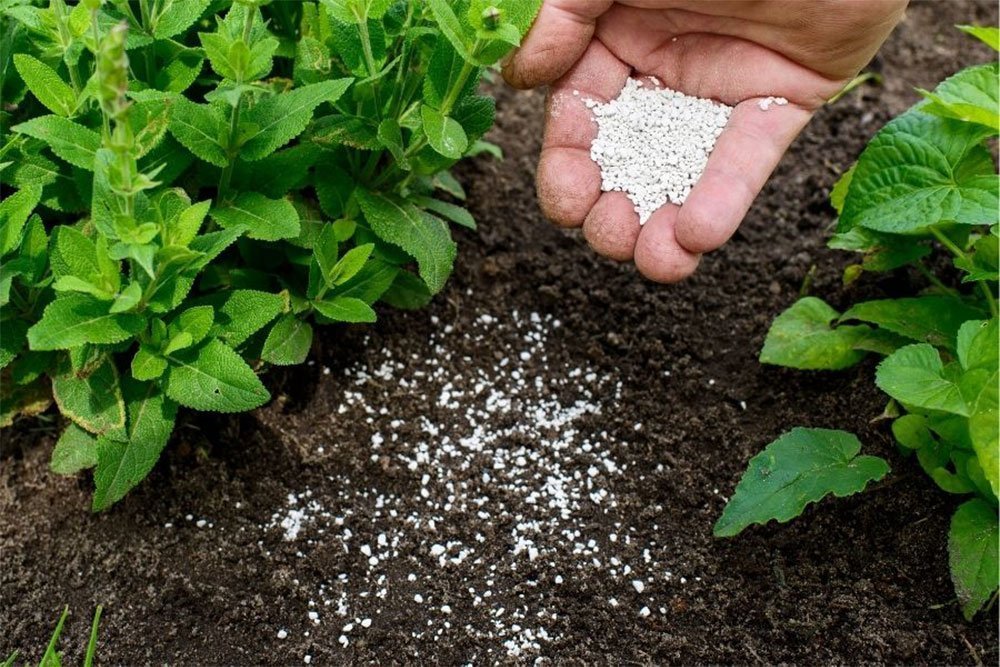
Think of soil as a pantry and fertilizer as the groceries that restock it. Healthy soil provides structure, water retention, and beneficial microorganisms, while these applied amendments supply the direct nutrition plants consume over time.
Without adequate nutrition, plants may develop pale leaves, weak stems, poor flowering, slow growth, or reduced harvests. Applying the right product at the right time helps correct nutrient deficiencies and encourages vigorous, productive plants.
However, more is not always better. Overfertilizing can damage roots, burn foliage, pollute waterways, and reduce overall plant health. That’s why understanding product types and nutrient ratios is just as important as choosing a quality brand.
Why Plants Need Fertilizer
Plants require sunlight, water, carbon dioxide, and nutrients to complete photosynthesis and build healthy tissues. While sunlight and water are obvious requirements, soil nutrients often become depleted as plants continue growing or when vegetables and fruits are harvested from the garden.
Proper fertilization can help:
- Encourage faster, healthier growth and greener foliage.
- Support stronger root establishment.
- Improve flowering and maximize crop yields.
- Increase resistance to environmental stress and diseases.
Different plants require different nutrient balances. A leafy vegetable like lettuce needs far more nitrogen than a flowering rose or a fruiting tomato plant. Understanding those differences is the first step toward successful gardening.
Understanding Plant Nutrients
Plants require 17 essential elements to complete their life cycle. Understanding these building blocks makes it much easier to choose the right plant food for your garden.
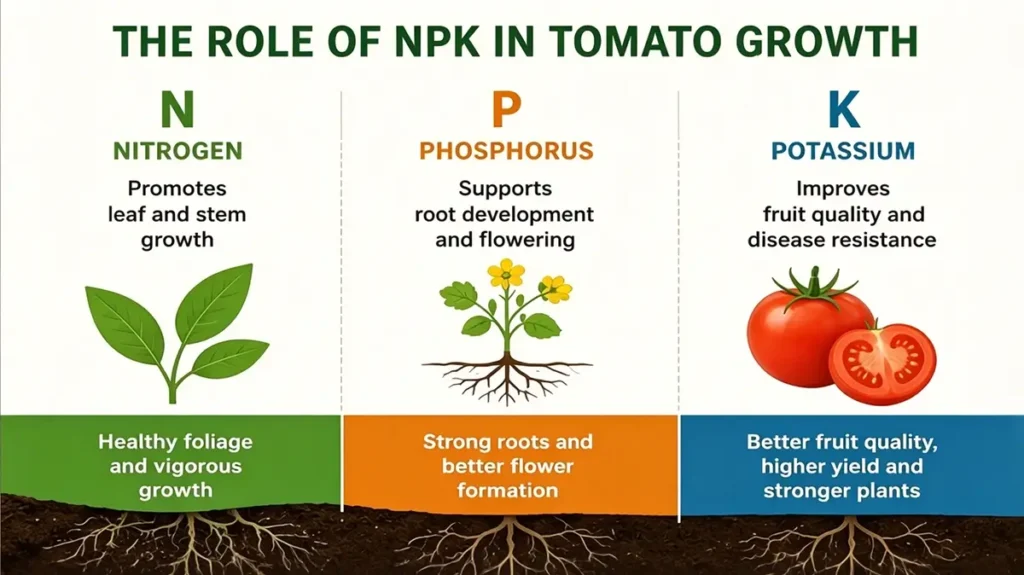
Primary Nutrients (Macronutrients)
The three numbers printed on every bag represent the primary macronutrients, commonly known as NPK.
Nitrogen (N)
Nitrogen promotes vigorous leafy growth and rich green color by supporting chlorophyll production. Common signs of nitrogen deficiency include yellowing older leaves and slow overall growth. Plants that benefit from higher nitrogen include:
- Lawn grasses, lettuce, spinach, kale, corn, and herbs.
Phosphorus (P)
Phosphorus supports strong root development, flowering, seed production, and fruit formation. It plays a particularly important role during transplanting. Low phosphorus levels may result in poor flowering and weak root systems. Plants that benefit from phosphorus include:
- Tomatoes, peppers, roses, fruit trees, bulbs, and root vegetables.
Potassium (K)
Potassium improves overall plant health by strengthening cell walls and regulating water movement inside the plant. It also helps plants tolerate drought, disease, and temperature stress while improving fruit quality. Plants with higher potassium demands include:
- Tomatoes, cucumbers, citrus trees, potatoes, strawberries, and peppers.
Secondary Nutrients & Micronutrients
Although required in smaller amounts, secondary nutrients (Calcium, Magnesium, Sulfur) and trace micronutrients (Iron, Zinc, Boron, Copper, Manganese) are critical. For example, calcium supports strong cell walls; a deficiency commonly causes blossom-end rot in tomatoes. For most home gardeners, a balanced organic feed containing micronutrients provides sufficient nutrition.
Fertilizer Isn’t a Substitute for Healthy Soil
One of the biggest misconceptions among new gardeners is that adding chemicals alone can solve every plant problem. In reality, fertilizers work best when combined with healthy soil biology.
Adding compost, mulch, and organic matter regularly improves soil structure and increases the effectiveness of your top dressing over time. Think of it as plant food—but remember that healthy, living soil is the foundation that allows plants to use those nutrients efficiently.
Types of Fertilizers
Choosing the right fertilizer starts with understanding the different types available. There is no single product perfect for every garden; the best choice depends on your soil quality, crop demands, and how much maintenance you are willing to do.

Organic Fertilizers
Organic fertilizers are made from naturally occurring materials such as compost, manure, bone meal, blood meal, fish emulsion, and kelp. Instead of feeding plants immediately, they feed the soil ecosystem. Beneficial microbes gradually break down the organic matter, releasing nutrients over time.
- Best For: Vegetable gardens, raised beds, organic gardening.
- Advantages: Improves soil biology over time, lower risk of fertilizer burn, environmentally friendly.
- Disadvantages: Slower nutrient availability, weather-dependent release.
Synthetic Fertilizers
Synthetic fertilizers are manufactured to provide nutrients in precise concentrations. Because nutrients are immediately available, plants can absorb them quickly.
- Best For: Lawns, fast-growing vegetables, correcting severe deficiencies.
- Advantages: Fast nutrient availability, precise ratios, highly concentrated.
- Disadvantages: Does not improve soil structure, higher risk of nutrient runoff and root burn.
Application Formats
- Granular Fertilizers: Dry pellets spread over the soil surface (top dressing). Easiest for beginners as they require less frequent applications. Ideal for large gardens and lawns.
- Liquid Fertilizers: Diluted with water for rapid root uptake or foliar feeding. Excellent for containers, houseplants, and quick deficiency corrections.
- Water-Soluble Fertilizers: Dissolve completely in water. Perfect for intensive gardening and greenhouses, but wash out quickly after heavy rain.
- Slow-Release Fertilizers: Coated prills that release nutrients gradually over months. Perfect for busy gardeners, shrubs, and landscapes.
Quick Comparison of Fertilizer Types
| Fertilizer Type | Speed | Soil Health Impact | Maintenance | Best For |
|---|---|---|---|---|
| Organic | Slow | Excellent | Medium | Vegetables, herbs, raised beds |
| Synthetic | Fast | Minimal | Medium | Lawns, rapid growth, emergencies |
| Granular | Medium | Depends on formulation | Low | Large garden beds, landscapes |
| Liquid | Very Fast | Moderate | High | Containers, foliar feeding |
| Water-Soluble | Very Fast | Moderate | High | Greenhouses, heavy feeders |
| Slow-Release | Slow & Steady | Moderate | Very Low | Trees, shrubs, busy gardeners |
Shop Fertilizers by Plant Type
Every plant has unique nutritional needs. Explore our expert recommendations by plant category:
- 🍅 Vegetables: Tomato Fertilizers, Pepper, Cucumber, Lettuce, Potato, Corn.
- 🌱 Herbs: Basil, Rosemary, Mint, Parsley, Cilantro.
- 🌹 Flowers: Roses, Hydrangeas, Annuals, Perennials.
- 🌳 Trees & Shrubs: Citrus Trees, Fruit Trees, Evergreens, Ornamental Shrubs.
- 🌿 Lawn Care: Spring, Summer, Fall, and Winterizer Fertilizers.
- 🪴 Indoor Plants: Houseplants, Succulents, Orchids, Tropicals.
Expert Tip: Don’t choose a product simply because it’s labeled “all-purpose.” A high-nitrogen mix may produce lush tomato foliage but fewer fruits, while a high-potassium mix supports better flowering. Every recommendation on HomeGardenExpert considers the specific plant’s growth stage and intended crop yield.
Understanding NPK Ratios
The three numbers printed prominently on every fertilizer package (e.g., 10-10-10 or 5-10-5) represent the NPK ratio—the percentage by weight of Nitrogen (N), Phosphorus (P), and Potassium (K).
Different nutrient ratios are formulated for different stages of plant growth:
- Balanced Fertilizers (10-10-10, 20-20-20): Provide equal amounts of N-P-K. Ideal for general maintenance, mixed landscape plantings, and established vegetables.
- High-Nitrogen (24-8-16, 21-0-0): Fuels leafy growth. Ideal for lawns, leafy greens, and early vegetative growth.
- High-Phosphorus (5-10-5, 10-52-10): Encourages strong root establishment and flowering. Best for transplants, roses, and bulbs.
- High-Potassium (5-5-20, 15-5-30): Strengthens disease resistance and fruit quality. Crucial for tomatoes, citrus, and peppers during the fruiting stage.
Do Higher Numbers Mean Better Fertilizer?
Not necessarily. Many beginners assume a product with higher percentages is automatically superior. In reality, applying a highly concentrated synthetic fertilizer too frequently can lead to nutrient imbalances, root damage, and excessive leafy growth at the expense of your harvest.
Common Fertilizer Mistakes to Avoid
Even experienced gardeners occasionally make fertilizing mistakes. Understanding these pitfalls will help you protect your plants and improve soil health.
1. Applying Too Much Fertilizer
- One of the biggest misconceptions in gardening is that more nutrients automatically mean faster growth. In reality, excessive application can burn roots, damage leaf tissue, and pollute groundwater through nutrient runoff. Always follow the manufacturer’s recommended application rate.
2. Choosing the Wrong Fertilizer
- Lawn fertilizer is usually high in nitrogen, while tomatoes require more potassium during fruiting. Using the wrong nutrient ratio can lead to poor plant performance even if you are feeding them regularly.
3. Ignoring Soil Testing
- Many gardeners fertilize without knowing what their soil actually needs. A simple soil test reveals pH, organic matter, and existing macronutrient levels. Applying nutrients your soil already contains is unnecessary and can cause toxic lockouts.
4. Fertilizing Dry Soil
- Applying concentrated salts to bone-dry soil can desiccate and severely damage roots. Always water the soil lightly before fertilizing, and water again afterward (unless using a foliar spray) to allow nutrients to dissolve evenly.
When Should You Fertilize?
The best fertilizing schedule depends on the plant, product type, and local growing season.
- Spring: The primary feeding season. Lawns, vegetables, and perennials are actively waking up and benefit from a nutritional boost.
- Summer: Continue feeding actively growing vegetables and flowers. However, during periods of extreme heat or drought, reduce applications to avoid stressing the plants.
- Fall: Many trees, shrubs, and cool-season lawns benefit from fall fertilization. Avoid encouraging tender new growth right before the first frost.
- Winter: Depending on your USDA hardiness zone, most outdoor plants become dormant. In colder climates, outdoor feeding is unnecessary, though indoor houseplants may need light maintenance.
Frequently Asked Questions
What fertilizer is best for beginners?
- A balanced, slow-release organic granular fertilizer is often the easiest and safest choice for new gardeners. It provides steady nutrition over several months with a very low risk of fertilizer burn or over-application.
Can too much fertilizer kill plants?
- Yes. Applying excess fertilizer, especially synthetic, water-soluble types, deposits high levels of chemical salts in the soil. This can instantly burn tender roots, desiccate foliage, and ultimately kill the plant.
Should I fertilize every week?
- You should only fertilize weekly if you are using a product specifically designed for frequent, diluted applications, such as a liquid or water-soluble feed for container plants. Most in-ground granular fertilizers only require feeding every 4 to 8 weeks.
Is organic fertilizer better than synthetic fertilizer?
- Neither is universally better, as they serve different purposes. Organic fertilizers build long-term soil biology and structure, while synthetic fertilizers deliver precise, immediate nutrients for rapid correction and fast growth.
What’s the difference between plant food and fertilizer?
- In retail gardening, the terms are used interchangeably. Technically, plants produce their own “food” (sugars) through photosynthesis; fertilizers simply provide the essential raw soil minerals needed to facilitate that biological process.