

The Best NPK Ratio for Tomatoes (And How to Choose One)
The best NPK ratio for tomatoes shifts as the plant matures. A balanced 10 10 10 fertilizer for tomatoes is excellent for early leafy growth, but once blossoms appear, you should switch to a lower-nitrogen blend—like a 5 10 10 fertilizer for tomatoes—to encourage heavy fruiting rather than just massive green vines.
Why Tomato Plants Need the Right NPK Ratio
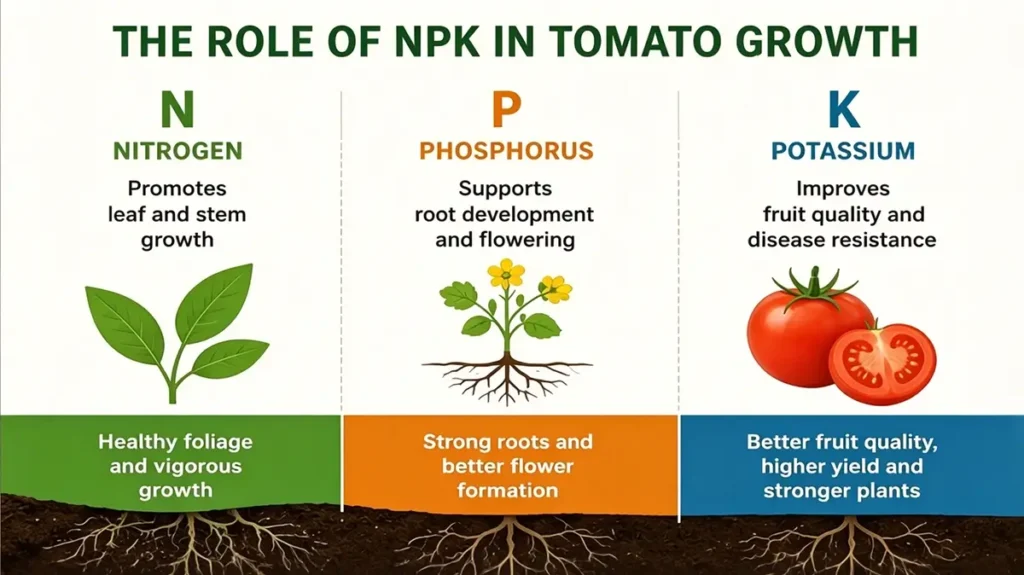
To understand the npk requirement for tomato plants, you first need to look at how these heavy-feeding vines grow. Tomatoes are not “plant it and forget it” vegetables. They extract massive amounts of nutrients from the soil in a very short period to build extensive root systems, thick stalks, lush foliage, and heavy, water-dense fruits. The acronym NPK stands for Nitrogen (N), Phosphorus (P), and Potassium (K)—the three primary macronutrients that every plant needs to survive. However, the specific npk ratio for tomatoes you choose dictates exactly how your plant directs its energy.
Choosing the right tomato fertilizer npk ratio is about matching the nutrient profile to the plant’s current life stage. If you give a tomato plant the wrong ratio at the wrong time, you are essentially giving it confusing instructions.
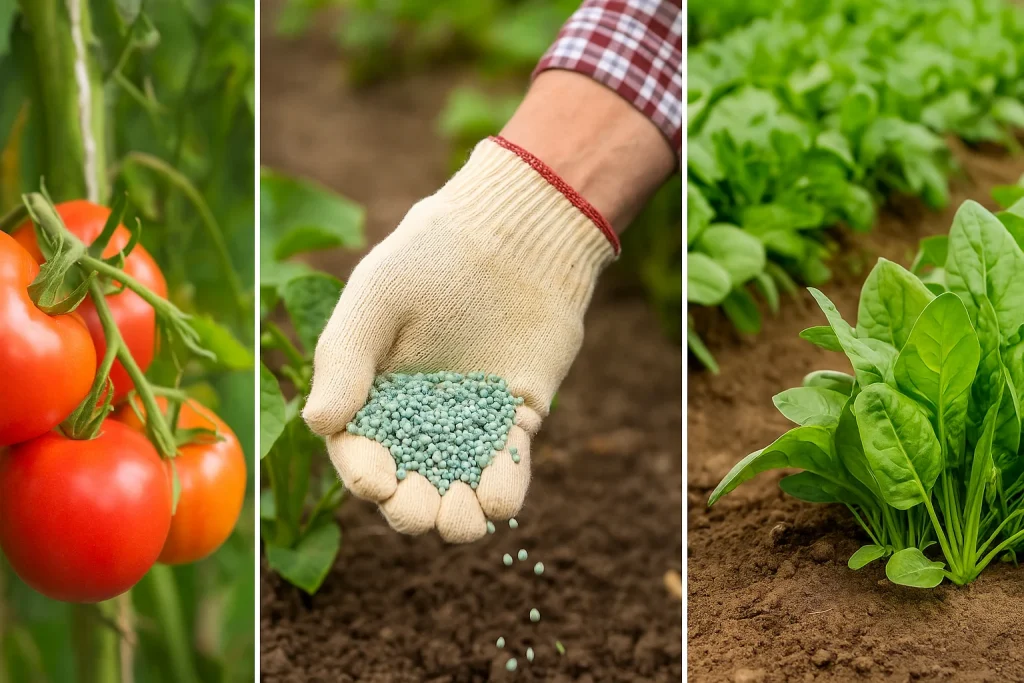
Nitrogen (N): The Engine of Vegetative Growth
Nitrogen is the first number in the NPK sequence. It is the building block of chlorophyll, the green pigment responsible for photosynthesis. In the early stages of a tomato plant’s life, nitrogen is absolutely critical. It fuels the rapid expansion of leaves and the lengthening of the main vines. Without sufficient nitrogen early on, your plant will lack the solar panels (leaves) required to generate enough energy to produce fruit later.
However, nitrogen is famously a double-edged sword in the vegetable garden. If you continue to apply a heavy nitrogen feed throughout the entire summer, the plant will prioritize vegetative growth at the expense of reproduction. This is why a standard lawn fertilizer is disastrous for a vegetable garden.
Phosphorus (P): The Foundation for Roots and Blooms
The second number in any npk fertilizer for tomatoes represents phosphorus. This nutrient is the primary driver of root development and flower production. When you first transplant your tomato seedlings into the garden, a healthy dose of phosphorus helps the root system stretch deep into the soil to seek out water and stabilize the tall plant.
Later in the season, phosphorus is the trigger that helps the plant transition from growing leaves to setting blossoms. A robust blossom set is the only way you will get a heavy harvest. Phosphorus also plays a key role in energy transfer and storage within the plant’s cells, ensuring that the sugars produced during photosynthesis make it to the developing fruit.
Potassium (K): The Fruit Enhancer and Health Guardian
The final number in the sequence is potassium. As the plant enters its fruiting stage, potassium becomes the most critical nutrient in your garden. Potassium regulates the opening and closing of the stomata (the pores on the leaves), which controls moisture loss and carbon dioxide uptake.
More importantly for your harvest, potassium is responsible for moving water and carbohydrates into the fruit itself. It directly influences the size, shape, color, and flavor of your tomatoes. Furthermore, adequate potassium strengthens the plant’s immune system, helping it fend off early blight, late blight, and stress from extreme summer temperatures.
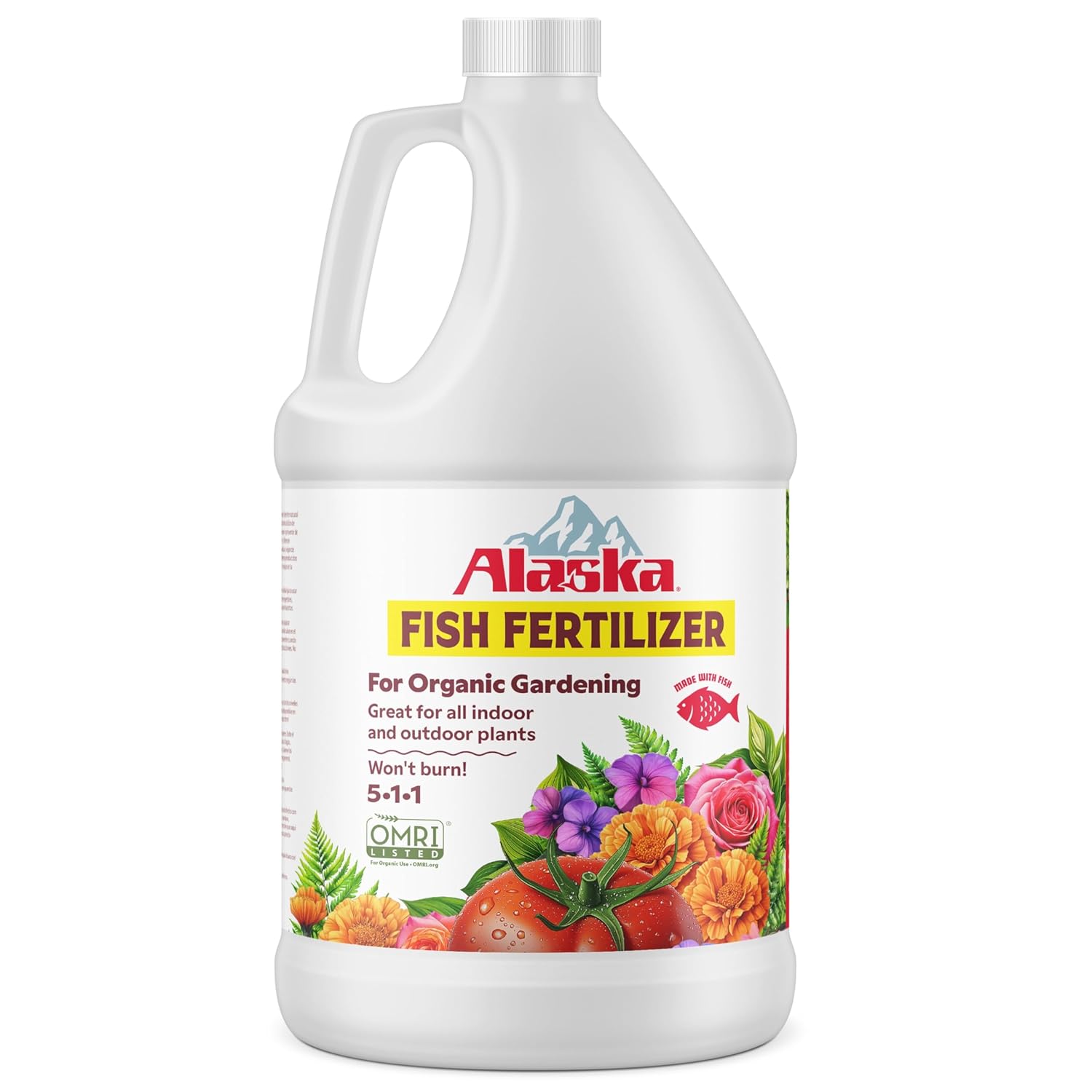
Alaska Liquid Fish Emulsion Fertilizer (5-1-1)Fast Acting • Organic Nitrogen • Deodorized FormulaThe perfect early-season boost for your tomato plants. This deodorized fish emulsion delivers rapid, bio-available nitrogen to promote thick stems and lush foliage without burning delicate young roots.
✓ Excellent for Foliar Feeding
Signs of Deficiency and Excess
Even with the best intentions, it is easy to get the balance wrong. Learning to “read” your tomato plant’s leaves will help you diagnose whether your current npk for tomatoes is missing the mark or causing toxic buildup in the soil.

Diagnosing Nitrogen Issues
- Nitrogen Deficiency: The most obvious sign is the yellowing of the oldest, lowest leaves on the plant, while the new growth at the top remains pale green. Because nitrogen is a “mobile” nutrient, the plant will actively strip it from older leaves to support the growing tips if the soil is depleted. Growth will be severely stunted, and the main stalk will remain thin and spindly.
- Nitrogen Excess: If you over-apply a balanced 10 10 10 fertilizer for tomatoes too late in the season, you will experience “all vine and no dine.” The plant will grow into a massive, gorgeous, dark-green bush that produces absolutely no flowers and no fruit. The foliage may also become so dense that it restricts airflow, inviting fungal diseases.
Diagnosing Phosphorus Issues
- Phosphorus Deficiency: A lack of phosphorus often manifests early in the season when the soil is still too cold for the roots to effectively absorb nutrients. The telltale sign is a distinct purplish or dark reddish tint on the undersides of the leaves and along the main veins. The plant will grow very slowly, and flower production will be delayed or non-existent.
- Phosphorus Excess: It is relatively rare to see direct toxicity from too much phosphorus, but an excess will lock out other vital nutrients. Too much phosphorus in the soil binds with iron and zinc, making them unavailable to the roots. This leads to interveinal chlorosis, where the leaves turn yellow but the veins remain starkly green.
Diagnosing Potassium Issues
- Potassium Deficiency: When a tomato plant lacks potassium, the edges of the older leaves will look scorched, brown, and crispy, as if they have been burned by a blowtorch. The fruits themselves will suffer greatly; they often ripen unevenly, leaving hard, woody, yellow shoulders near the stem even when the rest of the tomato is red.
- Potassium Excess: Similar to phosphorus, an excess of potassium usually causes secondary deficiencies. High levels of potassium will aggressively block the plant’s ability to uptake calcium and magnesium.
This brings us to a crucial point regarding secondary macronutrients. If you disrupt calcium uptake by over-fertilizing with potassium, you will almost certainly trigger blossom end rot—a heartbreaking condition where the bottom of your tomatoes turns into a black, sunken, leathery patch. How to treat and prevent calcium issues.
Natural vs. Commercial Sources
When deciding how to deliver the perfect npk ratio for tomatoes, you have to choose between organic vs. synthetic options. Both can successfully grow massive, productive plants, but they interact with your garden soil in entirely different ways.

Commercial (Synthetic) Fertilizers
Commercial fertilizers, often sold as water-soluble powders or uniform chemical granules, deliver an exact, guaranteed NPK ratio. For instance, a bag labeled exactly as a 10 10 10 fertilizer for tomatoes will provide a precise 10% nitrogen, 10% phosphorus, and 10% potassium by weight.
The Pros: Synthetic fertilizers are fast-acting. Because they are composed of water-soluble salts, the nutrients are immediately available to the plant’s roots the moment you water them in. This is incredibly useful if you need to rapidly correct a diagnosed nutrient deficiency. They are also highly concentrated, meaning a small box goes a long way.
The Cons: Synthetic fertilizers do nothing to improve the long-term health or structure of your soil. They do not feed the beneficial microbes or earthworms. Furthermore, because they are concentrated salts, it is incredibly easy to accidentally “burn” your plant’s roots by applying too much at once.
Natural (Organic) Fertilizers
Organic fertilizers are derived from plant, animal, or mineral sources. To get your desired npk requirement for tomato plants through organics, you often have to blend different ingredients, as natural sources rarely have perfectly even numbers like 10-10-10.
- Nitrogen sources: Blood meal, feather meal, and composted chicken manure.
- Phosphorus sources: Bone meal and rock phosphate.
- Potassium sources: Kelp meal, wood ashes (use sparingly to avoid altering pH), and greensand.
The Pros: Organic fertilizers are slow-release. They must be broken down by soil bacteria and fungi before the plant can absorb them. This means they provide a slow, steady trickle of nutrients over several months, virtually eliminating the risk of fertilizer root burn. More importantly, they add organic matter to your garden, improving soil drainage, aeration, and water retention year after year.
The Cons: Because they rely on microbial action, organic fertilizers will not work well in early spring when the soil is cold and microbes are inactive. They also act too slowly to fix an immediate, severe nutrient deficiency in the middle of the summer.
Recommended Dosage by Growth Stage
To get the most out of your garden, you must adjust the npk fertilizer for tomatoes based on the physiological stage of the plant. A static feeding schedule will not yield the best results. Below is a structured guide detailing the optimal ratios and dosages as your plant matures.
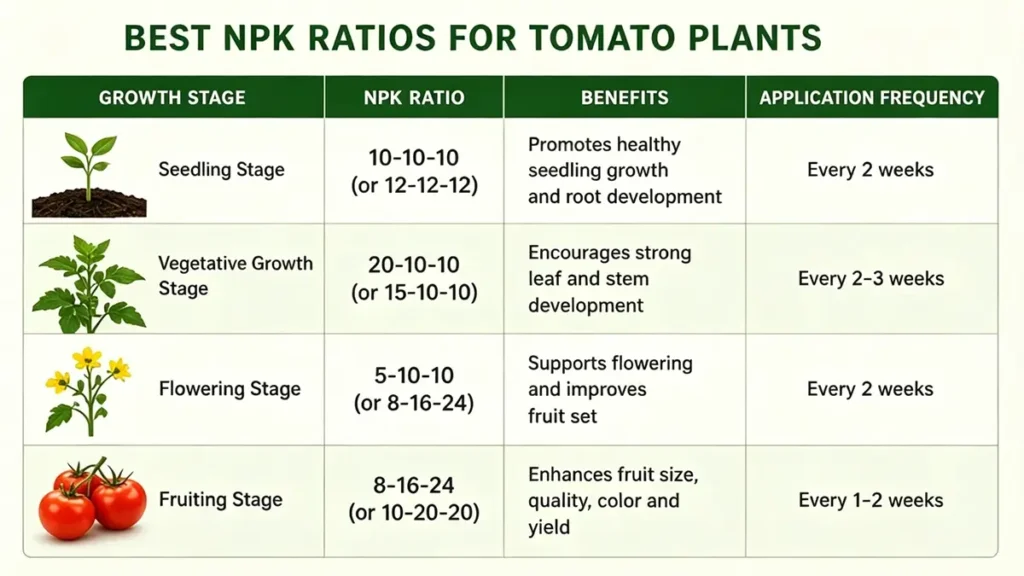
| Growth Stage | Ideal NPK Ratio | Recommended Dosage (Per Plant) | Application Frequency | Expert Notes |
|---|---|---|---|---|
| Seedling (Indoors) | 5-5-5 or 10-10-10 (Diluted) | 1/4 strength of manufacturer’s recommendation | Every 10-14 days | Seedlings have delicate roots. If using a 10 10 10 fertilizer for tomatoes, dilute it heavily to prevent chemical burn. |
| Transplanting | 3-4-6 or 5-10-5 | 2-3 tablespoons granular | Once, mixed into the planting hole | High phosphorus is needed here to mitigate transplant shock and encourage deep root establishment. |
| Early Vegetative | 10-10-10 | 1 tablespoon granular or standard liquid dose | Every 3-4 weeks | Use a balanced ratio to build strong, thick vines and plenty of leaves before the summer heat arrives. |
| Pre-Flowering / Blooming | 5-10-10 or 3-4-6 | 2 tablespoons granular | Once, as the first blossoms appear | Cut back the nitrogen. A 5 10 10 fertilizer for tomatoes pushes energy away from leafy growth and into flower production. |
| Fruiting & Harvest | 5-10-15 or similar high-K | Standard liquid dose or 2 tbsp granular | Every 2 weeks | Potassium demands skyrocket as the fruit swells. Consistent feeding prevents uneven ripening and supports heavy yields. |
Note: Always water your garden deeply before applying any granular or liquid fertilizer. Applying nutrients to bone-dry soil forces the plant to uptake the salts too rapidly, which can cause severe tissue damage.
FAQ
What’s the ideal amount of NPK Ratio for tomato plants?
The ideal NPK ratio starts as a balanced 10-10-10 during the early vegetative stage to promote leaf and stem growth. Once the plant begins to set flowers and fruit, the ideal ratio shifts to something lower in nitrogen and higher in phosphorus and potassium, such as a 5-10-10. This shift ensures the plant directs its energy into producing heavy, healthy tomatoes rather than just growing more leaves.
What happens if tomatoes get too much NPK Ratio?
Applying too much fertilizer, particularly one high in nitrogen, will result in a massive, dark green plant that produces very few flowers and almost no fruit. Furthermore, an excessive concentration of synthetic NPK salts in the soil can chemically burn the delicate root system, causing the plant to wilt and drop its existing blossoms. It can also lock out vital micronutrients like calcium and magnesium.
How can I tell if my tomato plants need more NPK Ratio?
You can usually tell your plants need more nutrients if their overall growth is slow, stunted, or the foliage appears pale and yellowing starting from the bottom leaves. Additionally, if the plant drops its blossoms before fruit sets, or if the tomatoes that do form are unusually small and slow to ripen, the plant is likely lacking sufficient phosphorus and potassium.
Does NPK Ratio affect fruit taste or yield?
Yes, the NPK ratio directly impacts both the overall yield and the flavor profile of the fruit. Potassium, the “K” in the ratio, is specifically responsible for moving sugars and water into the developing fruit, which drastically improves its sweetness, texture, and size. Without the correct balance, you will experience lower yields, watery flavors, and fruits that suffer from uneven ripening.
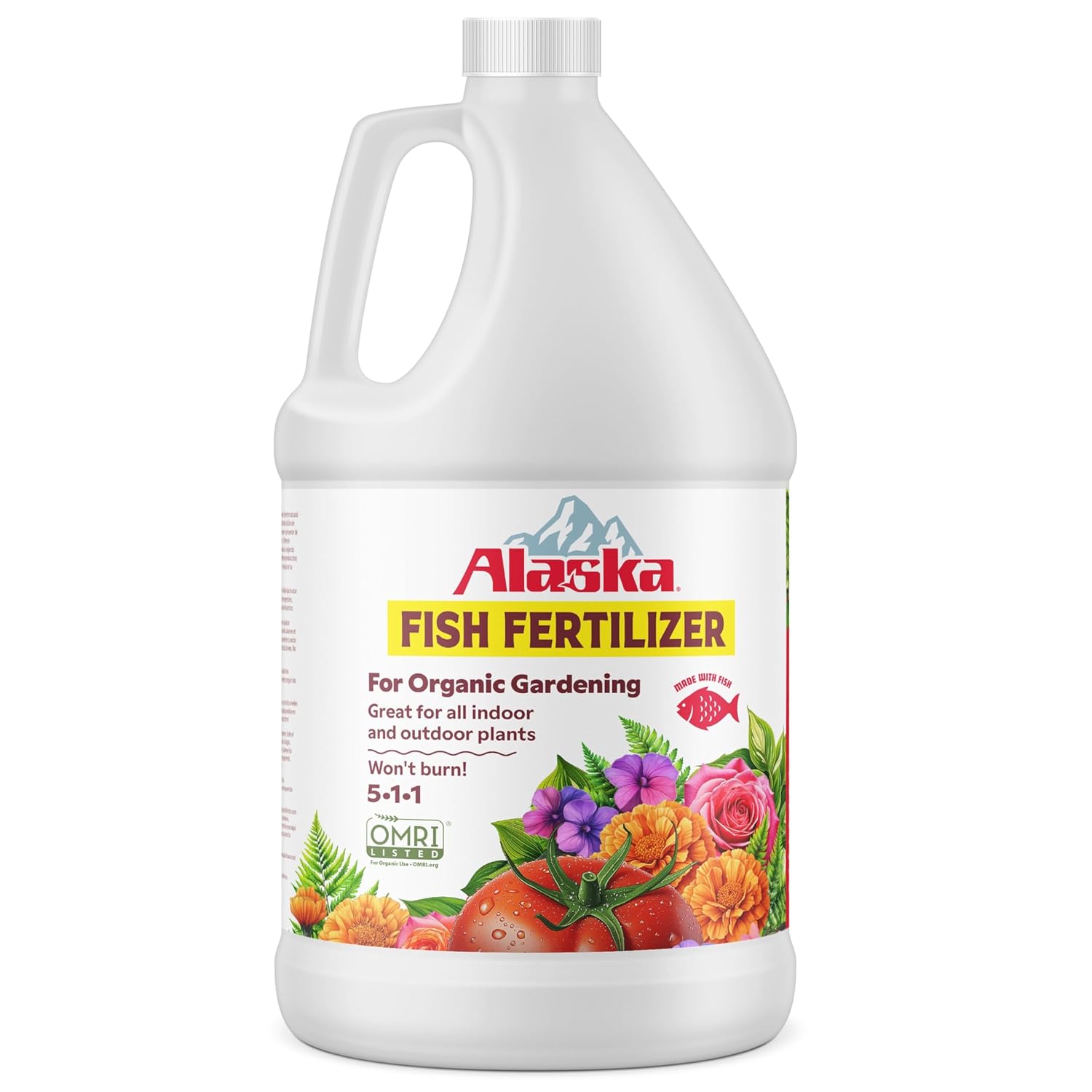
Alaska Liquid Fish Emulsion Fertilizer (5-1-1)Fast Acting • Organic Nitrogen • Deodorized FormulaThe perfect early-season boost for your tomato plants. This deodorized fish emulsion delivers rapid, bio-available nitrogen to promote thick stems and lush foliage without burning delicate young roots.
✓ Excellent for Foliar Feeding
