

Worm Castings for Tomatoes: Benefits and How to Use Them Correctly
Using worm castings for tomato plants provides a slow-release, nutrient-rich organic fertilizer that will not burn delicate roots. Mix a half cup into the planting hole when transplanting, or top-dress established vines monthly. You can also brew worm casting tea for tomatoes to deliver an instant boost of beneficial soil microbes.
Growing the perfect, juicy summer tomato requires more than just sunlight and water. As heavy feeders, tomatoes extract massive amounts of nutrients from the ground to build their thick stalks, lush green leaves, and heavy fruit clusters. While the shelves of local garden centers are lined with brightly colored synthetic fertilizers promising overnight miracles, experienced organic gardeners know that the secret to true plant health lies in the soil food web.
Enter one of nature’s most perfectly balanced, nutrient-dense soil amendments: worm castings. This dark, earthy material is the ultimate organic input for your vegetable garden. However, incorporating worm castings and tomatoes together effectively requires an understanding of what this material actually is, how it feeds your plants, and the most efficient ways to apply it to your garden beds or patio containers.

What Worm Castings is and its key nutrients
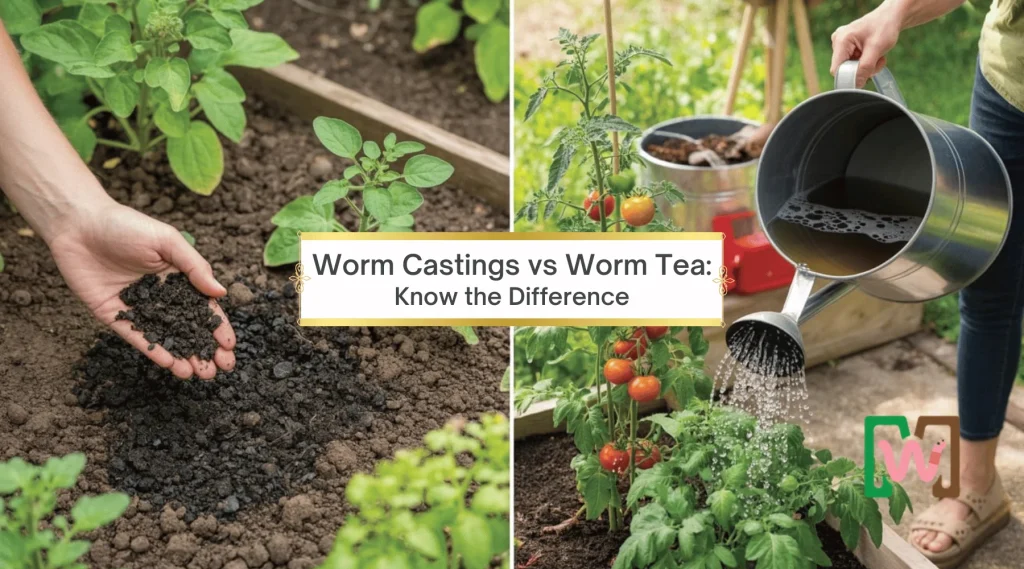
To put it simply and scientifically, worm castings are earthworm manure. Also known as vermicompost, this rich, dark, crumbly material is the end product of the breakdown of organic matter by species of composting worms, most commonly red wigglers (Eisenia fetida). As the worms consume decaying plant material, kitchen scraps, and compost, the organic matter passes through their digestive tracts. During this journey, it is finely ground and infused with powerful digestive enzymes and beneficial microorganisms.
When analyzing worm castings for tomatoes, it is important to adjust your expectations regarding the NPK ratio (Nitrogen, Phosphorus, and Potassium). If you are accustomed to comparing organic vs. synthetic options, you might be surprised to find that pure worm castings generally have an incredibly low NPK profile—usually hovering around 1-0-0 or 1-1-1.
If the NPK ratio is so low, why are earthworm castings tomatoes’ best friend? The magic lies in bioavailability and biological activity rather than raw chemical concentration.
- Readily Available Macronutrients: The nitrogen, phosphorus, and potassium present in the castings have been chemically altered by the worm’s digestive system. They are encased in a water-soluble membrane, meaning they are immediately accessible to the tomato’s roots as soon as they are watered in.
- Essential Micronutrients: Castings are loaded with trace minerals that synthetic fertilizers frequently omit, including iron, sulfur, magnesium, and most importantly, calcium.
- Humic and Fulvic Acids: These complex organic acids act as chelators. They bind to locked-up nutrients already present in your garden soil and convert them into a format that the tomato plant can actually absorb.
- Microbial Life: A handful of fresh worm castings contains billions of beneficial bacteria and fungi. These microbes colonize the root zone of your tomato plants, forming a symbiotic relationship that actively feeds the plant and defends it against soil-borne pathogens.
Specific benefits for tomato plants
Using worm castings on tomatoes goes far beyond a simple nitrogen boost. Incorporating this organic input transforms the overall health of the plant and the surrounding soil ecosystem.
Prevents Calcium Deficiency and Blossom End Rot
One of the most devastating issues a home gardener can face is blossom end rot. This condition causes the bottom of a ripening tomato to collapse into a sunken, black, leathery patch. It is not a disease, but rather a severe calcium deficiency in the developing fruit. It is almost always caused by fluctuating soil moisture, which prevents the roots from taking up calcium.

Worm castings actively combat both causes of blossom end rot. First, they contain bioavailable calcium. Second, their physical structure acts like a microscopic sponge. Adding worm castings to your soil drastically improves its water retention capabilities, ensuring the roots stay evenly moist during the blistering heat of mid-summer. How to identify and prevent blossom end rot.
Natural Pest and Disease Resistance
As earthworms digest organic matter, they secrete an enzyme called chitinase. This enzyme breaks down chitin, which is the primary component of the exoskeletons of pest insects (like aphids and whiteflies) as well as the cell walls of certain detrimental fungi. When your tomato roots absorb this chitinase from the castings, the plant distributes it through its foliage, making the tomato vine inherently distasteful and resistant to sap-sucking pests.
Accelerated Root Growth
The high concentration of humic acid and natural plant growth hormones (auxins) found in worm castings stimulates explosive root development. When you apply castings early in the season, the young tomato plant dedicates its energy to building a massive, deep-reaching root system. This foundation is critical for anchoring tall indeterminate vines and helping the plant survive periods of drought.
Zero Risk of Fertilizer Burn
Synthetic chemical salts provide an instant hit of nutrients, but if mixed too strongly, they will rapidly draw moisture out of the plant’s roots, causing severe “fertilizer burn” that can kill a transplant overnight. Because the nutrients in worm castings are naturally encapsulated and slow-releasing, they are incredibly gentle. You could plant a tomato seedling in a pot of 100% pure worm castings and it would not suffer a single burned leaf.
How to use it — dosage and timing
Because it is so gentle, there is no wrong time for using worm castings on tomatoes. However, applying it strategically during the plant’s key growth phases will maximize your return on investment.
Seed Starting and Potting Up
If you grow your tomatoes from seed indoors, adding worm castings to your seed-starting mix gives the young seedlings a massive advantage. Standard peat or coir-based seed starting mixes are sterile and contain zero nutrients. Blend 10% to 20% worm castings by volume into your starting mix. This provides a gentle trickle of organic nutrition that sustains the seedlings until they are ready to be transplanted.
In the Planting Hole (Transplanting)
The most effective way to use worm castings for tomato plants is right at the time of transplanting. When you dig your hole in the garden bed or raised box, pour a half-cup to one full cup of worm castings directly into the bottom of the hole. Mix it slightly with the native soil. Place your tomato seedling directly on top of this mixture. As the roots grow outward, they will immediately encounter the microbial-rich castings, mitigating transplant shock and spurring rapid vegetative growth.
Top-Dressing Established Plants
As your tomato plants grow into massive, fruit-bearing vines in July and August, they deplete the nutrients in the topsoil. To replenish them, you can “top-dress” the plants. Every three to four weeks, sprinkle a half-cup of worm castings in a ring around the base of the tomato plant, staying near the drip line (the imaginary circle on the ground directly beneath the outermost leaves). Use a hand cultivator to gently scratch the castings into the top inch of soil, and then water deeply.
Brewing Worm Casting Tea for Tomatoes
If you want to stretch your supply and provide a rapid, liquid boost, brewing a compost tea is highly recommended. A worm casting tea for tomatoes extracts the billions of beneficial microbes and suspends them in highly aerated water.
To make it:
- Place 1 cup of fresh worm castings into a permeable mesh bag (a paint strainer bag works perfectly).
- Suspend the bag in a 5-gallon bucket of unchlorinated water.
- Add 1 tablespoon of unsulfured blackstrap molasses to the water. The molasses acts as a carbohydrate food source, causing the microbial population to explode in size.
- Place an aquarium air pump and air stone into the bucket to heavily oxygenate the water.
- Let it brew for 24 to 36 hours until it smells earthy and rich.
Use this liquid immediately as a root drench or pour it into a pump sprayer to use as a foliar feed directly on the tomato leaves.
Risks of overuse or incorrect use
While worm castings are frequently touted as the perfect, foolproof fertilizer, relying on them blindly without understanding their physical properties can lead to a few practical issues in your home garden.

Poor Soil Drainage in Containers
As previously mentioned, worm castings will never cause chemical root burn. However, they are incredibly dense, fine, and moisture-retentive. If you decide to fill a 5-gallon bucket or patio container entirely with worm castings, your tomato plant will likely drown. In a pure casting environment, the material compresses like wet clay, cutting off oxygen to the root zone and causing severe root rot. Never use worm castings as a complete substitute for potting soil; they should never make up more than 20% of your total soil volume.
The Expense and Wasted Application
Compared to bulk compost or synthetic granules, high-quality earthworm castings are expensive. Broadcasting them blindly over your entire yard or garden pathway is a massive waste of money. To get the most out of your investment, target the application specifically to the root zone of the tomato plants. Always bury them slightly or cover them with organic mulch (like straw or leaves); the beneficial microbes are sensitive to UV light and will die if left exposed on the dry surface of the soil.
Low-Quality Commercial Blends
Not all bags of worm castings are created equal. Because of their popularity, some commercial brands cut corners. They may feed the worms low-quality peat moss instead of nutrient-dense vegetable matter, resulting in castings with very little nutritional value. Other brands may mix heavy amounts of cheap filler dirt into the bag. When shopping, look for brands that advertise 100% pure earthworm castings, and ideally, feel the bag to ensure the contents are slightly moist, dark, and crumbly.
Worm Castings vs. other organic inputs
To build a comprehensive organic feeding schedule, it is vital to understand how worm castings stack up against other popular natural fertilizers. They are a phenomenal foundational amendment, but they are not the only tool you will need.
Organic Tomato Fertilizer Comparison
Review this structured breakdown to see how worm castings compare to other inputs you might be considering for your summer garden:
| Organic Fertilizer | Approx. NPK Ratio | Primary Benefit for Tomatoes | Risk of Root Burn | Breakdown & Release Speed |
|---|---|---|---|---|
| Worm Castings | 1-0-0 | Injects beneficial microbes; improves moisture retention; prevents blossom end rot. | None | Immediate microbial action; slow nutrient release. |
| Composted Cow Manure | 0.5-0.5-0.5 | Bulk organic matter to improve heavy clay or sandy soils economically. | Low (if fully composted) | Very Slow (Months) |
| Fish Emulsion | 5-1-1 | Rapid liquid nitrogen boost for early, explosive vine and leaf growth. | Moderate (if over-mixed) | Fast (Days to 1 week) |
| Bone Meal | 3-15-0 | Massive root expansion and heavy blossom production due to high phosphorus. | Very Low | Slow (Weeks to Months) |
| Standard Synthetic | 10-10-10 | Guaranteed, uniform macronutrients for instant feeding. | High | Instantaneous |
As the table illustrates, worm castings excel at conditioning the soil and providing biological life, but they lack the heavy phosphorus required for explosive blossom production later in the summer.
The ultimate strategy for organic gardeners is to combine inputs. Mix worm castings with bone meal in the planting hole for a perfect balance of microbes, calcium, and phosphorus. Later in the season, you can brew worm casting tea for tomatoes and spike it with a dose of liquid fish emulsion for a perfectly balanced, nutrient-dense foliar feed that supports both the health of the soil and the heavy fruiting demands of the plant.
FAQ
How much Worm Castings should I use per tomato plant?
- For the best results, mix one-half cup to one full cup of worm castings directly into the planting hole when transplanting a young tomato seedling. For ongoing maintenance during the summer, sprinkle an additional half cup around the base of the plant as a top-dressing every three to four weeks.
Can I use too much Worm Castings?
- Chemically, you cannot burn a tomato plant’s roots with worm castings, making it incredibly safe to use. However, because they are so dense and hold water like a sponge, using too much in a container garden (exceeding 20% of the total soil volume) can severely reduce soil drainage and suffocate the roots.
How long does it take for Worm Castings to work?
- Because the nutrients in worm castings are naturally water-soluble and encased by the worm’s digestive process, they begin working almost immediately after being watered into the soil. The beneficial microbes inoculate the root zone within days, while the trace minerals provide a slow, steady trickle of nutrition throughout the season.
Can Worm Castings be combined with other organic fertilizers?
- Yes, worm castings are highly effective when combined with other organic inputs. Mixing them with high-phosphorus bone meal or fast-acting liquid fish emulsion creates a highly balanced, robust nutritional profile that supports both soil health and massive fruit yields.

Wiggle Worm Soil Builder Pure Worm Castings
100% Pure • Nutrient Dense • Won’t Burn Roots
The ultimate organic amendment for your tomato plants. This 100% pure earthworm casting blend provides essential microbes, improves soil moisture, and naturally prevents blossom end rot.
✓ Essential for Soil Health
