

Homemade Tomato Fertilizer: DIY Recipes That Actually Work
The best homemade fertilizer for a tomato plant combines calcium-rich crushed eggshells, potassium-heavy banana peels, and nitrogen-boosting coffee grounds or compost tea. Applying these DIY ingredients throughout the growing season provides a slow-release, organic nutrient boost that encourages heavy fruiting and prevents common diseases like blossom end rot.
Growing your own tomatoes is one of the most rewarding experiences a home gardener can have. There is nothing quite like the taste of a sun-ripened, freshly picked tomato straight from the vine. But as any seasoned gardener will tell you, tomatoes are incredibly heavy feeders. To grow those towering vines and produce dozens of heavy, water-dense fruits, your plants need a massive amount of nutrition.
While store-bought fertilizers are readily available, many home gardeners are turning to their own kitchens and backyards to source their plant food. Crafting a tomato fertilizer homemade blend is not only easy, but it allows you to completely control what goes into your garden soil.
Why Make Your Own Tomato Fertilizer
When you walk down the aisle of a garden center, the sheer number of commercial fertilizers can be overwhelming. While these products are convenient, relying on a diy fertilizer for tomatoes offers a unique set of benefits that go far beyond just saving money.
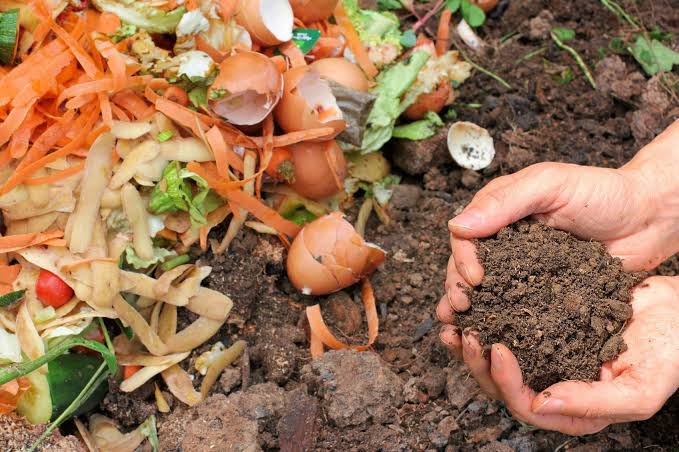
First and foremost, making your own plant food allows you to build long-term soil health. Commercial synthetic fertilizers are essentially concentrated chemical salts. They deliver an immediate jolt of nutrients directly to the plant’s roots, but they do absolutely nothing to improve the quality of your soil. In fact, overusing synthetics can actually degrade your soil structure and harm beneficial earthworms and microbes.
In contrast, a diy tomato fertilizer relies on organic matter. When you use natural ingredients, you are feeding the soil food web—the complex ecosystem of bacteria, fungi, and insects living in your garden beds. These microbes break down the homemade ingredients and slowly convert them into a form that your tomato plants can absorb. This slow-release mechanism ensures a steady diet for your plants and drastically reduces the risk of chemical “fertilizer burn.”
Additionally, creating your own fertilizer is an excellent way to reduce household waste. Instead of throwing kitchen scraps into the landfill, you can upcycle them into the best homemade fertilizer for tomatoes. You are taking everyday organic waste and transforming it into the exact NPK ratio (Nitrogen, Phosphorus, and Potassium) your garden needs to thrive.
7 DIY Recipes by Ingredient
You do not need a degree in chemistry to make an incredible homemade fertilizer for a tomato plant. Here are seven powerful, nutrient-dense recipes using ingredients you likely already have around the house or yard.
1. Crushed Eggshells for Calcium
One of the most devastating issues tomato growers face is calcium deficiency, which directly causes blossom end rot. This condition leaves an ugly, black, sunken patch on the bottom of your ripening tomatoes, rendering them inedible. Eggshells are composed of almost pure calcium carbonate, making them the perfect preventative treatment.
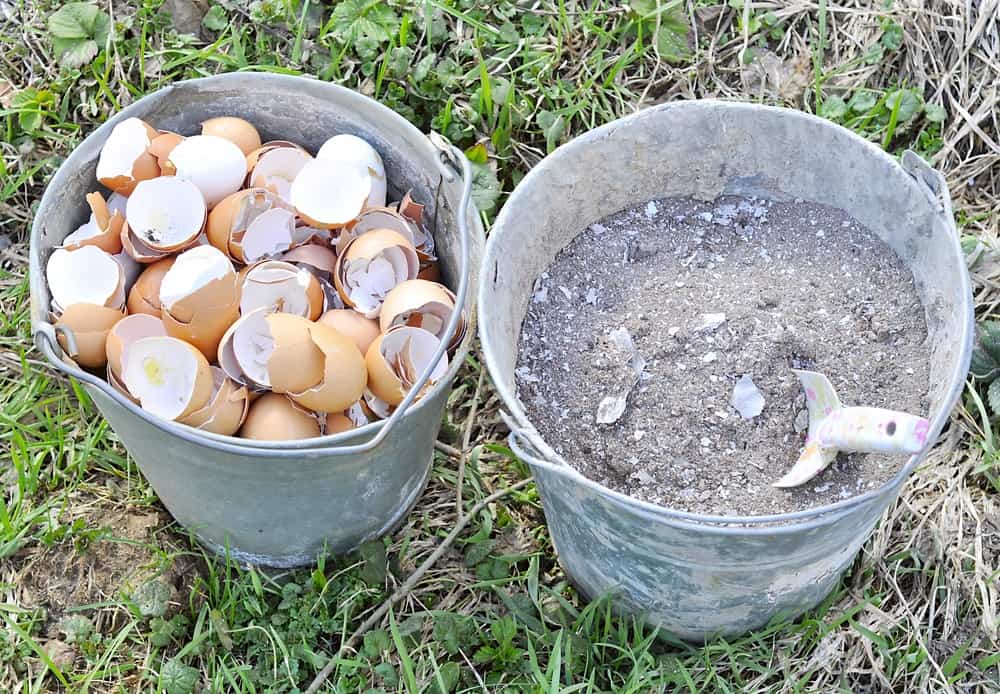
How to make it: Rinse your empty eggshells and let them dry completely in the sun or in a warm oven. Once dry, they become brittle. You cannot simply toss whole shells into the garden; they will take years to break down. Instead, pulse them in a blender or coffee grinder until they form a fine, powdery dust.
How to use it: When transplanting your tomato seedlings, sprinkle a handful of this eggshell powder directly into the bottom of the planting hole. If your plants are already in the ground, you can lightly scratch the powder into the top inch of the soil around the base of the plant. As the soil microbes go to work, they will slowly release the calcium to the tomato roots, keeping blossom end rot at bay.
2. Compost Tea
If there is one universal superfood for the vegetable garden, it is compost tea for tomato plants. Compost tea is essentially a liquid extraction of all the beneficial microbes, soluble nutrients, and humic acids found in solid compost. It provides a beautifully balanced NPK ratio that feeds the plant while simultaneously inoculating the soil with beneficial bacteria.
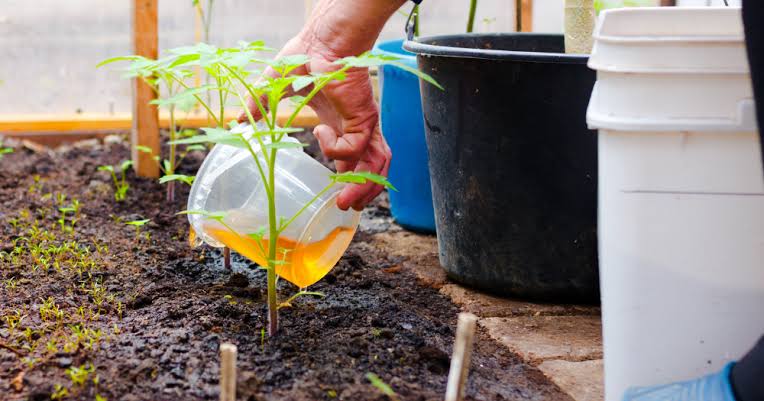
How to make it: Fill a 5-gallon bucket about one-third full with high-quality, finished compost. Fill the rest of the bucket with unchlorinated water (rainwater is perfect; if using tap water, let it sit out for 24 hours to let the chlorine evaporate). Stir the mixture vigorously every day for about three to five days. For an even better brew, add an aquarium air pump to aerate the mixture, which multiplies the aerobic bacteria exponentially.
How to use it: Strain the liquid through a cheesecloth or old t-shirt. You can use the resulting dark liquid as a direct soil drench around the base of your tomatoes, or dilute it slightly and use a pump sprayer to apply it directly to the leaves as a foliar feed. Dump the leftover solid compost sludge back into your garden.
3. Banana Peels for Potassium
Potassium is the “K” in the NPK ratio, and it is the nutrient most responsible for flowering and fruit development. Without enough potassium, your tomatoes will be small, lack flavor, and ripen unevenly. Banana peels are famously rich in potassium, making them a fantastic single-ingredient tomato fertilizer diy solution.
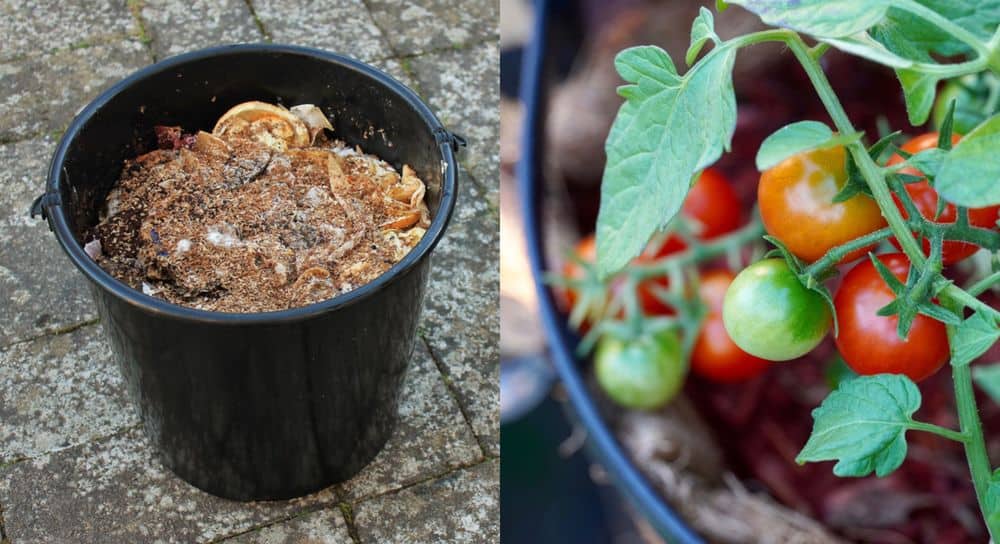
How to make it: You have two options. The first is to chop fresh banana peels into very small pieces (one to two inches long) to help them decompose faster. The second option is to make a “banana peel tea” by placing three or four peels in a large mason jar, filling it with water, and letting it steep at room temperature for 48 hours.
How to use it: If using chopped peels, bury them a few inches deep in the soil around the drip line of your tomato plants (be sure to bury them completely so they do not attract fruit flies or raccoons). If using the liquid tea, simply pour it directly onto the soil at the base of the plant once a week during the heavy fruiting stage.
4. Coffee Grounds for Nitrogen
Nitrogen is the engine of leafy, vegetative growth. In the early stages of a tomato plant’s life, it needs nitrogen to build strong stalks and a massive canopy of leaves to capture sunlight. Used coffee grounds contain roughly 2% nitrogen by volume, along with trace amounts of phosphorus and potassium.
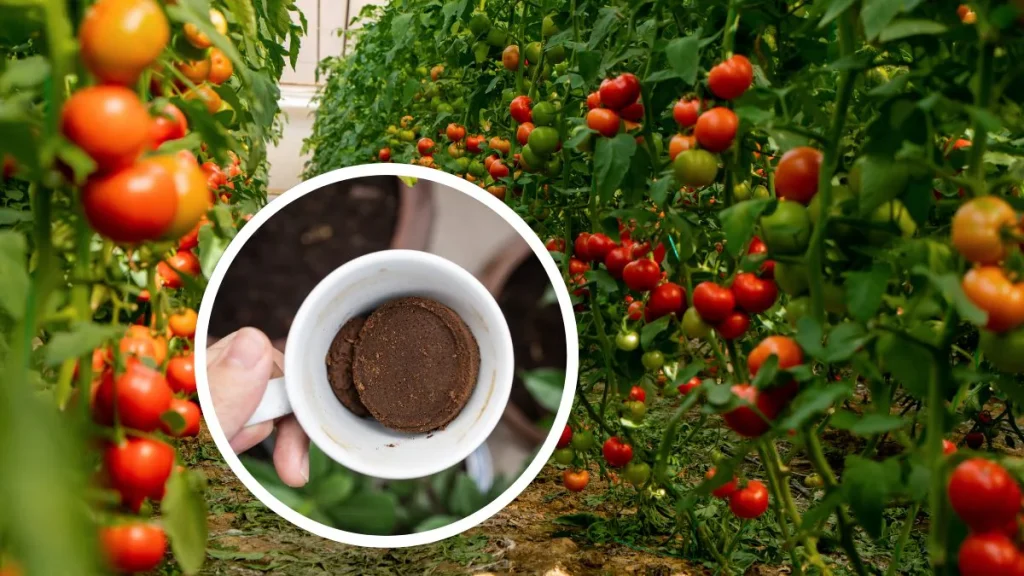
How to make it: Simply save your daily used coffee grounds. Do not use fresh, unbrewed coffee grounds, as they are highly acidic. The brewing process removes the acid, leaving behind perfectly neutral organic matter.
How to use it: The key to using coffee grounds is moderation. Do not dump a thick, heavy layer of grounds around the base of your plant, as they can dry out and form a crust that repels water. Instead, sprinkle a thin layer (about a quarter-inch thick) around the soil surface and gently rake it into the topsoil. Earthworms absolutely love coffee grounds and will quickly pull them down into the root zone.
5. Grass-Clipping Tea
If you have a lawn, you have an endless supply of free, high-nitrogen fertilizer. Fresh grass clippings break down rapidly and release a massive flush of nitrogen, making them ideal for pushing early-season vine growth.

How to make it: Fill a 5-gallon bucket two-thirds full of fresh grass clippings. Crucial note: Only use grass clippings from a lawn that has NOT been treated with chemical herbicides or weed-and-feed products, as these will kill your tomatoes. Fill the bucket to the top with water, cover it loosely, and let it steep for about a week. Stir it occasionally. Be warned: it will smell like a swamp.
How to use it: Strain the liquid and dilute it—mix one part grass tea with one part plain water. Pour a few cups around the base of each young tomato plant to encourage aggressive early growth. Stop using this once the plant starts flowering, as too much nitrogen later in the season will result in huge green plants with zero tomatoes.
6. Epsom Salt for Magnesium
Magnesium is the central atom in the chlorophyll molecule; without it, your plants cannot photosynthesize. A common issue in tomatoes is interveinal chlorosis, where the leaves turn yellow but the veins remain starkly green. This is a classic magnesium deficiency. Epsom salt (magnesium sulfate) is the perfect quick fix.
How to make it: Dissolve one tablespoon of unscented, standard Epsom salt in one gallon of warm water. Shake or stir until the crystals are completely dissolved.
How to use it: You can pour this solution directly into the soil around the roots once a month. Alternatively, for faster absorption, put the mixture in a spray bottle and mist the foliage of the tomato plants early in the morning before the sun gets too hot.
7. Comfrey Tea
Comfrey is a deep-rooted perennial herb known in gardening circles as a “dynamic accumulator.” Its deep taproots mine minerals like potassium, calcium, and phosphorus from deep in the subsoil and store them in its large, fuzzy leaves.
How to make it: Harvest a large bundle of comfrey leaves, chop them up, and stuff them into a bucket with a tight-fitting lid. Weigh the leaves down with a brick, fill the bucket with water, and seal it. Let it rot for three to four weeks. The resulting black slurry is incredibly nutrient-dense, though it produces a famously terrible odor.
How to use it: Strain the dark liquid and dilute it heavily—about one part comfrey concentrate to ten parts water. Use this potassium-rich feed every two weeks once your tomatoes begin setting fruit to encourage massive, flavorful yields.
Dilution Ratios and Feeding Frequency
To prevent nutrient burn and ensure a steady supply of food, follow this quick reference guide for your homemade fertilizers.
| DIY Fertilizer Type | Dilution / Preparation Ratio | Best Growth Stage to Apply | Application Frequency |
|---|---|---|---|
| Crushed Eggshells | Pure powder (no dilution) | Transplanting / Early Growth | Once at planting, or side-dress once a month |
| Compost Tea | Use straight for soil; dilute 1:1 for foliar | All stages | Every 1 to 2 weeks |
| Banana Peel Tea | Steep 3-4 peels per gallon of water | Flowering / Fruiting | Every 1 to 2 weeks |
| Coffee Grounds | Raw grounds mixed lightly into topsoil | Early Vegetative | Once a month |
| Grass-Clipping Tea | Dilute 1 part tea to 1 part water | Early Vegetative | Every 2 weeks (Stop when flowers appear) |
| Epsom Salt | 1 tablespoon per gallon of water | All stages (if yellowing occurs) | Once a month |
| Comfrey Tea | Dilute 1 part tea to 10 parts water | Flowering / Fruiting | Every 2 to 3 weeks |
When You Need to Supplement with a Commercial Fertilizer
While a diy fertilizer for tomatoes is fantastic for the environment and long-term soil health, there are times when it simply will not be enough. The main drawback of organic, homemade fertilizers is that they are slow-acting. If you are heavily relying on solid organic matter, the microbes require time and warm soil temperatures to process the food.
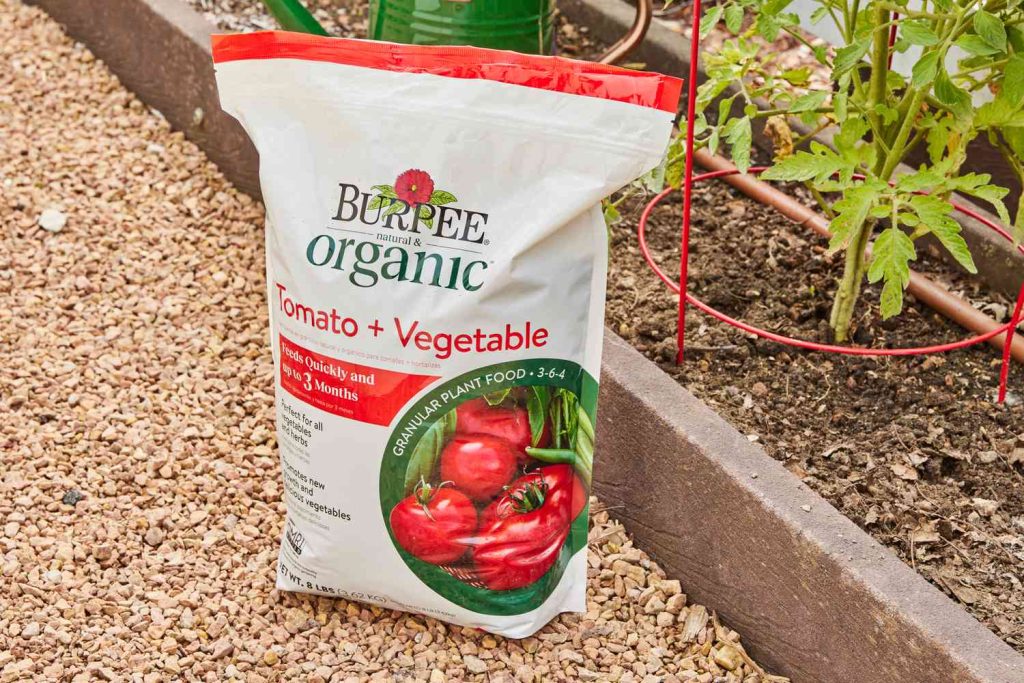
If your tomato plants suddenly show signs of severe distress—such as rapidly yellowing leaves, severely stunted growth, or a complete lack of blossoms—you may not have time to wait for eggshells and coffee grounds to break down. In these emergency situations, you need to weigh your organic vs. synthetic options carefully.
A high-quality, water-soluble commercial fertilizer will provide an immediate nutrient injection to a starving plant. If your soil is completely depleted, supplementing with a balanced commercial liquid feed (like a 5-10-5 or an organic fish emulsion) can save your harvest. Once the plant stabilizes, you can return to your homemade routine. How to read NPK labels
Furthermore, if you are growing tomatoes in pots or containers, homemade fertilizers are much harder to maintain. Potted plants do not have the natural soil web of microbes and earthworms required to break down raw kitchen scraps. In container gardening, you will almost always need to supplement with a liquid commercial fertilizer to ensure the plants get readily available nutrients.
FAQ
Is homemade tomato fertilizer as effective as store-bought?
Yes, homemade tomato fertilizer is highly effective for building long-term soil health and providing a steady, slow-release diet of organic nutrients. While store-bought synthetic fertilizers provide a faster, immediate green-up, homemade versions are better for preventing root burn and sustaining the soil ecosystem over the entire growing season.
How often should I apply DIY fertilizer?
Liquid homemade fertilizers, like compost tea or banana peel tea, are gentle enough to be applied every one to two weeks during watering. Solid amendments, such as crushed eggshells or coffee grounds, should be applied less frequently—typically once at planting and then side-dressed lightly once a month.
Will coffee grounds make my soil too acidic?
No, used coffee grounds will not make your soil too acidic. The natural acids present in coffee beans are water-soluble, meaning they end up in your morning cup of coffee, leaving the used grounds with a nearly neutral pH of around 6.5 to 6.8, which is actually perfect for tomato plants.
Do eggshells need to be crushed fine to work?
Yes, eggshells must be crushed into a very fine powder to be immediately useful to your tomato plants. If you place whole or roughly crushed shells in the garden, they can take months or even years to fully decompose, rendering the calcium unavailable for the current season’s crop.
