

Why Are My Tomato Leaves Curling?
Curled leaves in tomato plants are most commonly caused by environmental stress, such as extreme heat, uneven watering, or heavy pruning. While this physiological leaf roll is a harmless defense mechanism, severe tomato leaves curling can also indicate pest infestations, viral diseases, or chemical herbicide damage. Identifying the direction of the curl is the first step to saving your crop.
There are few things more alarming for a home gardener than walking out to the vegetable patch and finding your once-lush tomato vines looking twisted, distorted, or tightly rolled up. Tomatoes (Solanum lycopersicum) are generally resilient plants, but they are incredibly expressive. When something in their environment is slightly off, their foliage will immediately let you know.
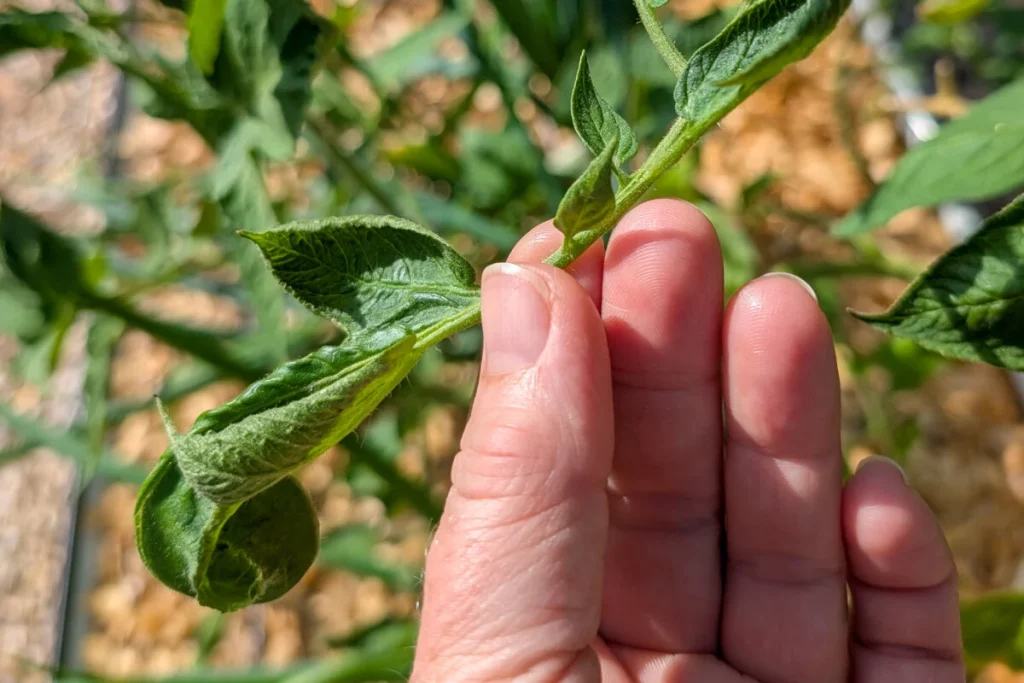
Before you panic and assume your garden has been struck by a deadly blight, it is important to understand that leaf curl is a symptom, not a specific disease in itself. Let’s break down exactly why you might have curly tomato plant leaves, how to properly diagnose the issue, and what you can do to get your garden back on track.
The most common causes
Understanding why tomato plant leaves curling happens requires looking at both environmental factors and potential biological threats.
Physiological Leaf Roll (Environmental Stress)
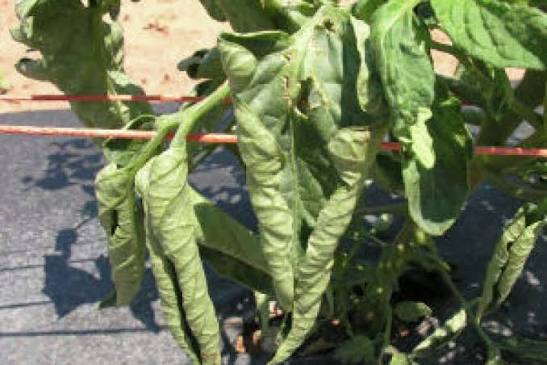
This is by far the most common cause of a leaf curling up on tomatoes. When a plant is subjected to extreme stress—such as a sudden heatwave, severe drought, or even having its roots sitting in waterlogged soil—it goes into survival mode. The plant rolls its leaves upward and inward to reduce its total surface area. By making the leaves smaller, the plant reduces the amount of moisture it loses to the sun through transpiration (plant sweating). You will also often see physiological leaf roll if you prune away too many branches and suckers at one time, sending the plant into a temporary state of shock.
Pest Damage
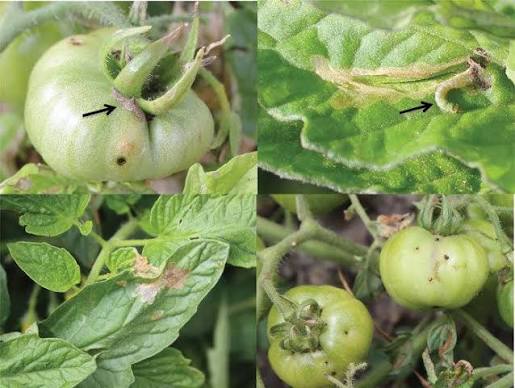
Tiny, sap-sucking insects love the soft, fleshy leaves of a tomato plant. Aphids, whiteflies, and broad mites congregate on the undersides of the foliage and drain the plant’s vital fluids. As the pests feed on the cellular structure of the leaf, the tissue becomes distorted, leading to wrinkled, tomatoes with curly leaves.
Herbicide Drift
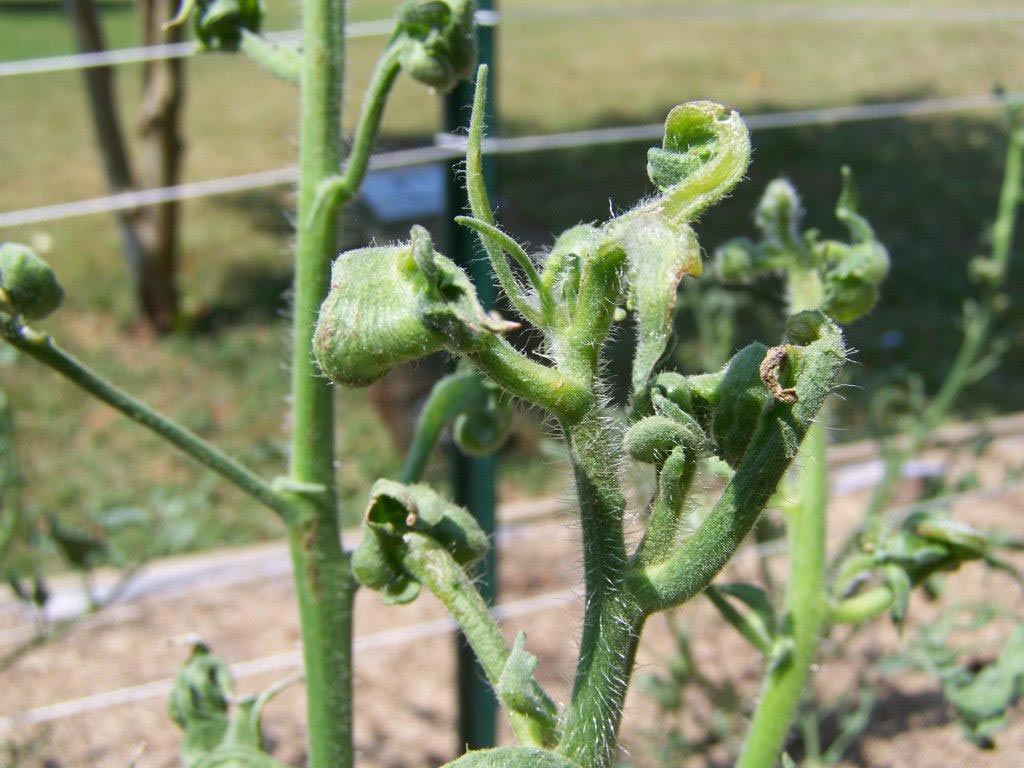
If you or your neighbors recently sprayed a chemical weed killer (like 2,4-D or dicamba) on a nearby lawn, the wind can carry microscopic droplets into your vegetable garden. Tomatoes are incredibly sensitive to broadleaf herbicides. Even a tiny trace of herbicide drift will cause the new growth at the very top of the plant to twist tightly, resembling twisted shoelaces or cupped hands.
Viral Infections
If your tomato curl leaf is accompanied by severe yellowing and stunted growth, you may be dealing with a virus. The Tomato Yellow Leaf Curl Virus (TYLCV) is a notorious pathogen transmitted by the silverleaf whitefly. Once the virus enters the plant’s vascular system, it disrupts normal growth, causing the leaves to cup upward, turn pale green or yellow, and stop producing fruit.
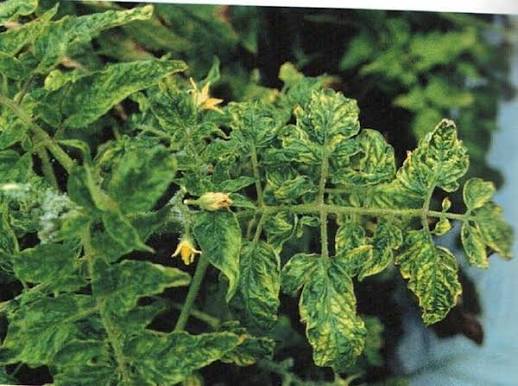
How to tell which cause applies to your plant (diagnostic table)
To properly treat the problem, you must first play the role of a garden detective. Use the diagnostic table below to match your plant’s specific symptoms with the most likely cause.
| Primary Symptom | Direction of the Curl | Additional Warning Signs | Most Likely Cause |
|---|---|---|---|
| Leaves roll like a cigar, feel thick and leathery. | Curling UPWARD (inward) | Usually affects the older, bottom leaves first. Plant remains green and healthy-looking overall. | Physiological Leaf Roll (Heat, water stress, or over-pruning). |
| Leaves look puckered, wrinkled, or distorted. | Curling DOWNWARD (or twisting) | Sticky residue (honeydew) on leaves; tiny green, black, or white bugs visible on the undersides of leaves. | Pest Infestation (Aphids, whiteflies, or broad mites). |
| New growth is severely twisted into tight spirals. | Curling DOWNWARD (cupping) | Leaves look like ferns or shoelaces. Stems may split or turn white. Older leaves may remain totally flat. | Herbicide Drift (Chemical weed killer exposure). |
| Leaves are cupped, crinkled, and distinctly yellow. | Curling UPWARD | Plant growth is completely stunted; blossoms drop off; tiny white flying insects dart away when the plant is shaken. | Viral Infection (Tomato Yellow Leaf Curl Virus). |
Step-by-step fix for each cause
Once you have identified the most likely culprit using the table above, you can take targeted action. Here is how to fix curled leaves in tomato plants based on the root cause.
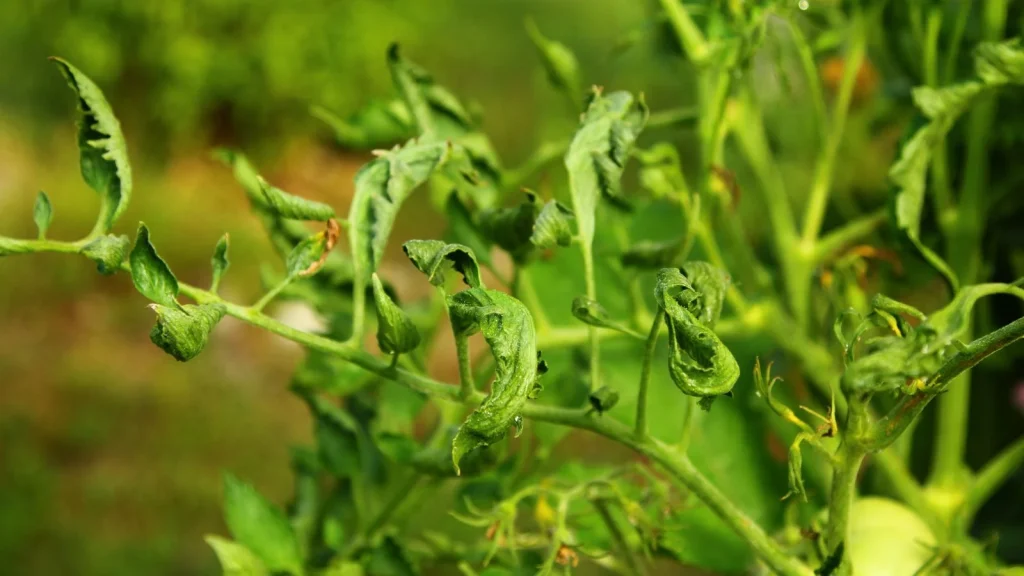
Fixing Physiological Leaf Roll (Stress)
- Check your soil moisture: Push your finger about two inches into the soil. If it is bone dry, you need to water deeply. If it is sitting in soggy mud, hold off on watering until the top two inches dry out. Tomato roots need oxygen just as much as they need water.
- Provide temporary shade: If a sudden heatwave (temperatures consistently over 90°F) is causing the stress, drape a 30% to 40% shade cloth over your plants during the peak afternoon sun.
- Stop pruning: If you recently gave your plant a heavy haircut, put the pruning snips away. Let the plant recover its foliage canopy for a few weeks.
Fixing Pest Damage
- The water blast: For minor aphid infestations, take your garden hose and give the undersides of the leaves a sharp, direct blast of water. This will physically knock the pests off the plant.
- Apply organic sprays: For heavier infestations of aphids or whiteflies, mix a solution of insecticidal soap or cold-pressed neem oil according to the package directions. Spray the plant thoroughly in the early evening (never in direct sunlight), paying special attention to the undersides of the leaves where pests hide.
- Repeat: Pests reproduce rapidly. You will likely need to reapply the organic spray every 5 to 7 days until the infestation is gone.
Addressing Herbicide Drift
- Assess the damage: Unfortunately, there is no “cure” or chemical antidote for herbicide damage. If the exposure was very minor, the plant might eventually outgrow it after a few weeks of stunted growth.
- Make the tough call: If the twisting is severe and the plant’s main stem is splitting, the most humane and productive thing to do is pull the plant out of the garden and throw it in the trash (do not compost it).
Managing Viral Infections (TYLCV)
- Remove the plant immediately: Viral infections cannot be cured. If you are certain your plant has Tomato Yellow Leaf Curl Virus, you must carefully pull the entire plant—roots and all—place it in a garbage bag, and dispose of it.
- Control the vectors: Because viruses are spread by pests like whiteflies, immediately treat your remaining healthy plants with neem oil or insecticidal soap to kill the insects before they can bite and infect another plant.
How to prevent it going forward
The best way to deal with curly tomato plant leaves is to prevent the issue from happening in the first place. By setting up a stable, consistent environment, you can drastically reduce the chances of your plants succumbing to stress or disease.
Establish a consistent watering schedule
Tomatoes thrive on consistency. Instead of relying on a garden hose to shallowly water your plants every day, install a drip irrigation system or use soaker hoses. These tools deliver water directly to the root zone slowly and deeply, encouraging the plant to grow a massive, drought-resistant root system.
Use a thick layer of organic mulch
Covering the bare soil around your tomato plants with two to three inches of straw, shredded leaves, or untreated wood chips is a game-changer. Mulch acts as an insulator, keeping the soil cool during blistering summer heat and locking moisture into the ground so it doesn’t evaporate away.
Practice smart pruning
When pruning your indeterminate tomatoes, never remove more than 20% to 30% of the plant’s total foliage at one time. Prune your suckers gradually over the course of the season rather than doing a massive “chop” all in one afternoon.
Plant disease-resistant varieties
If you live in a hot climate where whiteflies and viruses are a constant battle, look for tomato seeds or transplants that are bred for resistance. Varieties with a “TYLCV” designation on their plant tag will naturally fight off the virus, keeping your harvest safe. For more tips on selecting the right varieties and managing your crop’s entire life cycle, be sure to read our complete growing overview.
FAQ
Is curling always a sign of disease?
- No, it is most often physiological leaf roll, which is a natural defense mechanism against heat or water stress. If leaves curl up but remain green and leathery, the plant is likely just stressed by its environment, not actively diseased.
Can I still eat tomatoes from a plant with curling?
- Yes. If the curling is due to environmental stress, common pests, or even a virus, the fruit remains perfectly safe for human consumption. However, if you suspect the curling is a direct result of chemical herbicide drift, it is best to discard the fruit to be safe.
How quickly can curling be fixed once I start treatment?
- Environmental stress can often be resolved in a few days with proper watering and shade, though the older, already curled leaves may never fully flatten out again. You will know your treatment is working when the brand new growth emerges looking flat, normal, and healthy.
Does curling spread to other plants?
- Physiological leaf roll does not spread from plant to plant, as it is just an individual reaction to the environment. However, if the tomato curl leaf is caused by a virus (like TYLCV) or a heavy pest infestation (like aphids), those biological threats can easily travel to and infect neighboring plants if left unmanaged.

Bonide Captain Jack’s Neem Oil (Ready-to-Use)
★★★★★ (10,500+ ratings)
A must-have for treating aphid and whitefly infestations that cause tomato leaf curl. This cold-pressed, organic neem oil acts as a fungicide, insecticide, and miticide all in one.
Check Price on Amazon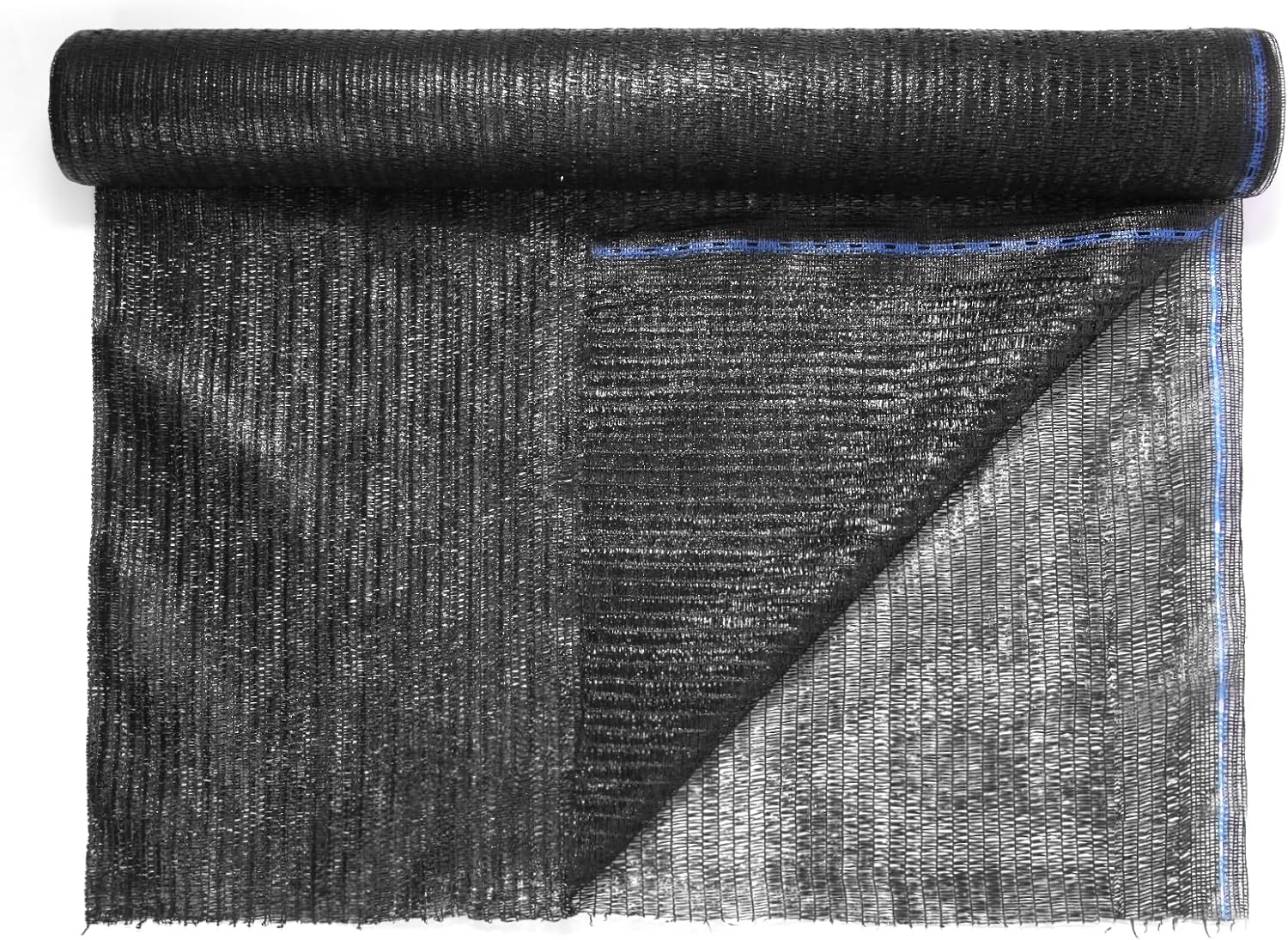
Agfabric 40% Sunblock Shade Cloth with Grommets
★★★★☆ (3,200+ ratings)
The perfect density to protect your tomato plants from extreme summer heatwaves. Reduces physiological leaf roll and heat stress without blocking essential photosynthesis.
Check Price on Amazon