

Growing Tomatoes in 5-Gallon Buckets
Growing tomatoes in 5-gallon buckets is highly effective if you ensure proper drainage, use high-quality potting mix, and select compact determinate varieties. By drilling multiple holes in the bottom, planting one tomato per bucket, and watering daily during hot weather, you can yield a massive harvest in incredibly small spaces.
Whether you have a sprawling backyard or just a sunny apartment balcony, container gardening opens up a world of possibilities. The common garden tomato (Solanum lycopersicum) is incredibly adaptable to container life. (Note: Ensure you are growing true garden tomatoes; never confuse them with the tamarillo or “tree tomato,” Cyphomandra betacea, which is a botanically unrelated plant requiring entirely different care).
Planting tomatoes in buckets is one of the most cost-effective and space-saving methods for home gardeners. However, cultivating heavy-feeding, water-loving plants in an enclosed space requires a specialized approach. You cannot simply scoop dirt from your yard into a plastic pail and hope for the best. To harvest baskets of juicy, sun-ripened fruit, you must master the unique environment of a containerized root system.
What makes this setting different from in-ground growing
When you plant a tomato in a traditional garden bed, the roots have infinite space to stretch outward and downward to search for moisture and hidden pockets of nutrients. The earth also acts as a massive thermal blanket, keeping the root zone cool during blistering summer days and insulating it during chilly nights.
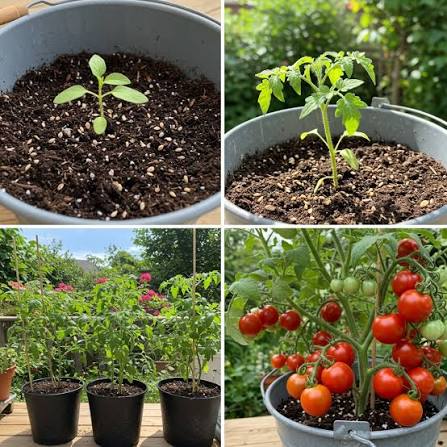
Growing tomatoes in buckets completely changes this biological dynamic. In a bucket, the root system is strictly confined. This constriction means the plant is entirely dependent on you for every drop of water and every ounce of nutrition. Because there is a limited volume of soil, 5 gallon bucket tomatoes will dry out exponentially faster than their in-ground counterparts. On a 90°F day, a mature tomato plant can easily drain the moisture from a 5-gallon bucket in a matter of hours.
Furthermore, the plastic walls of the bucket absorb solar radiation. While tomatoes love warm weather, the soil inside a dark-colored bucket sitting on a concrete patio can heat up rapidly, potentially stressing the roots.
Lastly, the restricted space changes how nutrients behave. Every time you water a bucket until it drains, a small amount of soluble nutrients washes out of the bottom. This process, known as leaching, means bucket tomatoes require a more frequent, steady supply of fertilizer compared to garden-bed plants. Understanding these differences is the foundation of successful container gardening. For a broader look at how container care fits into the overall lifecycle of your crop, check out our complete growing overview.
What to look for / recommended setup
Setting up your container correctly from day one is the secret to a stress-free summer. You will need to gather the right materials to create the perfect artificial environment for your plants.
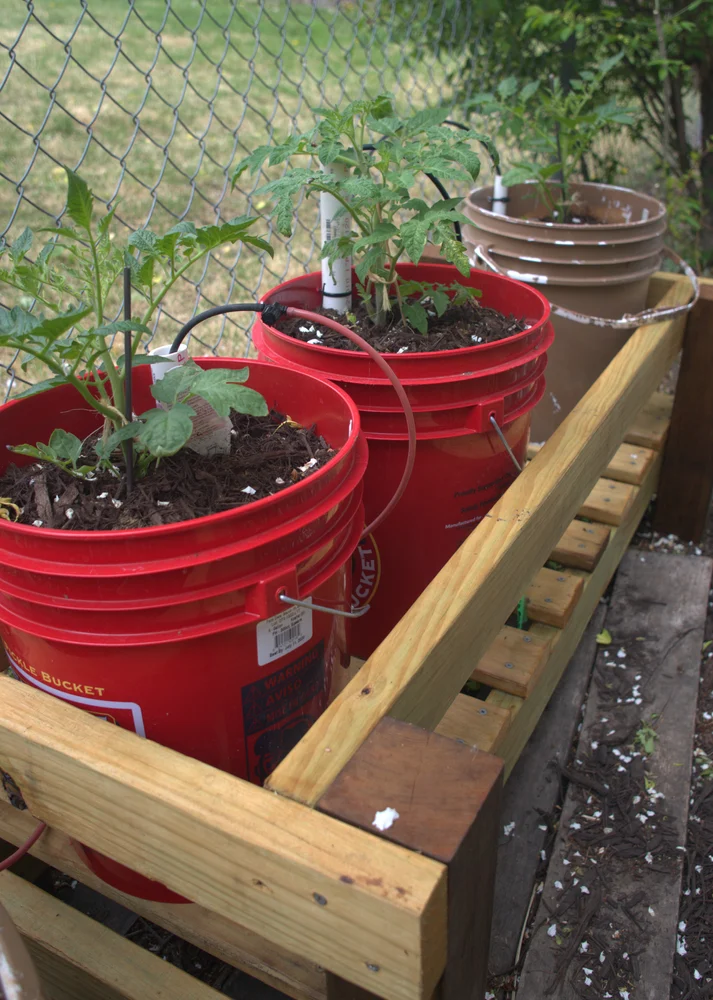
The Right Bucket
Not all plastic is created equal. When growing food, you should ideally use food-grade buckets. Look at the recycling triangle on the bottom of the bucket; HDPE #2 (High-Density Polyethylene) is generally considered food-safe and will not leach harmful chemicals into your soil when exposed to the hot summer sun. Bakery departments at local grocery stores or big-box hardware stores are great places to source these.
Drainage is Non-Negotiable
A 5-gallon bucket without holes is just a water-tight pond. If water cannot escape, the soil turns into a muddy swamp, suffocating the roots and causing root rot. You must drill a minimum of six to eight 1/2-inch holes in the bottom of the bucket, plus a few holes around the lower edge of the sidewall to ensure complete drainage.
Choosing the Soil
Never use “topsoil” or “garden soil” in a bucket. These soils are heavy and contain clay and fine silt. In the confined space of a bucket, they will compress into a brick, cutting off oxygen to the roots. You must use a high-quality “potting mix.” Potting mixes are lightweight, soilless blends usually made from peat moss or coco coir (for moisture retention), perlite (for drainage and aeration), and compost.
Selecting the Right Tomato Varieties
Tomatoes come in two main growth habits: determinate and indeterminate. Determinate (bush) tomatoes have a genetic limit; they grow to about 3 to 4 feet tall, set all their fruit at once, and stop. Indeterminate (vining) tomatoes grow continuously, often reaching 8 to 10 feet tall. While you can grow indeterminate types in buckets, they require massive trellising. For the best 5 gallon bucket tomatoes, stick to determinate, dwarf, or patio varieties like ‘Roma’, ‘Patio Princess’, or ‘Tiny Tim’.
In-Ground vs. 5-Gallon Bucket Growing Comparison
| Growing Factor | In-Ground Garden Bed | 5-Gallon Bucket |
|---|---|---|
| Watering Frequency | 1 to 2 times per week | Daily (sometimes twice daily in peak summer) |
| Soil Requirement | Amended native garden soil | Lightweight, aerated soilless potting mix |
| Fertilizer Needs | Monthly granular feeding | Weekly diluted liquid feeding (due to leaching) |
| Root Temperature | Stable and naturally insulated | Fluctuates rapidly; vulnerable to high heat |
| Space Required | 2 to 3 feet between plants | 1 square foot (highly portable) |
Step-by-step planting and care tips
Once you have your supplies, it is time to put your hands in the dirt. Follow these steps for planting tomatoes in 5 gallon buckets to ensure vigorous growth.
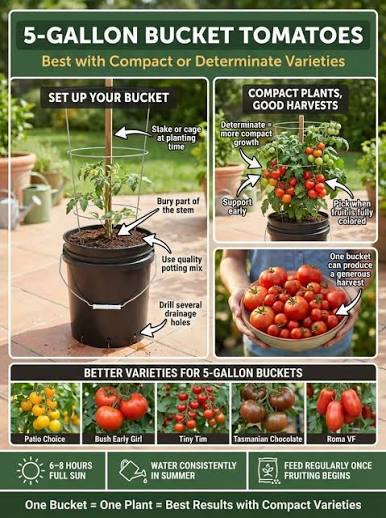
Step 1: Prep and fill the bucket
After drilling your drainage holes, wash the inside of the bucket with mild soapy water and rinse it well. Fill the bucket to about one-third full with your premium potting mix. Mix in a handful of slow-release, organic granular fertilizer containing calcium (like bone meal) to give the plant a strong nutritional foundation.
Step 2: Plant deeply
Tomatoes possess a unique biological trait: they can grow adventitious roots (new roots) directly out of their main stem if it is buried underground. Take your tomato seedling and pinch off the lowest sets of leaves. Place the seedling into the bucket so that the bare stem is sitting deep inside. Fill the rest of the bucket with potting mix, burying the stem right up to the top cluster of leaves. Leave about two inches of empty space at the top of the bucket to prevent water from overflowing when you irrigate.
Step 3: Establish a support system early
Do not wait until the plant is falling over to support it. Staking tomatoes in buckets is critical because the loose potting mix cannot hold up a heavy, fruit-laden plant against high winds. Immediately after planting, insert a wire tomato cage into the bucket, pushing the legs all the way down to the bottom. Doing this early prevents you from accidentally piercing and destroying the root system later in the season. Alternatively, you can drive a sturdy bamboo stake into the bucket and tie the main stem to it as it grows.
Step 4: Implement a strict watering routine
Growing tomatoes in buckets requires vigilance. Check the soil moisture every single morning. Stick your index finger two inches down into the potting mix. If it feels dry, you must water. Water the bucket slowly at the soil level until you see liquid running out of the bottom drainage holes. This ensures the entire root ball is saturated.
Step 5: Feed consistently
Because frequent watering washes nutrients out of the bucket, your initial granular fertilizer will eventually deplete. Once the plant begins to form yellow blossoms, start feeding it with a water-soluble, liquid organic tomato fertilizer every 7 to 10 days.
Common mistakes to avoid
Even experienced gardeners can face setbacks when planting tomatoes in buckets. Avoid these common pitfalls to keep your plants thriving.
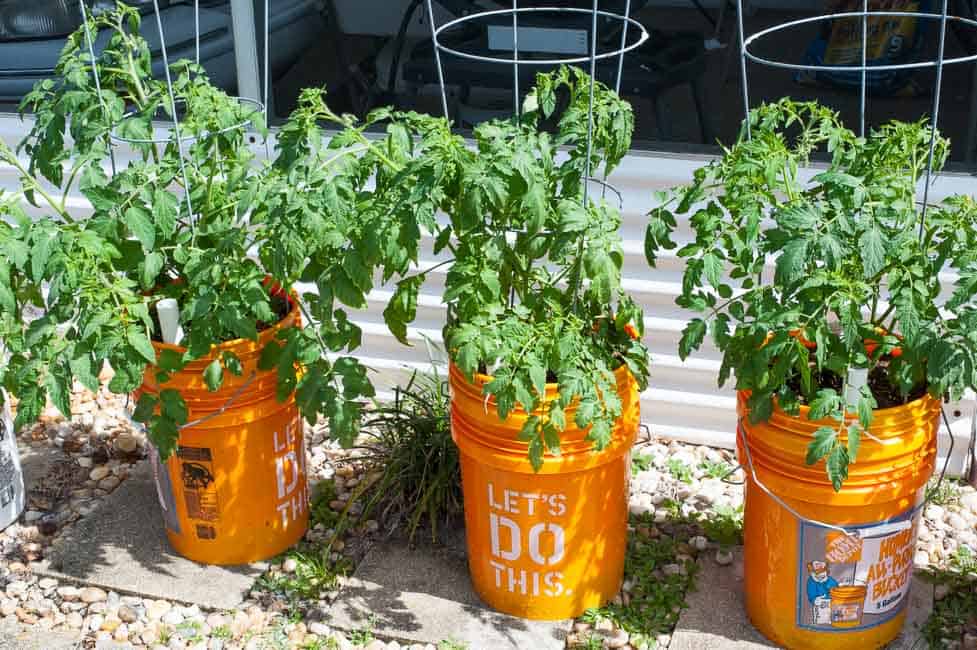
Ignoring the Calcium Demands (Blossom End Rot)
If you water inconsistently—letting the bucket turn to bone-dry dust and then flooding it—the plant cannot properly absorb calcium. This results in blossom end rot, a devastating condition where the bottom of the tomato turns black, leathery, and sunken. Maintain even, consistent soil moisture, and always use a fertilizer that contains calcium to prevent this issue.
Crowding Too Many Plants
A 5-gallon bucket looks quite large when you are holding a tiny 4-inch seedling. It is tempting to plant two or three seedlings in a single bucket. Do not do this. A mature tomato plant has a massive root system that requires exactly five gallons of space to thrive. If you crowd them, they will fight for water and nutrients, resulting in stunted, weak plants that produce very little fruit. One bucket equals one tomato plant.
Using Dark Buckets on Hot Pavement
Black or dark blue buckets sitting on a concrete patio in July act like solar ovens. The soil inside can easily exceed 100°F, cooking the root system. If you are using dark buckets, try to shade the bucket itself (while leaving the foliage in the sun) by placing a piece of cardboard in front of it, or wrapping the bucket in reflective material or white fabric to bounce the heat away.
Skipping the Mulch
Just because the soil is in a container does not mean it is immune to evaporation. Leaving the top of the potting mix exposed to the sun dries it out rapidly. Add a two-inch layer of straw, untreated grass clippings, or shredded leaves to the top of the soil inside the bucket. This acts as a protective blanket, locking in moisture and keeping the surface roots cool.
FAQ
Do tomatoes grow as well in a 5-gallon bucket as in the ground?
- Yes, tomatoes can grow just as well in a 5-gallon bucket as they do in the ground, provided their specific needs are met. Because their roots are confined, they rely entirely on you for optimal potting mix, daily watering, and consistent feeding to match the yields of an in-ground plant.
What size container/setup do I need in a 5-gallon bucket?
- A standard 5-gallon bucket provides exactly the minimum volume of soil required to support the root mass of a single mature tomato plant. You must drill adequate drainage holes in the bottom and use a sturdy wire cage or central stake for structural support.
Do I need a different fertilizer schedule in a 5-gallon bucket?
- Yes, you need to fertilize bucket tomatoes more frequently than in-ground plants. Because container plants require daily watering in the summer, soluble nutrients are quickly washed out through the drainage holes, necessitating a weekly dose of diluted liquid fertilizer to keep the plant nourished.
What’s the biggest mistake beginners make in a 5-gallon bucket?
- The biggest mistake beginners make is using heavy, traditional garden soil instead of a lightweight, soilless potting mix. Garden soil severely compacts inside the tight confines of a bucket, preventing proper drainage and literally suffocating the tomato’s root system.

Premium Organic Potting Soil Mix
Lightweight • Excellent Drainage • Nutrient Rich
The absolute best foundation for 5-gallon bucket tomatoes. This lightweight, soilless mix is aerated with perlite to prevent root rot and packed with earthworm castings to deliver explosive growth in confined containers.
✓ Prevents Soil Compaction
