

Best Garden Hose Nozzles for Watering Plants and Lawns
Affiliate Disclosure: HomeGardenExpert.net participates in affiliate programs. If you buy through a link on this page, we may earn a commission at no extra cost to you. This does not affect our selection criteria.
Watering is a different job than cleaning, and a nozzle built for one doesn’t always do the other well. A jet setting strong enough to strip grime off concrete will flatten seedlings and wash soil away from roots. A nozzle that only offers a hard stream and a wide fan leaves you with no good option for container plants or a freshly seeded bed.
This guide is about matching a nozzle — or in some cases a watering wand — to what you’re actually watering, from delicate transplants to a full lawn, without buying more nozzle than the job calls for.
Best Hose Nozzle for Watering
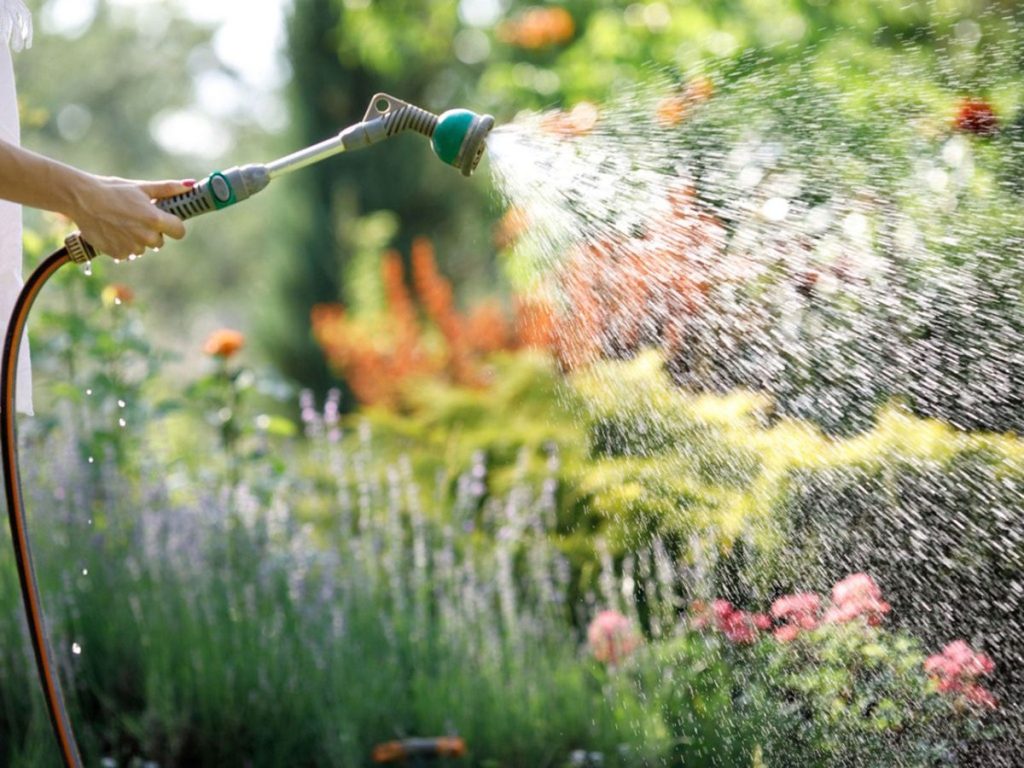
For most gardens, a nozzle with a genuine soft-shower setting and a rear thumb throttle for fine control handles containers, beds, and light lawn watering well. If you’re mainly watering hanging baskets, raised beds, or anything at ground level that requires bending over, a long watering wand with a rain-style shower head is usually more comfortable than a standard hand nozzle. For seedlings and newly planted transplants specifically, look for a true mist setting — not just the lowest setting on a general-purpose nozzle.
What Matters for Watering (and What Doesn’t)
A lot of “best hose nozzle” advice is written with cleaning power as the implicit priority — more patterns, more pressure, tougher build. Watering flips those priorities. Here’s what actually matters:
- 💧 A Genuine Soft Setting: Not a slightly weaker jet — an actual gentle, dispersed shower or mist. Many multi-pattern nozzles market a “shower” setting that’s still forceful enough to compact soil or knock petals off flowers. Check reviews specifically for how gentle the softest setting really is.
- 📏 Reach for Beds and Baskets: A standard hand nozzle puts you within a foot or two of the plant, which means bending over for ground-level beds or reaching overhead for hanging baskets. A watering wand extends that reach by a foot or more, which matters if you’re watering daily.
- ✋ Flow Control You Can Hold Comfortably: A locking flow-control lever that holds a set rate is more comfortable over a long watering session than a trigger you have to keep squeezing, especially if you’re watering more than a few containers or a full row of beds.
- 🌿 Water Efficiency: A trigger lock or thumb control that lets you cut flow instantly between plants prevents the water waste that comes from carrying an open nozzle from spot to spot — useful both for your water bill and for anyone watering during dry-season restrictions.
Our Editorial Evaluation
Our editorial evaluation draws on manufacturer specifications, verified retailer listings, and independent testing coverage that specifically evaluates watering performance — spray gentleness on delicate plants, flow consistency at low settings, and comfort during extended use. We have not run our own controlled trial of every nozzle referenced here, and we say so directly rather than implying in-house lab testing that didn’t happen.
Recommendations by Watering Need
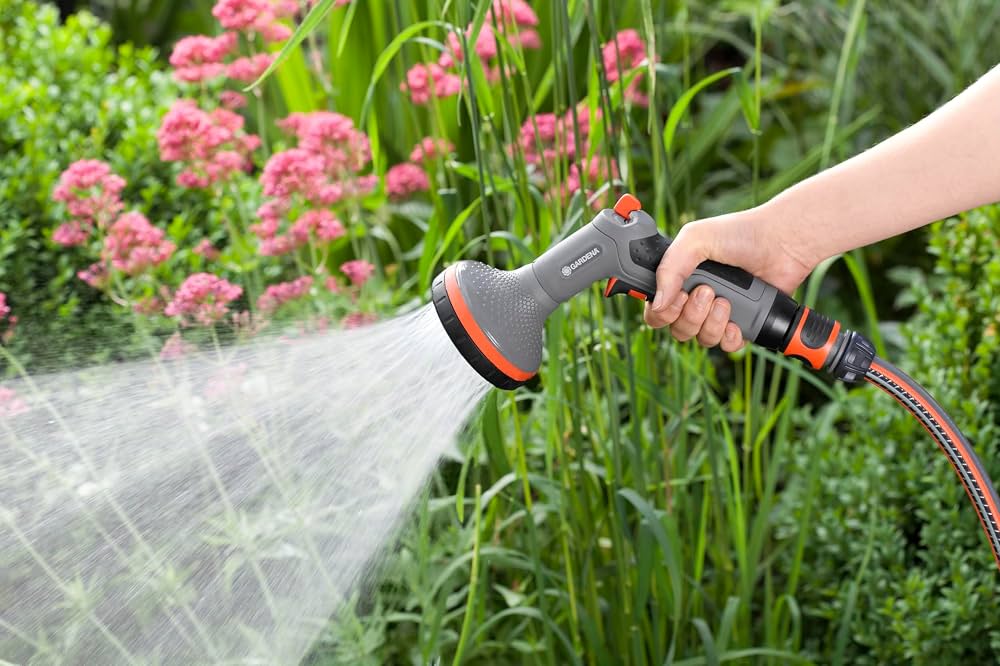
1. Best for Containers and Flower Beds: Two-Setting Soft-Shower Nozzle
A simple dial between a soft shower and a firm stream, adjusted with a rear thumb throttle, covers the two settings most container and bed gardeners actually use. This style consistently earns strong marks for letting a gardener adjust flow single-handedly, which matters when your other hand is holding back foliage or steadying a pot.
Pros & Cons
- Pros: Genuinely gentle shower setting that won’t compact soil or bruise petals; Single-handed flow adjustment; Simple design with little to go wrong.
- Cons: Limited pattern variety compared to multi-mode nozzles; Not built for cleaning tasks.
Best For & Skip If
Best For: Container gardens, flower beds, and anyone who wants one reliable setting for everyday watering.
Skip If: You want a single nozzle to also cover car washing or patio cleaning — see our general buying guide for an all-purpose pick instead.
2. Best for Raised Beds and Ground-Level Plants: Long Watering Wand
A longer wand — typically 12 to 15 inches or more — lets you water at soil level without bending over, which adds up over a season of daily watering. Most wands also include a locking flow lever, so you can set a rate once and keep both hands free to steady the wand.
Pros & Cons
- Pros: Reaches ground-level plants and the base of hanging baskets without bending or stretching; Locking flow lever reduces hand fatigue; Wide rain-style head disperses water gently over a larger area.
- Cons: Less maneuverable than a compact hand nozzle in tight spaces; Not suited to cleaning or high-pressure tasks.
Best For & Skip If
Best For: Raised beds, vegetable rows, hanging baskets, and anyone who waters daily and wants to avoid repetitive bending.
Skip If: Your garden is mostly container plants on a patio or porch, where a wand’s extra length doesn’t add much benefit. See our nozzle vs. watering wand comparison for a closer look at when each makes sense.
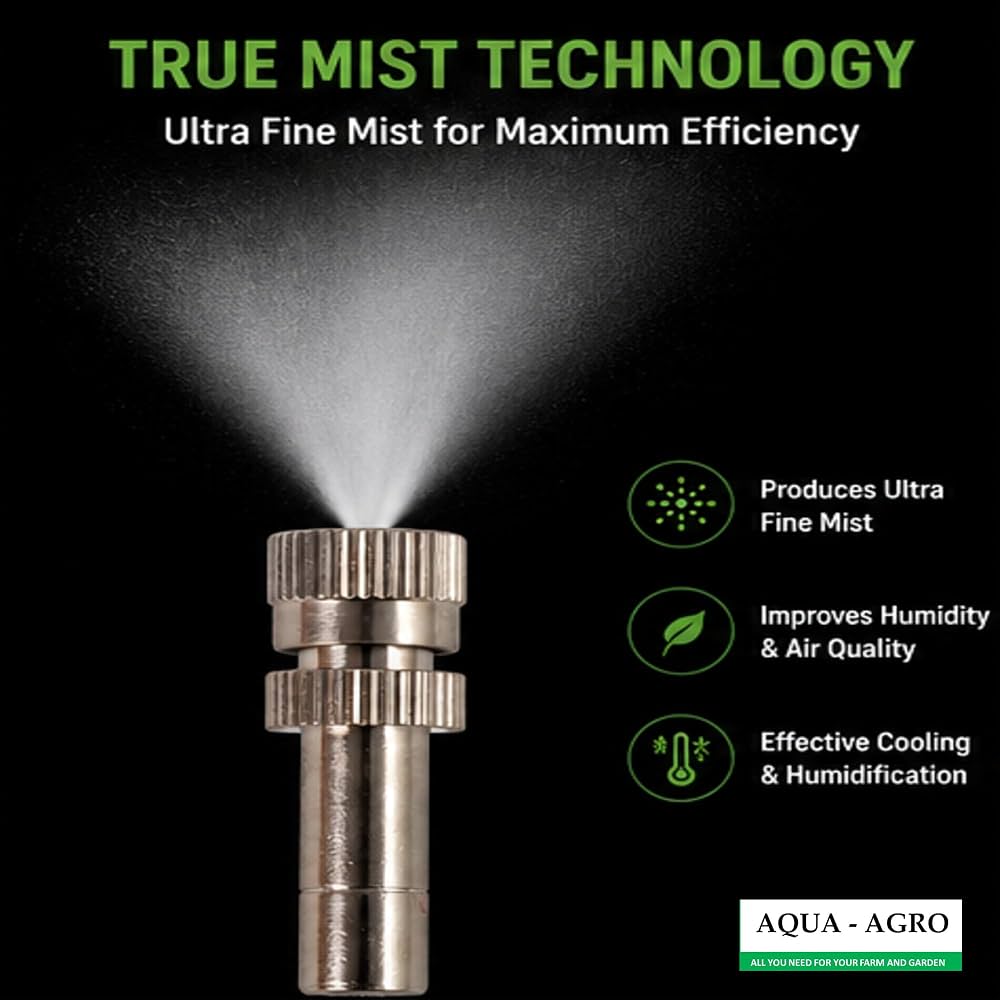
3. Best for Seedlings and Transplants: True Mist Setting Nozzle
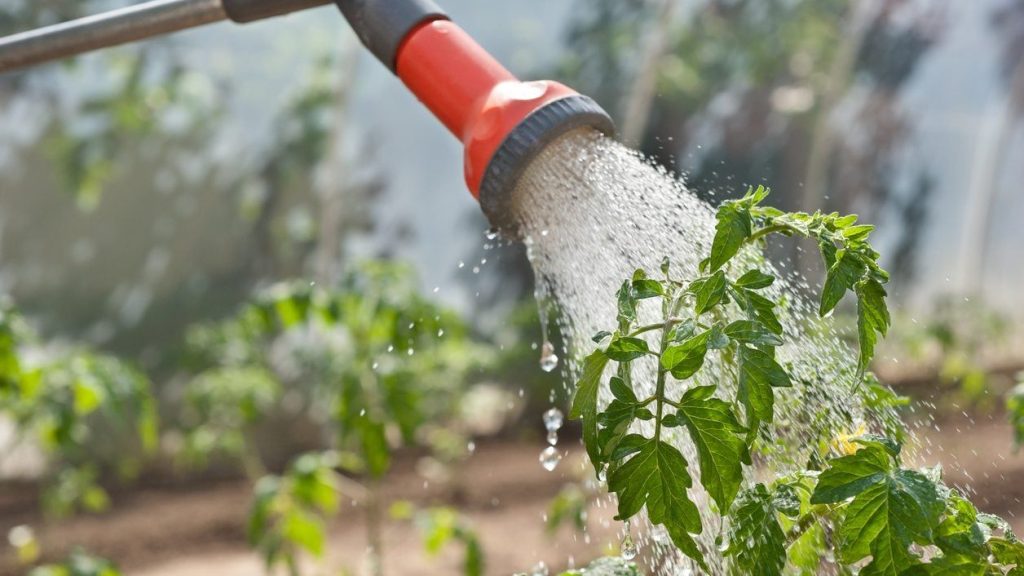
Newly planted seedlings and fresh transplants need water fine enough not to disturb loose soil or wash out shallow roots. Look specifically for a mist setting distinct from the shower setting — some nozzles only offer one “gentle” mode that isn’t actually fine enough for this job.
Pros & Cons
- Pros: Fine enough spray to water without disturbing loose soil or seeds; Reduces risk of damaging delicate young plants; Useful for indoor/greenhouse propagation as well as outdoor beds.
- Cons: Mist setting alone is too slow for watering an established garden; Best paired with a second nozzle or a multi-pattern option for everyday use.
Best For & Skip If
Best For: Seed-starting, transplanting, and any young plant that hasn’t established a strong root system yet.
Skip If: You’re watering established plants or lawn areas — a mist-only nozzle will be too slow for that job.
4. Best for Light Lawn Watering: Wide Fan-Pattern Nozzle
For spot-watering dry patches or newly seeded lawn areas — not full lawn irrigation, which is better handled by a sprinkler — a nozzle with a wide, even fan pattern covers more ground per pass than a narrow shower setting.
Pros & Cons
- Pros: Covers wider ground area per pass than a shower or mist setting; Useful for spot-treating dry patches without setting up a sprinkler.
- Cons: Not a substitute for a sprinkler on full lawns; Fan pattern can be uneven at the edges on lower-quality nozzles.
Best For & Skip If
Best For: Spot-watering dry patches, newly seeded areas, or small lawns where a sprinkler isn’t practical.
Skip If: You’re watering a full-size lawn regularly — a sprinkler or irrigation system will be far more efficient than hand-watering with any nozzle.
Buying Advice: Nozzle, Wand, or Both?
Most gardens end up better served by two tools than one perfect nozzle. A compact multi-pattern or two-setting nozzle handles containers, quick watering, and anything within easy reach. A watering wand earns its space if you have raised beds, in-ground rows, or hanging baskets that require reaching or bending repeatedly.
If you’re only buying one tool and your garden is mostly containers and a few beds within arm’s reach, a soft-shower nozzle is the more versatile pick — it also pulls double duty for light cleaning tasks a wand can’t handle. If daily bending over ground-level beds is the bigger pain point, the wand is worth the extra length even if it means keeping a separate nozzle for everything else.
Frequently Asked Questions
What’s the best hose nozzle setting for watering vegetable gardens?
A gentle shower setting aimed at the base of the plant is generally best for established vegetable plants. For seedlings and direct-sown areas, switch to a true mist setting to avoid disturbing the soil or washing out shallow roots.
Is a watering wand better than a hose nozzle for gardens?
It depends on your garden’s layout. A wand’s extra length is genuinely useful for raised beds, in-ground rows, and hanging baskets. For container gardens and anything within easy reach, a standard nozzle is usually more versatile since it can also handle light cleaning tasks. See our full comparison for more detail.
Can I use the same nozzle for watering and cleaning?
Yes, a multi-pattern nozzle with both a gentle shower and a firm jet setting can cover both jobs reasonably well. If cleaning power is your main priority, though, our general buying guide and high-pressure nozzle guide go into more depth on that side of the category.
How gentle does a nozzle need to be for seedlings?
Gentle enough that water doesn’t visibly displace soil or seeds on contact. A true mist setting, rather than the lowest setting on a general multi-pattern nozzle, is the safest choice for anything newly planted.
What nozzle is best for someone with arthritis or limited grip strength?
Look for a thumb-slide or locking-lever control instead of a squeeze trigger, since it doesn’t require continuous hand pressure. Our guide to easy-grip nozzles covers this in more detail.
Related Guides
Best Garden Hose Nozzles: Full Buying Guide •
Garden Hose Nozzle vs. Watering Wand •
Best Hose Nozzle for Arthritis
Best High-Pressure Garden Hose Nozzles •
Garden Hose Nozzles: The Complete Guide
