
Best High-Pressure Garden Hose Nozzles
Affiliate Disclosure: HomeGardenExpert.net participates in affiliate programs. If you buy through a link on this page, we may earn a commission at no extra cost to you. This does not affect our selection criteria.
Standard garden water pressure runs somewhere around 40 to 60 PSI at the spigot — plenty for watering, not always enough to strip dried mud off a driveway or clear pollen film off a car. A high-pressure nozzle doesn’t change what’s coming out of your spigot; it reshapes that same flow into a smaller, faster stream so it hits harder on contact.
This guide covers what actually makes a nozzle “high pressure” in a way that matters, which builds hold up under repeated hard use, and where a nozzle’s limits are — because no garden hose attachment will out-clean an actual pressure washer, and pretending otherwise sets buyers up to be disappointed.
What’s the Best High-Pressure Garden Hose Nozzle?
Look for a zinc-alloy or brass body with a narrow jet setting and a lock bar or thumb-lock for extended use. That combination gives you the strongest sustained stream a garden hose nozzle can realistically produce, without the leaks and cracking that plague plastic jet nozzles under repeated pressure. For jobs a hose nozzle genuinely can’t handle — caked-on grease, years of grime — a dedicated electric pressure washer is the right tool, not a stronger nozzle.
How a Hose Nozzle Actually Increases Pressure
This is the most misunderstood part of the category, so it’s worth answering directly: a garden hose nozzle cannot increase your home’s water pressure. Water pressure is set by your municipal supply or well pump, and no attachment downstream of the spigot changes that number.
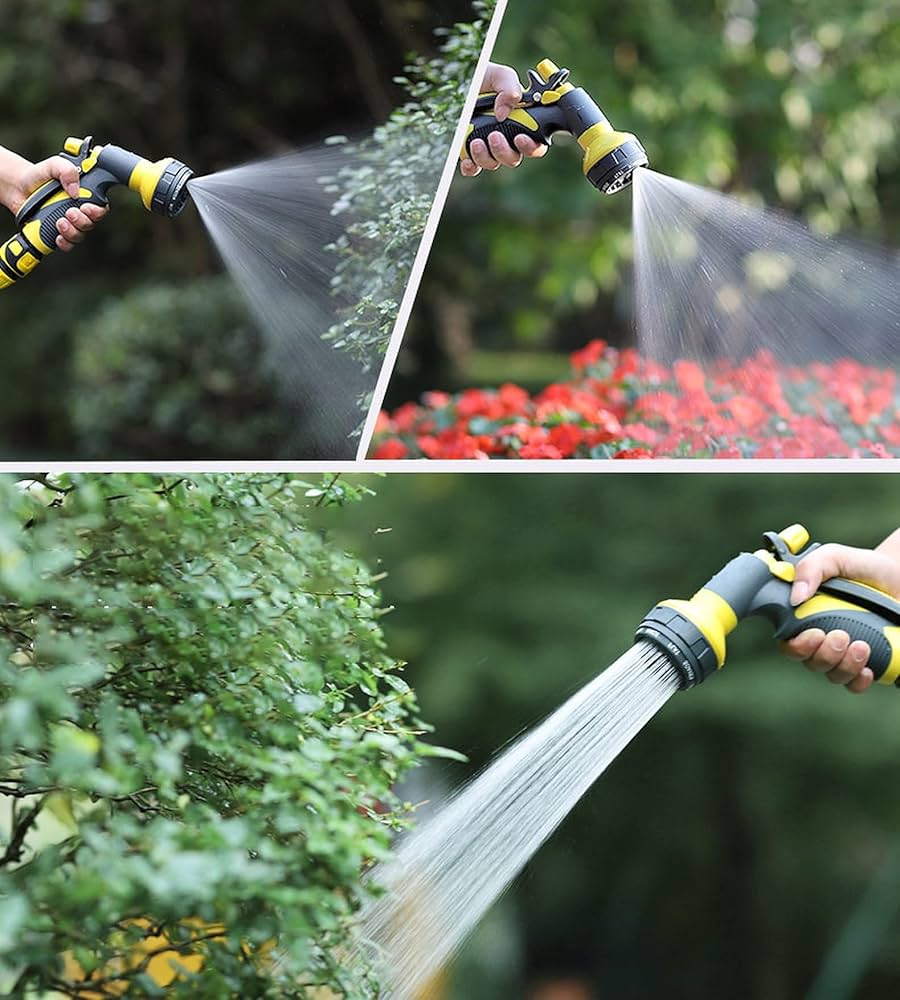
What a high-pressure nozzle does is narrow the opening the water exits through. The same volume of water (measured in gallons per minute, or GPM) is forced through a smaller opening, which increases its velocity — the same principle as putting your thumb over the end of a hose, just engineered and controllable. This is why manufacturers describe these nozzles as concentrating flow into a tighter, high-impact stream rather than boosting pressure itself. The practical result is a stream that feels and cleans like more pressure, even though the underlying PSI at your spigot hasn’t moved.
The ceiling on this effect is your home’s actual GPM and PSI. A nozzle on a low-flow line will never match one fed by strong municipal pressure, no matter how good the nozzle is.
What to Look For in a High-Pressure Nozzle
- 🏭 Zinc Alloy or Brass Body: Plastic-bodied “high pressure” nozzles are the most common failure point in this category. Under sustained jet-mode use, plastic seams flex and eventually crack or leak at the seal. A metal body handles the internal force far more consistently over time.
- 🎯 A True Narrow Jet Setting: Not every “8-pattern” nozzle actually includes a genuinely tight jet — some patterns billed as “jet” are really just a firm fan spray. If cleaning power is the goal, check that the nozzle has a dedicated pinpoint setting, not just a strong version of its widest spray.
- 🔒 Lock Bar or Thumb Lock: Holding a trigger closed for minutes at a time on a jet setting is genuinely tiring. A lock bar that holds the flow open lets you keep both hands on the task — useful for anyone with grip fatigue or arthritis, and just more comfortable for everyone else.
- 💧 Consistent Flow, Not Just Peak Force: A nozzle that surges and drops off isn’t as useful as one that holds a steady jet. Reviews that mention “consistent performance without pressure loss” over repeated use are describing exactly what separates a good high-pressure nozzle from a gimmick.
Our Editorial Evaluation
Our editorial evaluation for this guide draws on published manufacturer specifications, verified retailer listings, and a review of hands-on testing coverage from outlets that run side-by-side comparisons — things like jet distance, rinse-test effectiveness on driveways and patios, and drop-test durability. We have not conducted our own controlled lab test of every nozzle referenced here, and we’re not going to claim otherwise. Where we describe testing methodology, that reflects the approach used in the source coverage, not an in-house HomeGardenExpert lab.
High-Pressure Nozzle Comparison
| Nozzle Type | Body Material | Best For | Limitation |
|---|---|---|---|
| Zinc-Alloy Multi-Mode with Lock Bar | Zinc alloy, rubber seals | Sustained jet use, driveway/patio cleaning, users who want hands-free hold | Heavier than plastic; costs more than basic trigger nozzles |
| Solid Brass Twist Jet | Brass | Longest service life, frequent heavy-duty use | Fewer soft-spray settings for delicate plants |
| Pressure-Washer-Style Wand Attachment | Metal/composite wand, multiple jet tips | Reaching under vehicles, second-story windows, extended-reach cleaning | Still limited by home water pressure — not a substitute for a real pressure washer |
| Basic Plastic Jet Nozzle | ABS plastic | Occasional light cleaning, budget buyers | Most prone to cracking and leaking under repeated jet-mode use |
Individual Recommendations
1. Best Overall High-Pressure Nozzle: Zinc-Alloy Multi-Mode with Lock Bar
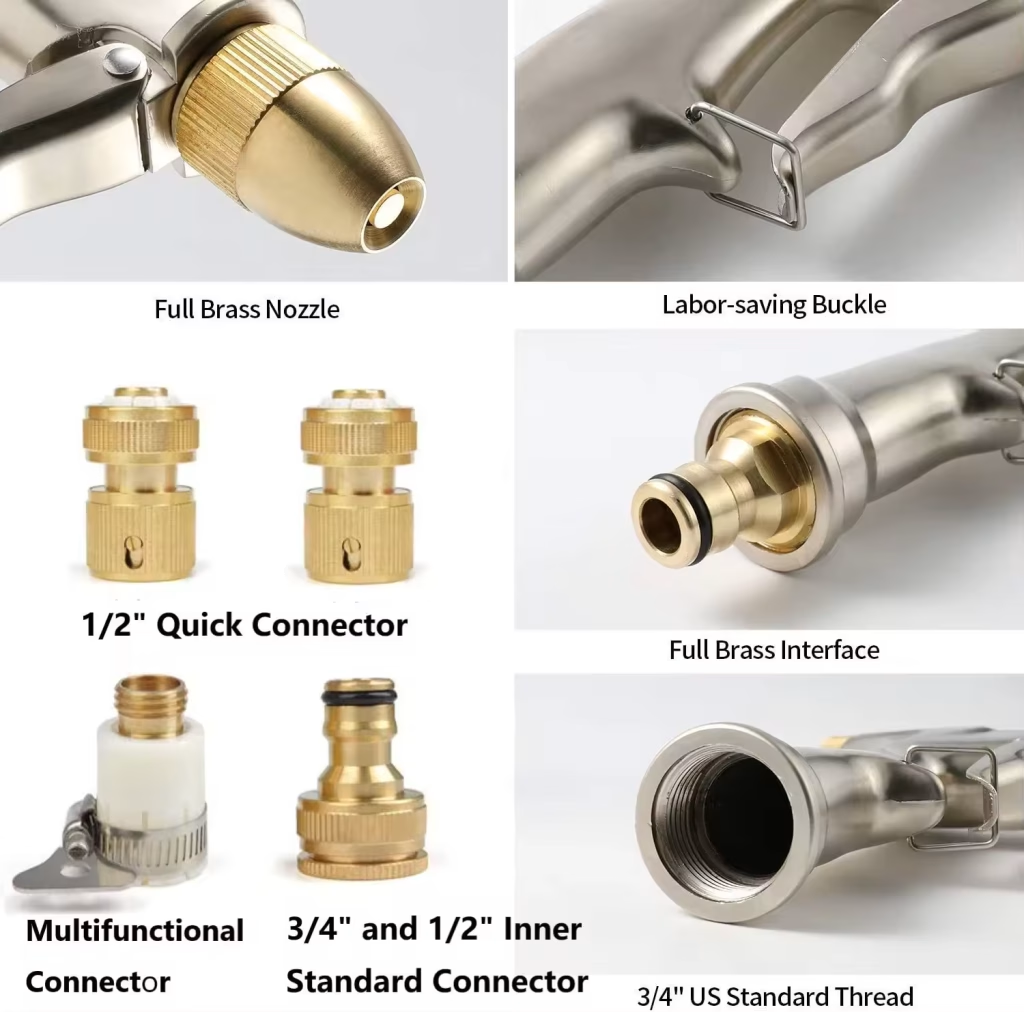
Nozzles in this category are typically built with a 100 percent metal zinc-alloy body and multiple internal rubber O-rings, which reviewers consistently point to as the reason they stay leak-proof through repeated heavy use. The labor-saving lock clip found on many of these models is frequently called out by users with arthritis or grip fatigue as a genuine quality-of-life feature — you engage the jet once and don’t have to keep squeezing.
Pros & Cons
- Pros: All-metal construction handles sustained jet use without cracking; Lock bar reduces hand fatigue on longer cleaning jobs; Multiple spray modes cover cleaning and watering in one nozzle.
- Cons: Heavier in the hand than plastic alternatives; Premium build means a higher price than basic jet nozzles.
Best For & Skip If
Best For: Homeowners who regularly clean driveways, patios, or vehicles and want a nozzle that won’t degrade under repeated full-pressure use.
Skip If: You only need occasional light cleaning — a basic jet nozzle will do the job for far less money.
2. Best for Longevity: Solid Brass Twist Jet Nozzle
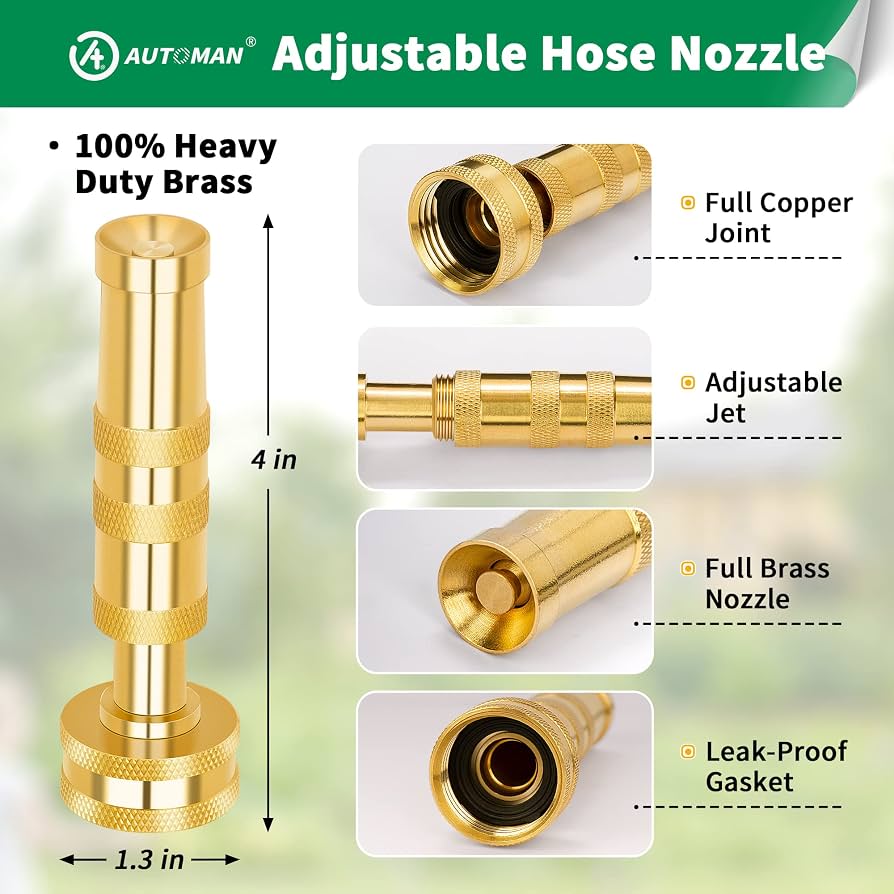
A solid brass body outlasts zinc alloy and plastic alike under years of outdoor storage and UV exposure. The twist-collar mechanism common to this style has fewer small moving parts than a trigger-and-dial design, which means less to wear out after hundreds of uses.
Pros & Cons
- Pros: Longest realistic service life of any nozzle material; Simple mechanism with minimal failure points; Strong, consistent jet stream.
- Cons: Heaviest option in this guide; Limited soft-spray range compared to multi-mode nozzles.
Best For & Skip If
Best For: Buyers who want a nozzle they won’t need to replace for many seasons and don’t need a wide range of delicate spray settings.
Skip If: You want one nozzle to also handle gentle plant watering — see our watering-nozzle guide instead.
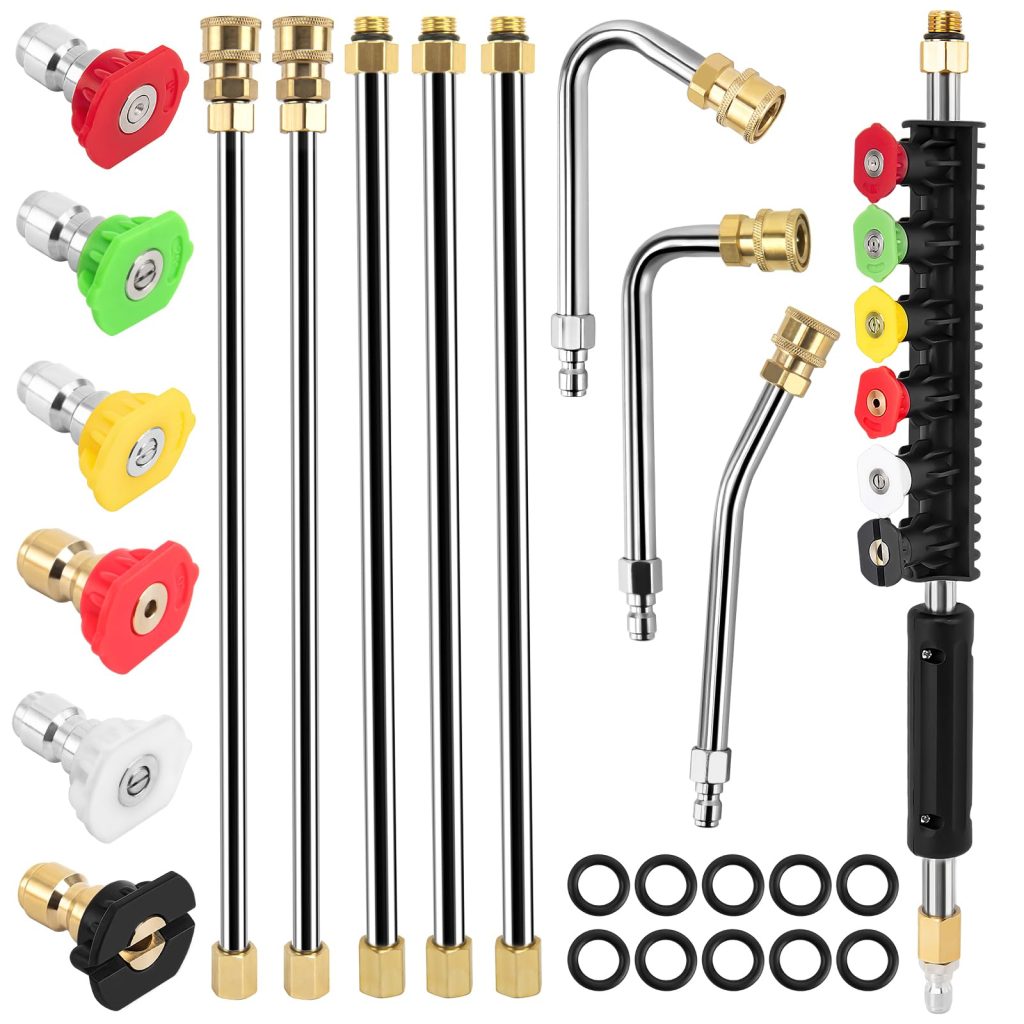
3. Best for Extended Reach: Pressure-Washer-Style Wand Attachment
For jobs like cleaning under wheel wells or reaching second-story windows, a longer wand attachment with an adjustable jet tip closes the gap between a standard nozzle and dedicated equipment. It’s still bound by your home’s water pressure, but the extended reach and angle control solve a real problem a short nozzle can’t.
Pros & Cons
- Pros: Reach that a standard hand nozzle can’t match; Multiple jet tips for different cleaning angles; No gas, electricity, or separate equipment required.
- Cons: Bulkier and less maneuverable than a hand nozzle for everyday tasks; Cleaning power is still capped by your home’s actual water pressure.
Best For & Skip If
Best For: Vehicle owners and anyone tackling elevated or hard-to-reach cleaning jobs without investing in a gas or electric pressure washer.
Skip If: You need genuine deep-clean power on caked-on grime — that’s a job for an actual pressure washer, not a hose attachment.
Buying Advice: Setting Realistic Expectations
The single biggest mistake buyers make in this category is expecting hose-nozzle “high pressure” to perform like a gas or electric pressure washer. It won’t — a residential pressure washer typically operates in a completely different force range than anything a standard garden hose can supply. A high-pressure hose nozzle is a meaningful upgrade over a basic trigger nozzle for driveway grime, dusty patio furniture, and pollen film on a car. It is not a replacement for a pressure washer on deep-set stains, years of built-up grease, or heavy moss.
If you’re shopping this category specifically to avoid buying a pressure washer, go in expecting a real improvement in cleaning speed — just not pressure-washer results. If your cleaning job genuinely needs more force than that, it’s worth comparing a nozzle upgrade against an entry-level electric pressure washer before you buy, since the price gap has narrowed in recent years.
Frequently Asked Questions
Do high-pressure hose nozzles actually increase water pressure?
No. A nozzle can’t raise the water pressure coming from your spigot. It narrows the opening water passes through, which increases the velocity of the stream and makes it feel and clean like more pressure — but the underlying PSI from your home’s supply stays the same.
What’s the strongest material for a high-pressure hose nozzle?
Solid brass and zinc-alloy bodies both outperform plastic under sustained jet-mode use. Brass tends to last the longest overall; zinc alloy is a common middle ground that balances durability with a lighter weight and lower price.
Can a garden hose nozzle replace a pressure washer?
For light-duty jobs like rinsing pollen off a car or knocking loose dirt off a patio, a good high-pressure nozzle gets close. For deep-set stains, grease, or moss, a dedicated pressure washer produces far more force than any hose attachment can generate.
Why does my high-pressure nozzle lose strength over time?
Worn internal seals, a partially clogged nozzle opening, or mineral buildup from hard water are the most common causes. This is separate from your home’s actual water pressure changing. Our troubleshooting guide walks through how to diagnose it.
Is a heavier nozzle always better for high-pressure use?
Not necessarily, but weight is often a rough proxy for metal content, and metal-bodied nozzles do hold up better under repeated jet-mode use than lightweight plastic ones. Weight alone isn’t a guarantee of quality — check the body material directly.
Related Guides
Best Garden Hose Nozzles: Full Buying Guide •
Why Is My Hose Nozzle Losing Pressure? •
Best Brass Garden Hose Nozzles
Best Nozzles for Car Washing •
Garden Hose Nozzles: The Complete Guide
