

Fish Emulsion for Tomatoes: Benefits and How to Use It Correctly
Fertilizing tomatoes with fish emulsion provides a fast-acting, organic nitrogen boost essential for vigorous early vine growth. Mix one to two tablespoons of liquid fish emulsion per gallon of water, and apply it every two weeks as a soil drench or foliar spray to rapidly correct nutrient deficiencies and encourage healthy tomato plants.
If you are looking to grow massive, sprawling tomato vines that yield buckets of juicy fruit, understanding how to feed your plants at the right time is half the battle. Walk down the fertilizer aisle of any garden center, and you will see dozens of bottles promising miracle growth. But for organic gardeners, one traditional, time-tested elixir stands above the rest: fish emulsion.
Using fish emulsion and tomatoes is a combination as old as agriculture itself. Native American populations famously taught early settlers to bury a fish alongside their corn and vegetable plantings to ensure a bountiful harvest. Today, you do not need to bury raw fish in your raised beds. Liquid fish emulsion offers all the historical benefits of this natural fertilizer in a convenient, concentrated bottle.
However, because tomatoes are incredibly heavy feeders with specific nutritional demands that shift as they mature, you cannot simply pour nitrogen-heavy fertilizers over them all summer long. To get the most out of your garden, you need to understand exactly what this liquid gold is doing beneath the soil, when your plants need it the most, and when you should put the bottle away.
What Fish Emulsion is and its key nutrients
To truly understand how to use fish fertilizer for tomatoes, it helps to know what is inside the bottle. Fish emulsion is a thick, highly concentrated organic liquid fertilizer created from the by-products of the fishing industry. Instead of letting fish scraps—such as heads, bones, and trimmings—go to waste, manufacturers cook them down, press out the oils, and filter the remaining slurry into a potent, nutrient-dense liquid.
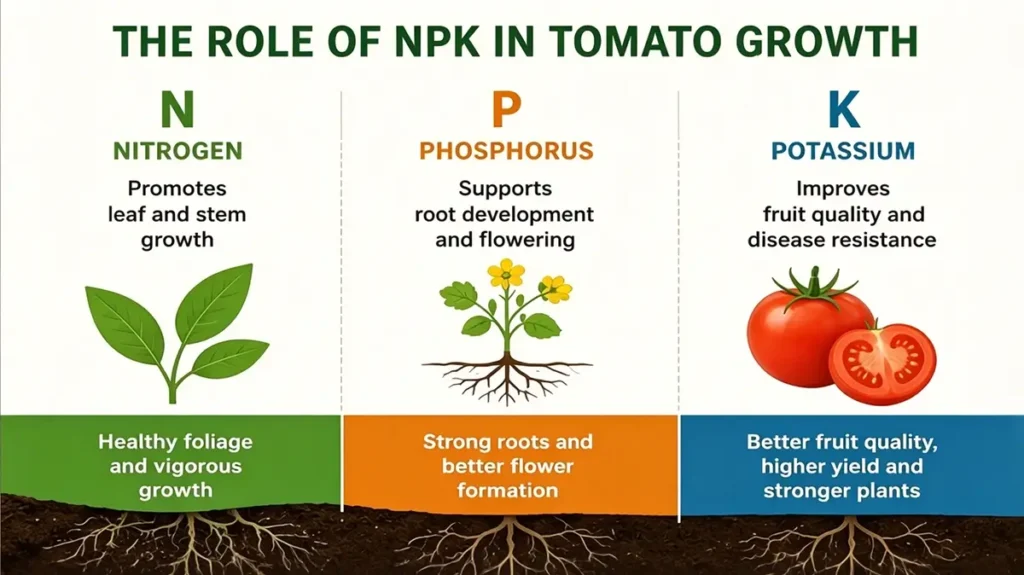
When you read the label on any fertilizer, the most important piece of information is the NPK ratio. This three-number sequence represents the percentage by weight of Nitrogen (N), Phosphorus (P), and Potassium (K) inside the product.
A standard fish emulsion fertilizer for tomatoes typically boasts an NPK ratio of 5-1-1.
- Nitrogen (5): This is the star of the show. Nitrogen is the fundamental building block for leafy green growth. It is what allows your young tomato seedling to rapidly develop a thick main stem and a massive canopy of leaves.
- Phosphorus (1): Present in smaller amounts, phosphorus is responsible for early root development and the eventual production of flowers.
- Potassium (1): This macronutrient helps the plant regulate its water uptake, fight off diseases, and eventually move sugars into the developing fruit.
Beyond the primary NPK macronutrients, fish emulsion is teeming with vital micronutrients that synthetic fertilizers often lack. Because it is made from whole organic matter, it contains trace amounts of calcium, magnesium, sulfur, and a complex profile of amino acids. These trace elements act like a daily multivitamin for your soil, keeping your tomato plants resilient against environmental stress, heatwaves, and minor pest attacks.
Specific benefits for tomato plants
Why should you choose fish emulsion for tomato plants over a cheap bottle of synthetic blue liquid? The benefits extend far beyond a simple nitrogen boost; it fundamentally changes the health of your garden ecosystem.
Instant Bio-Availability (The Fast-Acting Organic)
When comparing organic vs. synthetic options, one of the main criticisms of organic fertilizers is that they take too long to work. Solid organic granular fertilizers (like feather meal or blood meal) must be broken down by soil microbes over several weeks before the plant can actually absorb the nutrients. Fish emulsion bridges this gap. Because it is already broken down into a liquid suspension, the nutrients are immediately bio-available. If you have a stunted, yellowing tomato plant that is starving for nitrogen, a soil drench of fish emulsion will begin to green it up in a matter of days, providing the speed of a synthetic fertilizer without the chemical salt buildup.
Exceptional Foliar Feeding Capabilities
Tomato plants do not just drink through their roots; they can also absorb liquid nutrients directly through the microscopic pores on their leaves, known as stomata. Fish fertilizer for tomato plants is highly soluble, making it the perfect candidate for foliar feeding. By spraying a highly diluted mixture directly onto the leaves, you can bypass the root system entirely. This is an incredible “rescue mission” tactic if your soil is too cold, too wet, or too compacted for the roots to function properly.
Feeds the Soil Food Web
Synthetic fertilizers feed the plant directly, but they do absolutely nothing to improve your soil. Over time, heavy synthetic use can actually degrade the soil structure and kill off beneficial microbes. Fish emulsion, on the other hand, is a feast for the soil food web. When you pour it into your garden beds, you are feeding the earthworms, the beneficial bacteria, and the mycorrhizal fungi. As this microbial population explodes, they actively mine the soil for other locked-up minerals, processing them into a format your tomatoes can easily consume.
Gentle on Young Seedlings
Chemical fertilizers carry a high risk of “fertilizer burn.” If you mix them slightly too strong, the heavy salts will draw moisture out of the plant’s delicate roots, crisping the edges of the leaves and potentially killing young transplants. Fish emulsion is incredibly gentle. Even if you accidentally mix it a little too strong, it is highly unlikely to burn a young tomato seedling, making it the safest choice for early-season feeding.
How to use it — dosage and timing
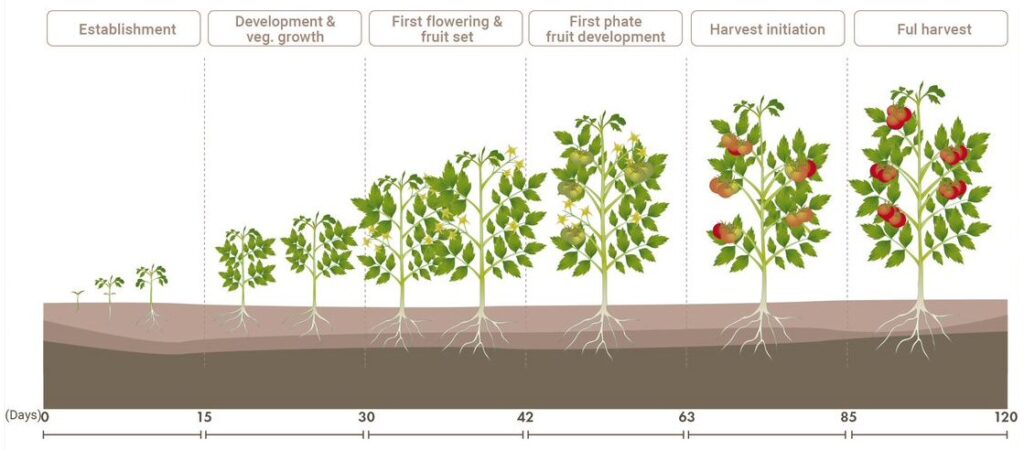
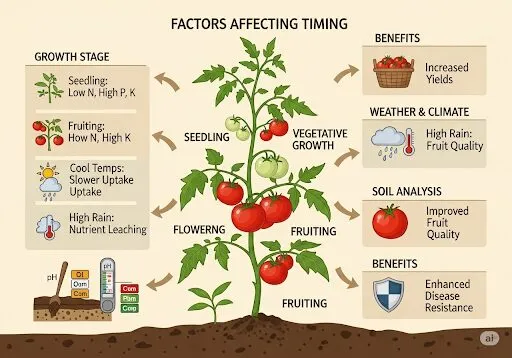
The secret to fertilizing tomatoes with fish emulsion is timing. Because it is so heavily skewed toward nitrogen (the 5-1-1 ratio), it is not a “cradle-to-grave” fertilizer. You must align your applications with the vegetative growth phase of the plant.
Stage 1: Seedlings and Indoor Growth
If you start your own tomato seeds indoors under grow lights, fish emulsion is the perfect first meal. Wait until the seedlings have developed their first set of “true leaves” (the jagged leaves that appear after the initial smooth seed leaves). At this stage, mix a very weak solution: just 1/2 tablespoon of fish emulsion per gallon of water. Water the seedlings from the bottom (pouring the liquid into the tray and letting the soil wick it up) once every two weeks.
Stage 2: Transplanting and Early Vegetative Growth
When you finally move your tomatoes into the outdoor garden, they need to build a massive “solar panel” array of leaves. This dense canopy is what will eventually capture the sunlight required to ripen heavy fruit. During this early summer period, your plants are starving for nitrogen.
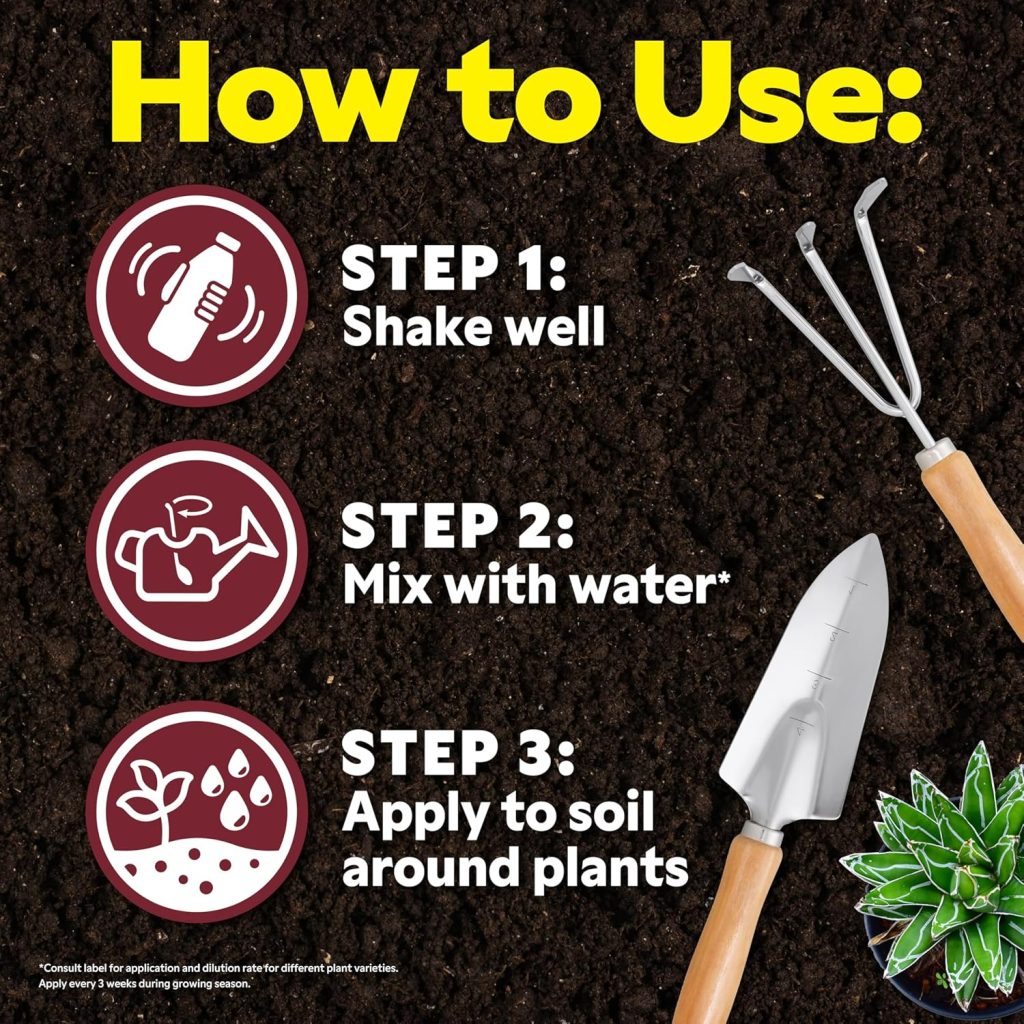
Mix 1 to 2 tablespoons of fish emulsion per gallon of water. Use a watering can to apply this mixture directly to the soil at the base of the plant (a soil drench) every 10 to 14 days. If you are growing tomatoes in 5-gallon buckets or containers, you may need to apply it slightly more often (every 7 to 10 days), as frequent watering washes soluble nutrients out of the container’s drainage holes.
Stage 3: Foliar Feeding as a Supplement
If your plants look a bit pale after a heavy rainstorm has washed nutrients out of the topsoil, use a foliar spray. Mix 1 tablespoon of fish emulsion per gallon of water and pour it into a clean pump sprayer. Spray the plants thoroughly, ensuring you coat the undersides of the leaves where the stomata are most heavily concentrated. Always foliar feed early in the morning before the sun gets hot. If you spray in the middle of the afternoon, the intense sun will magnify through the water droplets and scorch the foliage.
Stage 4: Tapering Off (The Crucial Pivot)
This is where many beginners make a critical error. Once your tomato plant begins to produce clusters of yellow flowers, its dietary needs shift dramatically. It no longer needs massive amounts of nitrogen to grow taller; it needs phosphorus and potassium to set blossoms and grow fruit.
When you see the first flowers open, you must drastically reduce or entirely stop applying fish emulsion. If you continue pumping the plant full of high nitrogen, it will suffer from “blossom drop.” The vine will prioritize pushing out more green leaves instead of ripening fruit, leaving you with a ten-foot-tall, lush green jungle that yields zero tomatoes. At this flowering stage, pivot to a fertilizer higher in phosphorus, like bone meal or a dedicated organic tomato bloom formula.
Risks of overuse or incorrect use
While fish emulsion is incredibly safe compared to synthetic chemicals, it is not without its drawbacks and risks. Being aware of these challenges will save you from a mid-season garden disaster.
The Odor and Animal Attraction
There is no getting around it: traditional fish emulsion smells terrible. It smells exactly like a bucket of rotting fish left in the summer sun. While the odor general
ly dissipates for humans within 24 to 48 hours after applying it to your garden, local wildlife has a much keener sense of smell. Raccoons, stray cats, dogs, and skunks are highly attracted to the scent of fish proteins. If you apply a heavy soil drench just before nightfall, you may wake up to find that raccoons have completely dug up your tomato transplants looking for a buried fish.
Pro tip: To mitigate this, always apply fish emulsion early in the morning so the scent has time to bake off in the sun. You can also purchase “deodorized” fish emulsion, which adds peppermint or citrus oils to mask the smell, though it is usually slightly more expensive.
Nitrogen Toxicity and Blossom End Rot
As mentioned earlier, pushing too much nitrogen late in the season inhibits fruiting. However, overusing fish emulsion during rapid growth can also indirectly trigger a devastating physiological condition.
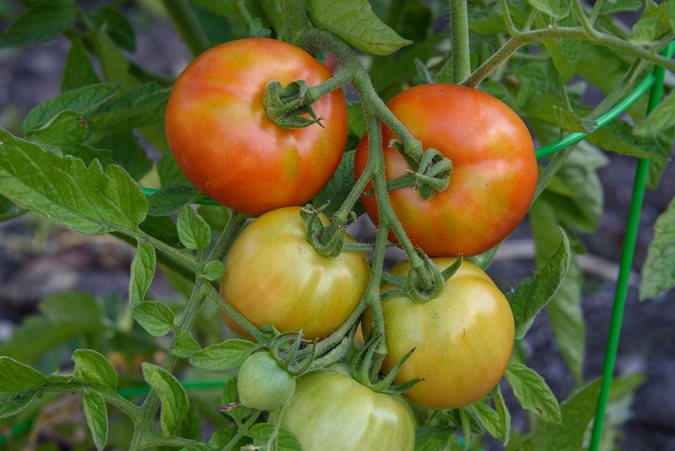
Tomatoes require a massive, steady supply of calcium to build the cell walls of their fruit. While fish emulsion contains trace amounts of calcium, it is not enough to sustain heavy fruiting. If you pump your plant full of nitrogen, causing it to grow at an explosive, unnatural rate, the plant’s root system may not be able to pull enough calcium out of the soil fast enough to keep up with the new growth.
When the plant attempts to form a tomato without enough calcium, the bottom of the fruit collapses, turning into a black, leathery, sunken patch. This is called calcium deficiency, or blossom end rot. To prevent this, ensure your soil is well-amended with a calcium source (like crushed eggshells or lime) before planting, and do not rely on fish emulsion as your sole fertilizer. How to identify and prevent blossom end rot.
Clogging Garden Sprayers
Because fish emulsion is an organic suspension rather than a pure chemical solution, it contains microscopic solids, fats, and oils. If you use a fine-mist foliar sprayer, these solids can easily gunk up the nozzle and the internal intake filter. Always shake the bottle vigorously before mixing to distribute the solids, and rigorously flush your pump sprayer with clean, warm water immediately after use. If you allow the mixture to dry inside the sprayer hose, it will cement into a clog that is nearly impossible to remove.
Fish Emulsion vs. other organic inputs
To build a truly robust organic tomato feeding program, it is helpful to see how fish emulsion compares to other popular organic amendments on the market. Relying on just one product rarely provides a perfectly balanced diet.
Organic Tomato Fertilizer Comparison
To help you structure your feeding schedule, review this breakdown of how different organic inputs affect your tomato plants:
| Organic Fertilizer | Average NPK Ratio | Primary Benefit for Tomatoes | Best Time to Apply | Nutrient Release Speed |
|---|---|---|---|---|
| Fish Emulsion | 5-1-1 | Rapid leafy vine growth, instant nitrogen rescue. | Seedling stage to early flowering. | Fast (Days to 1 week) |
| Bone Meal | 3-15-0 | Massive root expansion and heavy blossom production. | Mixed into the planting hole at transplanting. | Slow (Months) |
| Kelp Meal | 1-0-2 | Heat tolerance, stress resistance, and trace minerals. | Throughout the entire growing season. | Moderate (Weeks) |
| Worm Castings | 1-0-0 | Soil structure improvement and beneficial microbe inoculation. | Top-dressed throughout the season. | Slow (Months) |
| Tomato-Tone | 3-4-6 | Balanced fruiting nutrition with added 8% calcium. | Mid-summer to late harvest. | Moderate (Weeks) |
As the table illustrates, fertilizing tomatoes with fish emulsion is the ultimate early-season strategy. It provides the fast-acting nitrogen horsepower required to build the frame of the plant, while slow-release amendments like bone meal and balanced granular feeds take over the heavy lifting during the fruit-setting phase. For the ultimate organic liquid feed, many veteran gardeners actually mix fish emulsion and liquid kelp extract together in the same watering can, providing a potent blend of nitrogen for growth and potassium for heat tolerance.
FAQ
How much Fish Emulsion should I use per tomato plant?
- For an established tomato plant in the garden, mix 1 to 2 tablespoons of liquid fish emulsion per gallon of water. Use a watering can to apply roughly half a gallon of this diluted mixture directly to the root zone of each plant. For young seedlings, cut the dosage in half to avoid overwhelming their delicate root systems.
Can I use too much Fish Emulsion?
- Yes, using too much fish emulsion can severely harm your harvest. Because it is highly concentrated in nitrogen, applying it too often or mixing it too strongly will cause the tomato plant to prioritize massive leafy growth at the expense of producing flowers and fruit, leading to a sprawling green vine with no tomatoes.
How long does it take for Fish Emulsion to work?
- Because the nutrients in fish emulsion are already in a liquid, broken-down state, they are highly bio-available to the plant. When applied as a foliar spray or a root drench, you will typically see visible results—such as deeper green leaves and a burst of new growth—within 2 to 5 days.
Can Fish Emulsion be combined with other organic fertilizers?
- Absolutely. Fish emulsion is frequently combined with liquid kelp (seaweed extract) to create a highly balanced, nutrient-dense liquid feed that offers both high nitrogen and high potassium. It also acts as an excellent microbial activator when poured over slow-release granular fertilizers like bone meal or compost.
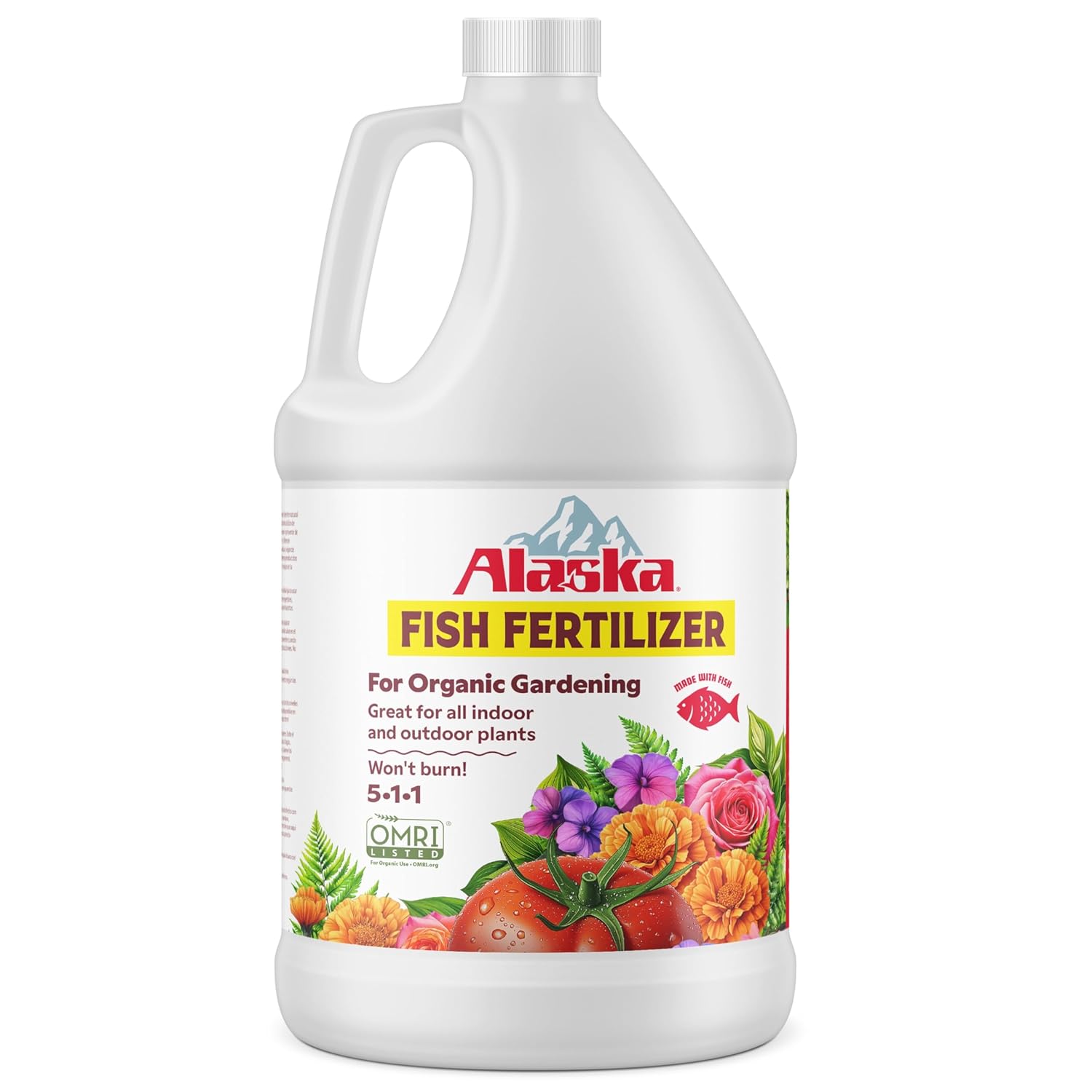
Alaska Liquid Fish Emulsion Fertilizer (5-1-1)
Fast Acting • Organic Nitrogen • Deodorized Formula
The perfect early-season boost for your tomato plants. This deodorized fish emulsion delivers rapid, bio-available nitrogen to promote thick stems and lush foliage without burning delicate young roots.
✓ Excellent for Foliar Feeding
