

Potassium for Tomatoes: Its Role and How to Supplement It
A high potassium fertilizer for tomatoes is essential for moving water and sugars into the developing fruit. Apply a potassium-rich fertilizer, like kelp meal or sulfate of potash, when the first blossoms appear. This boosts fruit size, prevents uneven ripening, and improves the plant’s overall heat and disease resistance.
When preparing for the summer gardening season, most home vegetable growers obsess over nitrogen to grow tall vines and phosphorus to push out early blossoms. However, if you want a harvest of heavy, sweet, perfectly ripened slicing tomatoes, you need to understand the magic of the third letter in the NPK ratio.
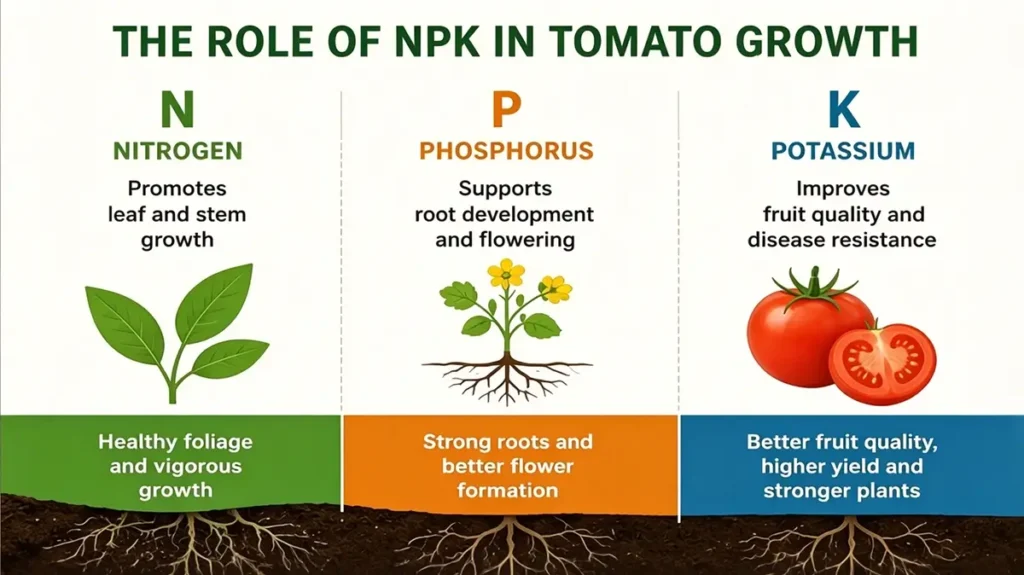
Potassium—represented by the letter “K” on fertilizer labels—is arguably the most critical nutrient during the second half of a tomato plant’s life. While nitrogen acts as the physical building block for leaves and stems, potassium acts as the master regulator. It manages the plant’s internal water pressure, orchestrates the movement of carbohydrates, and fortifies the vine’s immune system against summer stress.
If you have ever grown a massive, lush green tomato plant that ultimately yielded small, watery, or strangely colored fruits with hard yellow shoulders, your garden was likely starving for potassium. In this comprehensive guide, we will explore exactly how a potassium fertilizer for tomatoes functions, how to spot the visual symptoms of nutrient imbalances, and the safest ways to supplement your soil for a bumper crop.
Why tomato plants need Potassium (K)
To truly appreciate the value of a potassium tomato fertilizer, it helps to look inside the biology of the vine. Unlike calcium or nitrogen, potassium does not physically bond to the plant’s cell walls. Instead, it remains dissolved in the plant’s fluids, constantly moving and acting as a biological catalyst for dozens of vital functions.
Water Regulation and Heat Tolerance
Tomato plants face extreme environmental stress during mid-summer heatwaves. Potassium controls the opening and closing of stomata—the microscopic pores on the undersides of the leaves. When temperatures soar, adequate potassium ensures these pores close rapidly to prevent severe moisture loss and wilting. Without sufficient potassium for tomato plants, the stomata respond sluggishly, causing the plant to transpire water faster than its roots can replace it.
Fruit Sizing and Sugar Transport
Have you ever wondered how a tomato goes from a tiny green bead to a heavy, sweet, red fruit? Photosynthesis creates sugars in the leaves, but those sugars must be transported down the stems and packed into the developing fruit. Potassium acts as the engine for this transport system. A high potassium fertilizer for tomatoes ensures that the starches and sugars synthesized in the foliage are actively pumped into the tomatoes, dramatically increasing their size, weight, and flavor profile.
Enzyme Activation and Disease Resistance
Potassium is responsible for activating over 60 different growth enzymes within the tomato plant. These enzymes are responsible for producing the proteins and starches that build thick, sturdy main stalks. Furthermore, a plant with optimal potassium levels has thicker cellular fluids, making it inherently more difficult for fungal spores (like early blight or powdery mildew) to penetrate the leaf tissue, and making the sap less appealing to piercing insects like aphids.
Signs of deficiency and excess
Because potassium remains mobile within the plant’s fluids, a tomato vine can actively move this nutrient around to where it is needed most. If the soil runs out of potassium, the plant will strip it from the oldest, lowest leaves and send it up to the newest growth and developing fruit. This mobility creates very specific, easily identifiable visual symptoms.
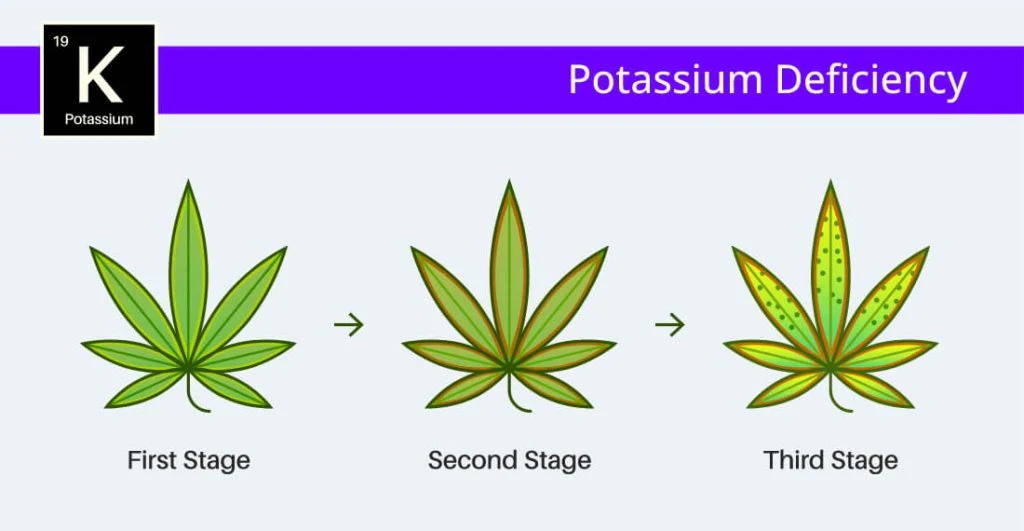
If your garden is lacking this vital nutrient, the plant will issue several clear distress signals:
- Marginal Chlorosis (Leaf Edge Burn): The most common early warning sign is the yellowing of the outer edges of the older, lower leaves. As the deficiency progresses, these yellow margins will turn brown, dry, and crispy, looking as though they were burned by a blowtorch, while the center veins of the leaf remain green.
- Yellow Shoulders on Fruit: When you harvest a tomato, the bottom might be perfectly red and ripe, but the top portion near the stem (the “shoulders”) remains hard, woody, and stubbornly yellow or green. This uneven ripening is a hallmark of potassium starvation.
- Hollow or “Puffy” Tomatoes: Cut the tomato open. If there is an excessive amount of empty air space between the outer wall and the seed gel cavities, the plant likely lacked the potassium required to transport enough water and carbohydrates to fully plump the fruit.
- Weak Stems: Plants will appear “floppy” and may have trouble holding themselves upright on their stakes or cages due to poor cellular turgor pressure.
The Dangers of Potassium Excess
While it is tempting to dump massive amounts of potash for tomato plants into your garden to guarantee huge fruits, over-fertilization is incredibly dangerous.
An excessive amount of potassium in the soil creates a nutrient lockout. Potassium molecules physically compete with calcium and magnesium molecules for entry into the plant’s root system. If you apply too much potassium, the plant will absorb it at the expense of calcium.
A sudden drop in calcium uptake during fruit development is the direct cause of blossom end rot—a heartbreaking physiological disorder where the bottom of the tomato collapses into a black, sunken, leathery patch. If you see blossom end rot occurring shortly after feeding your plants, you have likely skewed your soil’s balance. How to identify and fix calcium deficiency and blossom end rot.
Natural vs. commercial sources
When deciding how to deliver this nutrient to your garden, you will have to choose between organic vs. synthetic options. Both can successfully raise your potassium levels, but they interact with your soil ecosystem in vastly different ways.
Natural and Organic Sources
Organic potassium sources rely on natural minerals and plant byproducts. They are generally slower to break down, meaning they provide a steady, gentle feed that is highly unlikely to cause root burn or severe nutrient lockouts.
- Kelp Meal and Liquid Seaweed: This is arguably the best potassium rich fertilizer for tomatoes. Harvested from ocean kelp, it not only provides a gentle dose of potassium but also delivers over 60 trace micronutrients and natural growth hormones. Liquid seaweed is fantastic for an instant foliar feed, while granular kelp meal breaks down slowly over the summer.
- Langbeinite (Sulfate of Potash-Magnesia): A naturally mined mineral that provides a highly water-soluble form of potassium, along with magnesium and sulfur. It has a neutral pH, making it perfect for tomato beds where you do not want to alter soil acidity.
- Wood Ashes: Hardwood ashes are packed with potassium, but they must be used with extreme caution. Wood ash is highly alkaline and will rapidly raise the pH of your soil. Tomatoes prefer slightly acidic soil (6.0 to 6.8 pH). Only use wood ash if a soil test confirms your garden is overly acidic.
- Greensand: Mined from ancient ocean floors, greensand is rich in potassium and iron. However, it breaks down incredibly slowly. It is best used as a long-term soil conditioner applied in the autumn or early spring, rather than a quick fix for a mid-summer deficiency.
Commercial and Synthetic Sources
Synthetic fertilizers deliver exact, guaranteed NPK ratios via water-soluble chemical salts. They are incredibly fast-acting, making them useful for immediate emergency rescues, but they do nothing to improve long-term soil health.

- Sulfate of Potash (SOP – 0-0-50): This is a highly concentrated, fast-acting commercial potash fertilizer for tomatoes. It delivers a massive dose of potassium without adding any nitrogen or phosphorus. It is generally safe for tomatoes because it has a low salt index.
- Muriate of Potash (MOP – 0-0-60): Avoid this product for tomatoes. Also known as potassium chloride, this cheap synthetic fertilizer contains high levels of chlorine. Tomatoes are highly sensitive to chlorine toxicity, and using MOP can severely stunt your plants and burn their root systems.
- Soluble “Bloom Boosters”: Many commercial liquid fertilizers are sold as “tomato food” or “bloom boosters” with NPK ratios like 15-30-15 or 5-10-10. These provide a convenient, pre-mixed dose of phosphorus and potassium, but you must be careful not to over-apply and cause a chemical salt buildup in the soil.
Recommended dosage by growth stage
To maximize your harvest, you cannot simply apply the same fertilizer every week from May to September. A tomato plant’s dietary needs shift dramatically as it transitions from growing vines to ripening fruit. Early in the season, a balanced NPK ratio (like 10-10-10) builds the leafy frame of the plant. However, once flowers appear, you must pivot to a high potassium and phosphorus focus.
Use the structured feeding schedule below to ensure you are delivering the right amount of potassium exactly when the plant needs it.
| Growth Stage | Optimal NPK Focus | Recommended Potassium Source | Dosage & Application Frequency |
|---|---|---|---|
| Seedling / Transplanting | Balanced (e.g., 5-5-5) | Granular Kelp Meal or balanced compost | 1-2 tablespoons mixed directly into the planting hole to support early root establishment. |
| Early Vegetative (Weeks 1-4) | Higher Nitrogen (e.g., 10-5-5) | Liquid Seaweed Extract | 1 oz per gallon of water applied as a soil drench every 14 days to mitigate heat stress. |
| Flowering / First Fruit Set | High Phosphorus & Potassium (e.g., 5-10-10) | Langbeinite or Tomato-specific Granular | 2-3 tablespoons top-dressed around the drip line of the plant. Apply once as blossoms appear. |
| Heavy Fruiting / Ripening | High Potassium (e.g., 3-4-6 or 0-0-50) | Sulfate of Potash (SOP) or Liquid Kelp | 1 tablespoon SOP per gallon of water applied every 2 weeks. Do not exceed to avoid locking out calcium. |
Horticultural Tip: Always water your garden beds deeply before applying a concentrated liquid potassium fertilizer. Applying strong liquid feeds to bone-dry soil causes the plant to uptake the salts too rapidly, which can scorch the edges of the leaves and damage the root hairs.
FAQ
What’s the ideal amount of Potassium (K) for tomato plants?
- During the heavy fruiting stage, the ideal NPK ratio for a tomato fertilizer shifts to feature potassium as the highest or second-highest number, such as a 5-10-10 or 3-4-6 blend. When using a dedicated organic potassium supplement like kelp meal, applying 1 to 2 tablespoons around the base of the plant every three to four weeks provides a safe, steady supply.
What happens if tomatoes get too much Potassium (K)?
- Applying an excess of potassium creates a severe nutrient lockout in the soil, preventing the plant’s roots from absorbing calcium and magnesium. This sudden lack of calcium during fruit development directly causes blossom end rot, ruining the bottom of your tomatoes. Over-application of synthetic potassium salts can also chemically burn the root system and dehydrate the plant.
How can I tell if my tomato plants need more Potassium (K)?
- The most obvious early sign of potassium deficiency is marginal chlorosis, where the outer edges of the older, lower leaves turn yellow and eventually crispy and brown. You may also notice that your developing tomatoes suffer from “yellow shoulders,” where the top of the fruit near the stem remains hard and unripe even when the rest of the tomato has turned red.
Does Potassium (K) affect fruit taste or yield?
- Yes, potassium is the primary nutrient responsible for transporting starches and sugars synthesized in the leaves down into the developing fruit. A healthy supply of potassium dramatically increases the overall size, weight, and sweetness of the tomatoes, while a deficiency leads to hollow, watery, and bland-tasting yields.

Down to Earth Organic Kelp Meal (1-0-2)
Natural Potassium Source • Trace Minerals • Organic Certified
The premier organic potassium and trace mineral supplement for heavy-fruiting tomatoes. Kelp meal slowly releases vital nutrients to boost fruit sizing, improve sugar transport, and protect against summer heat stress.
✓ Promotes Sweet, Large Fruit
