

Best Jet Hose Nozzles
Affiliate Disclosure: HomeGardenExpert.net participates in affiliate programs. If you buy through a link on this page, we may earn a commission at no extra cost to you. This does not affect our selection criteria.
A jet nozzle does one thing: turn your hose’s water flow into a narrow, focused stream with enough force to knock dirt loose on contact. It’s a simpler tool than a multi-pattern nozzle, and for jobs like clearing mud off tools or blasting debris out of gutters, that simplicity is the point — there’s no dial to fiddle with, just a strong, direct stream.
Best Jet Hose Nozzle
A single-pattern or jet-focused nozzle with a brass or zinc-alloy body outperforms a multi-pattern nozzle’s jet setting in both force and durability, since the entire design is built around that one function. If you want jet power alongside other spray options in one tool, a metal multi-pattern nozzle with a dedicated jet mode is the better compromise — see our full high-pressure nozzle guide for that category.
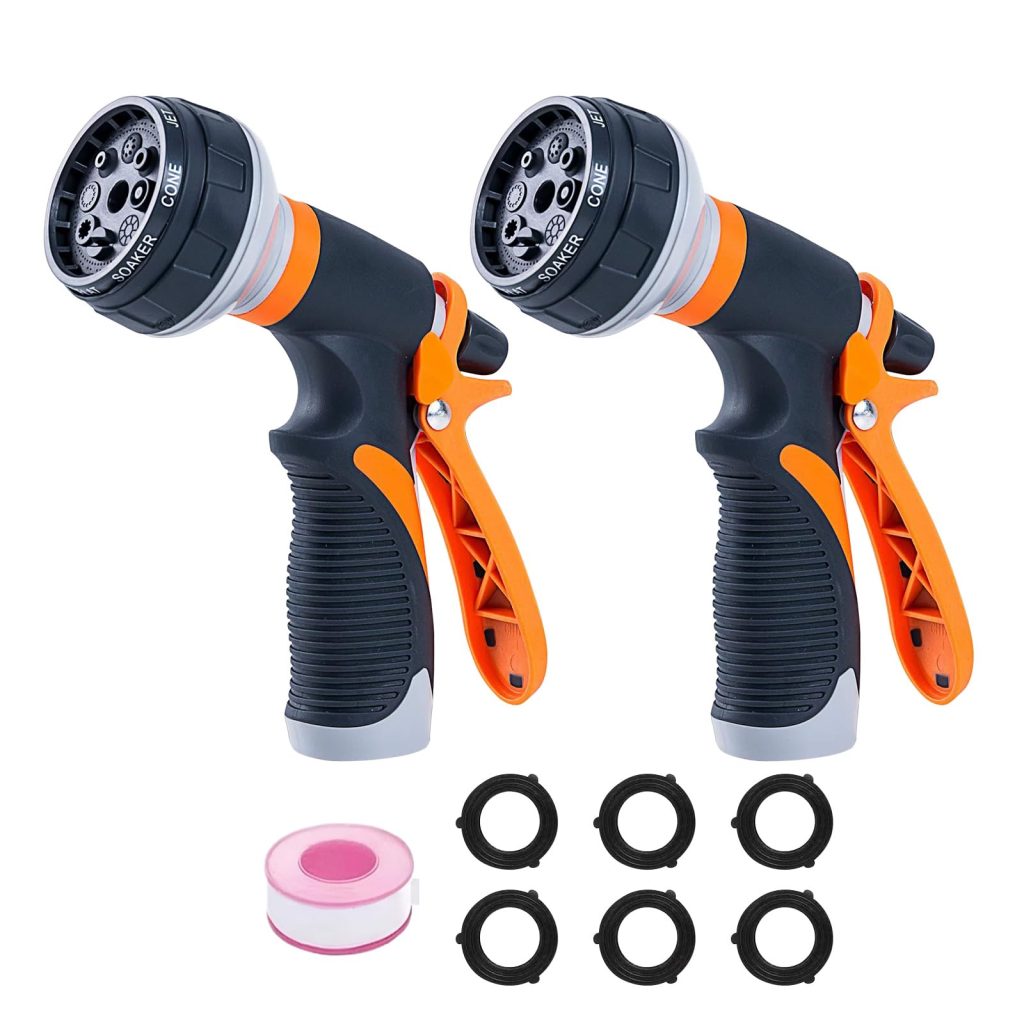
What Makes a Jet Nozzle Good at Its One Job
- 🎯 A Genuinely Narrow Opening: The narrower and more consistent the opening, the more force the same water volume carries. Cheaper jet nozzles sometimes use an opening that’s only marginally smaller than a firm fan setting, which blunts the whole point of the design.
- 🏭 Metal Body: Sustained jet-mode use puts more internal stress on a nozzle than any other setting. Plastic bodies are the most likely to crack or leak here over time; brass and zinc alloy hold up substantially better.
- 🔧 Solid Connection Seal: Jet-mode pressure finds weak seals fast. A rubber or silicone washer at the hose connection matters more here than on a general-purpose nozzle.
- ✋ Comfortable Hold for Extended Use: Clearing gutters, tools, or grimy equipment often takes longer than a quick rinse. A lock bar or thumb-slide grip beats a squeeze trigger if you’ll be holding the jet setting for more than a minute or two.
Our Editorial Evaluation
Our editorial evaluation draws on manufacturer specifications, verified retailer listings, and independent product coverage focused on jet distance, spray consistency, and build durability under sustained use. We have not run our own controlled distance or force test of every nozzle listed, and we’re upfront that this reflects source coverage and specification review, not an in-house lab.
Recommendations
1. Best Overall: Brass Single-Jet Twist Nozzle
A dedicated brass jet nozzle, without the added dial and internal switching mechanism a multi-pattern design requires, produces one of the strongest and most consistent streams available from a garden hose attachment. The trade-off is versatility — this isn’t the nozzle for watering — but for its one job, it’s hard to beat on durability and raw force.

Pros & Cons
- Pros: Strongest, most consistent jet in the category; Simple mechanism with minimal failure points; Brass body handles years of heavy use.
- Cons: No soft or shower setting — single-purpose tool; Heavier than plastic multi-pattern nozzles.
Best For & Skip If
Best For: Clearing debris, cleaning tools and equipment, and anyone who wants a dedicated cleaning nozzle separate from their watering nozzle.
Skip If: You want one nozzle that also handles gentle watering — see our watering nozzle guide instead.
2. Best Multi-Purpose Pick: Metal Multi-Pattern Nozzle with True Jet Mode
For buyers who want jet-level cleaning power without a dedicated single-purpose nozzle, a metal-bodied multi-pattern nozzle with a genuinely narrow jet setting — not just its firmest fan — covers both cleaning and watering reasonably well. Check user feedback specifically for jet strength before assuming a “jet” label on a multi-pattern nozzle performs like a dedicated one.

Pros & Cons
- Pros: One nozzle covers both cleaning and watering tasks; Metal body still holds up to jet-mode use; More versatile than a single-pattern nozzle.
- Cons: Jet mode typically isn’t quite as strong as a dedicated single-pattern nozzle; More moving parts than a simple twist design.
Best For & Skip If
Best For: Buyers who want strong cleaning power without owning a second dedicated nozzle. See our full best garden hose nozzles guide for this category.
Skip If: Jet strength is your top priority and you’re willing to own a second nozzle for watering.
Buying Advice
Jet nozzles are a good example of a case where the cheapest option often isn’t worth the savings. A budget plastic jet nozzle can produce a respectable stream when new, but the seams and seals that hold up under repeated jet-mode pressure are exactly what plastic construction handles worst. If jet cleaning is a task you’ll do regularly — not just once or twice a season — the jump to a metal body pays for itself in avoided replacements.
Frequently Asked Questions
What’s the difference between a jet nozzle and a high-pressure nozzle?
“Jet nozzle” usually refers to a specific narrow-stream spray pattern, either as a dedicated single-purpose nozzle or one setting on a multi-pattern nozzle. “High-pressure nozzle” is a broader category covering any nozzle built for strong output, which may include jet mode alongside other cleaning-focused features like lock bars. See our high-pressure nozzle guide for the fuller picture.
Is a dedicated jet nozzle stronger than a multi-pattern nozzle’s jet setting?
Generally yes. A dedicated single-pattern jet nozzle is built entirely around that one function, without the internal switching mechanism a multi-pattern nozzle needs, which typically makes its jet stronger and more consistent.
Can a jet nozzle damage plants or paint?
Yes, a jet setting is strong enough to damage delicate plants and isn’t safe for direct use on painted surfaces like a car. It’s best reserved for hardscaping, tools, and debris rather than anything delicate.
What material lasts longest for a jet nozzle?
Brass holds up best under sustained jet-mode use, followed by zinc alloy. Plastic jet nozzles are the most likely to crack or leak at the seams over time.
Related Guides
Best High-Pressure Garden Hose Nozzles
Best Garden Hose Nozzles: Full Buying Guide
Nozzle Types Explained
Why Is My Hose Nozzle Losing Pressure?
