

Pruning and Suckering Tomato Plants
The most effective method for trimming tomato plants is to routinely remove the small diagonal shoots, known as suckers, that emerge between the main stem and horizontal branches. Suckering tomato plants weekly improves sunlight penetration, increases airflow to prevent fungal diseases, and forces the plant to produce larger, healthier fruit.
Why this matters for healthy tomato plants
When cultivating the common garden tomato (Solanum lycopersicum)—which should not be confused with the botanically unrelated tamarillo or “tree tomato” (Cyphomandra betacea)—understanding how the plant directs its energy is the key to a massive harvest. In their natural, unpruned state, tomato plants are highly aggressive growers. They want to spread out, root wherever their stems touch the ground, and produce as much foliage as possible.
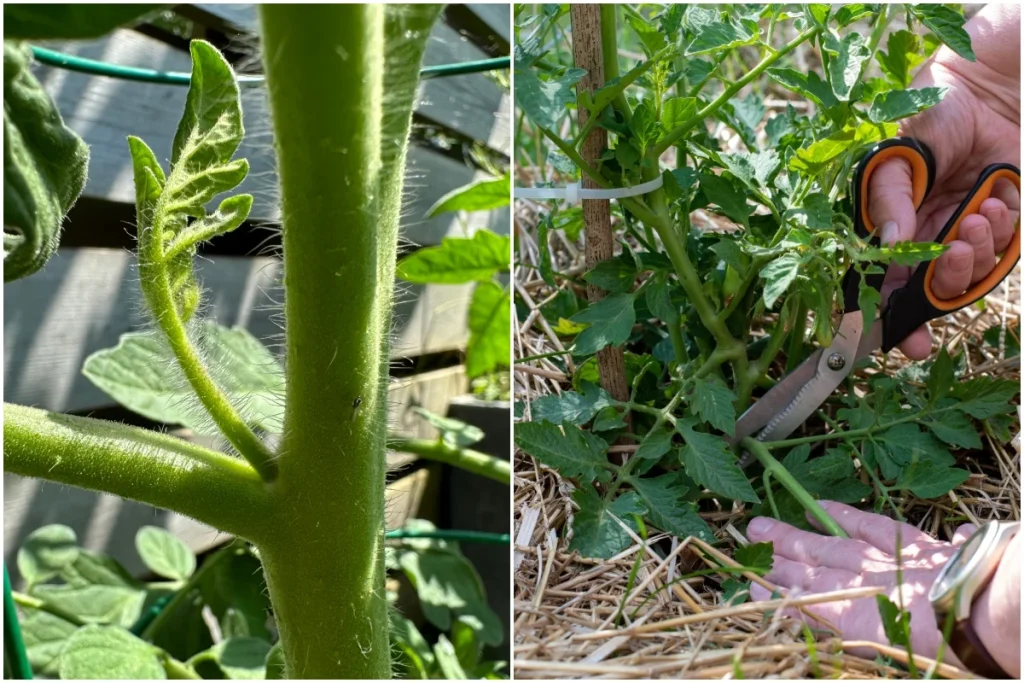
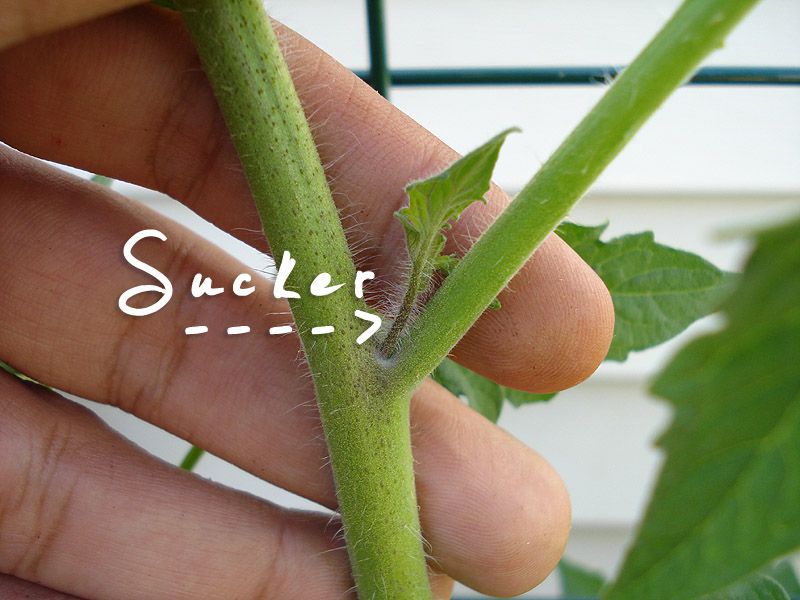
As a home gardener, your goal is not to grow a massive jungle of leaves; your goal is to grow fruit. This is where trimming tomatoes becomes an essential garden chore. As the main stem of the tomato plant grows upwards and produces horizontal leaf branches, a new growth point emerges in the “V” shape (the axil) between the stem and the branch. This new shoot is called a “sucker.” If left alone, a sucker will grow into a completely new, thick main stem that produces its own flowers, leaves, and eventually, its own suckers.
While more stems might sound like a good thing, they create a dense, tangled canopy. This extreme crowding blocks sunlight from reaching the center of the plant, delaying fruit ripening. Worse, it restricts airflow. Tomatoes are incredibly susceptible to soil-borne fungal diseases like early blight and Septoria leaf spot, which thrive in stagnant, humid air. Suckering tomatoes opens up the canopy, allowing the morning sun to dry the dew off the leaves rapidly, effectively starving fungal spores of the moisture they need to survive.
Furthermore, trimming tomato plants prevents the vine from wasting valuable energy on vegetative growth. By removing the suckers, you force the plant to funnel its water, calcium, and phosphorus directly into developing the existing fruit clusters, resulting in larger, sweeter, and more uniform tomatoes. For a broader overview of how pruning fits into the entire lifecycle of your crop, be sure to read our Complete Growing Guide.
Step-by-step instructions
Trimming tomato plants is not difficult, but it does require a bit of confidence and routine observation. Follow these steps to prune your plants safely and effectively throughout the summer.

Step 1: Determine your tomato variety
Before you pinch a single leaf, you must know if you are growing a “determinate” or “indeterminate” variety. Determinate (bush) tomatoes have a genetic limit to their growth. They grow to a specific height, produce all their fruit at once, and stop. You should never remove the suckers from a determinate plant, as doing so removes your entire harvest. Indeterminate (vining) tomatoes grow continuously until the winter frost kills them. These are the varieties that require strict, weekly suckering.
Step 2: Locate the suckers
Start at the bottom of your indeterminate tomato plant and work your way up the main central stalk. Look at the joint where a horizontal leaf branch meets the vertical main stem. If you see a small, diagonal green shoot growing directly out of that “V” joint, you have found a sucker.
Step 3: The pinching method (for young suckers)
The best time for suckering tomato plants is when the shoots are small—ideally under two inches long. At this stage, the plant tissue is soft and pliable. Simply grasp the base of the sucker between your thumb and index finger, and gently bend it back and forth until it snaps off cleanly. Doing this while the sucker is small minimizes the size of the wound left on the main stem, allowing it to heal and scar over rapidly.
Step 4: The snipping method (for overgrown suckers)
If a sucker has grown thicker than a pencil, do not try to pinch or snap it off by hand, as this will likely tear the skin down the side of the main stem, exposing the plant to disease. Instead, take a pair of sterilized micro-tip pruning shears and cut the sucker off as close to the main stem as possible without cutting into the stem itself.
Step 5: Bottom pruning for disease prevention
Aside from removing suckers, trimming tomatoes involves managing the lowest foliage. As your plant reaches about three feet tall, use your shears to remove the lowest branches that are touching or resting near the soil. Soil splashing onto the lower leaves during a rainstorm is the primary way blight infects a tomato plant. Keeping the bottom 8 to 12 inches of the main stem completely bare of leaves acts as a physical barrier against soil-borne pathogens.
Tomato Pruning Requirements by Growth Habit
| Tomato Growth Habit | Common Varieties | Suckering Required? | Lower Leaf Pruning? | End-of-Season “Topping” |
|---|---|---|---|---|
| Indeterminate (Vining) | Beefsteak, Sun Gold, Cherokee Purple | Yes (Weekly) | Yes (Bottom 12 inches) | Yes (4 weeks before frost) |
| Determinate (Bush) | Roma, Rutgers, San Marzano | No (Do not sucker) | Yes (Only leaves touching soil) | No |
| Dwarf / Patio | Tiny Tim, Micro Tom | No | No (Unless diseased) | No |
Common mistakes to avoid
Even experienced gardeners can unintentionally harm their plants if they prune haphazardly. Avoid these common pitfalls when suckering tomato plants:
Pruning wet plants
Never trim your tomatoes early in the morning when they are covered in heavy dew, or immediately after a rainstorm. Water acts as a perfect transportation system for bacteria and fungal spores. When you snap a sucker off, you create an open wound. If the plant is wet, pathogens can easily slide right into the plant’s vascular system. Always wait for the afternoon sun to dry the foliage completely before pruning.
Accidentally cutting the main growing tip
When navigating a dense plant, beginners sometimes mistake the main growing leader at the very top of the plant for a sucker and accidentally pinch it off. This is called “topping” the plant. If you do this early in the season, the plant will stop growing vertically. Always trace the stem carefully before you cut. (Note: Topping is done intentionally at the very end of the summer to force the last few green tomatoes to ripen before the frost, but it should never be done in June or July).
Using dirty pruning tools
If you pinch a diseased plant with your fingers, or cut it with your shears, and then immediately move to a healthy plant, you will transfer the disease. Tomato sap is sticky and carries pathogens easily. Keep a small rag soaked in isopropyl alcohol in your pocket, and wipe your shear blades down between every single plant.
Removing too much foliage at once
While airflow is great, tomatoes still need leaves to photosynthesize and create energy. Furthermore, the leaves act as an umbrella, shading the developing fruit. If you aggressively strip away too many large fan leaves, the sun will bake the exposed tomatoes, causing a condition called sunscald (white, blistered patches on the fruit).
Tools or products that help
You do not need an extensive tool shed for trimming tomato plants, but having the right equipment makes the job cleaner and reduces plant stress.

- Micro-Tip Bypass Pruners: While thick, heavy-duty anvil pruners are great for woody tree branches, they will crush delicate tomato stems. Small, spring-loaded micro-tip bypass snips allow you to get deep into the tight axil joints and make surgical, clean cuts on overgrown suckers.
- Isopropyl Alcohol Wipes: Convenient, disposable alcohol pads are the easiest way to sanitize your pruning shears as you move from plant to plant, ensuring you never cross-contaminate your garden with blight or mosaic virus.
- Tomato Clips and Twine: Once you prune a plant down to a single, heavy main stem, it becomes structurally vulnerable to wind. Soft garden twine or specialized plastic tomato clips are essential for securing the newly pruned, top-heavy stem to your stakes or trellis netting.
FAQ
How often does this need to be done?
- Trimming tomato plants is a continuous maintenance task that should be performed once a week during the active summer growing season. Suckers grow incredibly fast, especially in warm, humid weather, and checking them weekly ensures you can pinch them off while they are still small and manageable.
What happens if this step is skipped or delayed?
- If you skip suckering indeterminate tomatoes, the plant will grow into a massive, tangled bush with multiple thick main stems. This severe crowding blocks sunlight, drastically reduces airflow (leading to fungal diseases like blight), and results in a larger number of much smaller, later-ripening tomatoes.
Do I need special tools for this?
- No special tools are required for routine suckering; your thumb and index finger are the best tools for pinching off small suckers under two inches long. However, if a sucker has grown thick and woody, a pair of clean, sharp micro-tip garden snips is necessary to remove it without tearing the main stem.
Can beginners handle this without professional help?
- Absolutely. Suckering is a fundamental, entry-level gardening skill that any beginner can master simply by learning to identify the “V” joint on the plant. As long as you take your time to ensure you are not snipping the main central growing tip, you can successfully prune your own garden without professional assistance.

Micro-Tip Bypass Pruning Shears
Stainless Steel • Spring-Loaded • Precision Cuts
The perfect tool for suckering tomato plants. These surgical micro-tip snips easily reach deep into the plant canopy to cleanly remove thick suckers without crushing or tearing the delicate main stem.
✓ Essential for Clean Pruning
