

Watering Tomato Plants: How Much and How Often
The best way to water tomato plants is deeply and consistently, providing about 1 to 2 inches of water per week. Water directly at the soil level early in the morning to encourage deep root growth and prevent fungal diseases. Container tomatoes may need daily watering during hot summer weather.
Why this matters for healthy tomato plants
Mastering tomato watering is arguably the most critical skill for any home vegetable gardener. The common garden tomato (Solanum lycopersicum)—which should never be confused with the botanically unrelated tamarillo or “tree tomato” (Cyphomandra betacea)—is a heavy feeder and a heavy drinker. Because a ripe tomato is comprised of about 95% water, the plant’s vascular system requires a constant, steady supply of moisture to develop those heavy, juicy fruits we all crave in the summer.
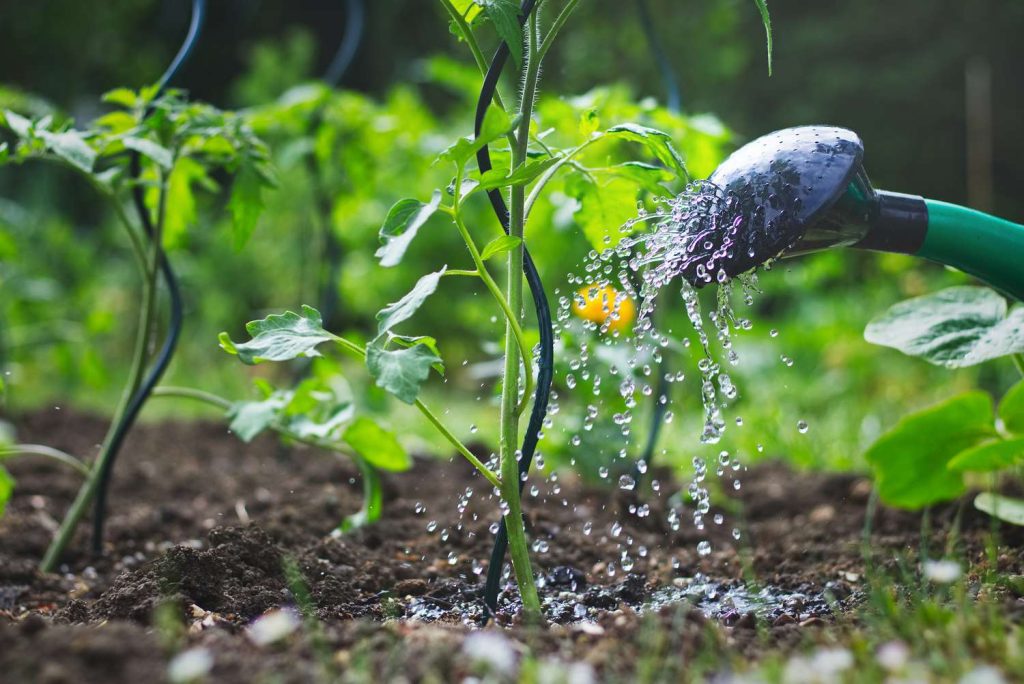
When you water your garden, you are doing much more than just quenching the plant’s thirst; you are facilitating a biological process called transpiration. Transpiration is the process where moisture is absorbed by the roots, carried through the plant, and released as vapor through tiny pores on the undersides of the leaves (called stomata). This upward flow of water acts as an internal elevator, carrying vital dissolved nutrients—especially calcium—from the soil up into the developing fruit.
If your watering is inconsistent, this nutrient elevator breaks down. A sudden lack of calcium transport causes a devastating condition known as blossom end rot, where the bottom of the tomato turns black, sunken, and leathery.
Furthermore, poor moisture management quickly leads to visible plant stress. A severely wilted tomato plant during the heat of the day is a clear cry for moisture, leading to dropped blossoms and stunted fruit. Conversely, an overwatered tomato plant will suffer from suffocated roots, displaying pale, yellowing leaves and mushy stems. Striking the perfect balance ensures vigorous growth, prevents the skin of the fruit from splitting, and keeps soil-borne diseases at bay. For a broader look at how moisture plays into the entire lifecycle of your crop, check out our Complete Growing Overview.
Step-by-step instructions
The best way to water tomatoes requires a mix of observation and consistent technique. Follow these steps to ensure your plants are receiving exactly what they need to thrive.
Step 1: Check the soil moisture manually
Never water purely on a calendar schedule, as rainfall, humidity, and temperature constantly change. Instead, use the “finger test.” Push your index finger into the soil near the base of the plant up to your second knuckle (about two inches deep). If the soil feels damp and cool, wait to water. If it feels completely dry, it is time to irrigate.
Step 2: Water at the soil level
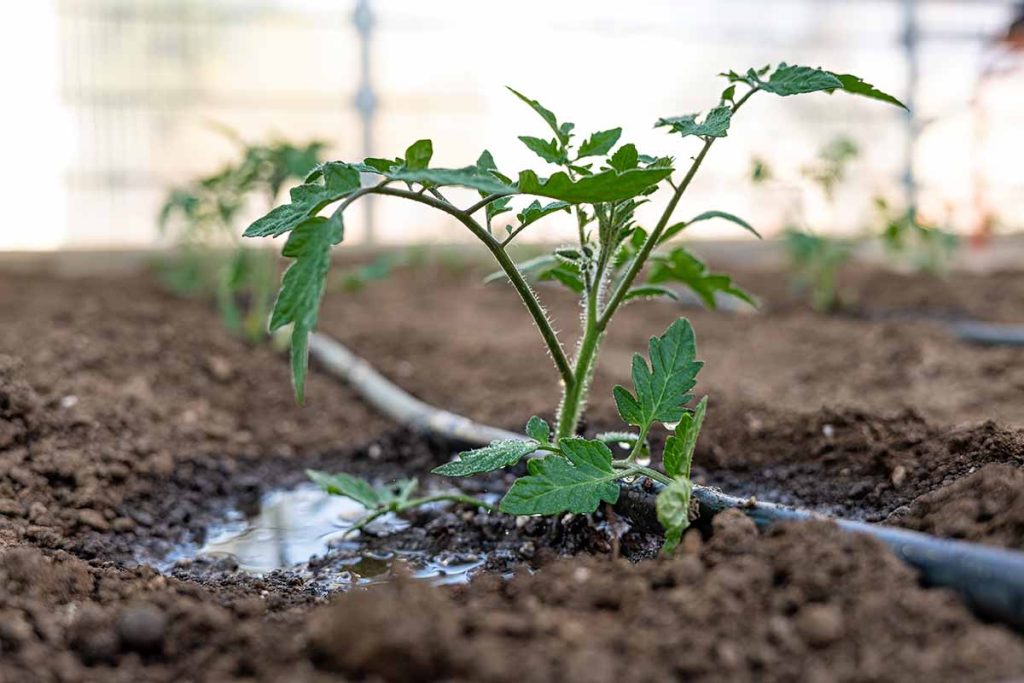
When it is time to water, always deliver the moisture directly to the soil at the base of the plant. Keep the foliage as dry as possible. Soil splashing onto wet leaves is the primary way fungal diseases, such as early blight, infect a tomato plant.
Step 3: Water deeply and infrequently
For established plants in the ground, it is better to water deeply once or twice a week rather than giving them a shallow sprinkle every day. Deep watering encourages the roots to grow further down into the earth to seek moisture. A deep, robust root system makes the plant far more resilient during extreme heatwaves.
Step 4: Apply a thick layer of mulch
Once your soil is thoroughly watered, lock that moisture in. Apply a 2- to 3-inch layer of organic mulch—such as straw, untreated grass clippings, or shredded leaves—around the base of the plant. Mulch acts as a barrier, drastically reducing evaporation from the sun and regulating the soil temperature.
Step 5: Adjust for containers and raised beds
Potted plants dry out much faster than in-ground gardens. During the peak of summer, container tomatoes will likely need watering every single day, and sometimes twice a day during extreme heat. To reduce this workload, many gardeners build or buy diy self watering planters for tomatoes, which utilize a bottom water reservoir to wick moisture up into the soil exactly as the plant needs it.
Tomato Watering Guidelines by Growth Environment
| Growth Environment | Average Frequency | Watering Depth / Volume | Primary Goal |
|---|---|---|---|
| In-Ground Garden | 1 to 2 times per week | Soak the top 6 to 8 inches | Encourage deep, resilient root systems. |
| Raised Beds | 2 to 3 times per week | Soak the top 4 to 6 inches | Compensate for faster drainage and evaporation. |
| Containers / Pots | Daily (in peak summer) | Water until it runs out the bottom | Prevent the restricted root ball from drying out entirely. |
| New Transplants | Daily for the first week | 1 inch deep (shallow but moist) | Prevent transplant shock while new roots establish. |
Common mistakes to avoid
Even veteran gardeners can fall into bad habits. Avoiding these common watering pitfalls will save your harvest from ruin.

Overhead watering with a sprinkler
Spraying your tomato plants from above is one of the worst things you can do. Wet foliage is a breeding ground for bacterial and fungal infections. Additionally, a sprinkler often applies a very shallow layer of water over a large area, meaning the moisture evaporates before it can reach the deep roots of your tomatoes.
Inconsistent watering cycles
Allowing the soil to turn to bone-dry dust and then suddenly flooding it with water causes a massive rush of moisture into the plant. The inside of the tomato fruit swells faster than the skin can stretch, resulting in deep, vertical cracks and split fruit. Consistency is the secret to perfect tomatoes.
Misdiagnosing an overwatered tomato plant
Many beginners see a drooping plant and immediately assume it needs water. However, an overwatered tomato plant will also wilt because its roots are drowning in muddy, oxygen-deprived soil and can no longer function. Before you reach for the hose to save a wilted plant, always check the soil. If the soil is already soggy, step away and let it dry out.
Watering late in the evening
While it might feel nice to water the garden at dusk, any accidental splashing on the leaves will stay wet all night long because there is no sun to evaporate it. This extended period of dampness invites disease. Always aim to water early in the morning so the plants are hydrated before the afternoon heat, and the sun can quickly dry any stray droplets on the foliage.
Tools or products that help
While a traditional watering can works fine for a single patio plant, managing a larger vegetable garden requires efficiency. Investing in a few targeted tools is the best way to water tomato plants effectively.
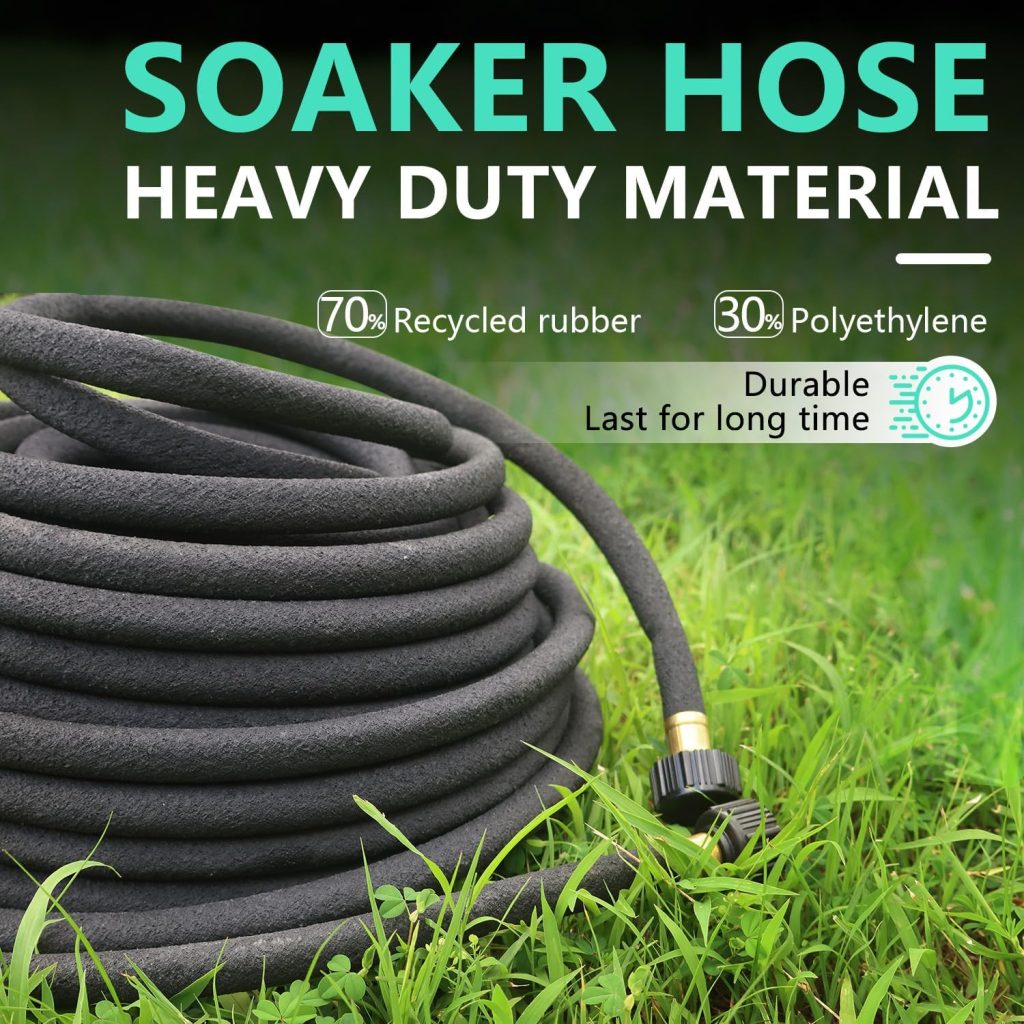
- Drip Irrigation Systems or Soaker Hoses: These are the gold standard for tomato watering. They lay flat on the soil beneath your mulch and slowly seep water directly into the root zone. This keeps the leaves perfectly dry and wastes zero water to evaporation.
- Watering Wands: If you prefer watering by hand, a long-handled watering wand allows you to reach past the bushy foliage and deliver a gentle shower of water directly to the base of the stem without stooping over.
- Soil Moisture Meters: Take the guesswork out of the “finger test.” A simple, inexpensive probe can be pushed into the soil to give you an exact reading of the moisture levels down at the root zone.
- Ollas (Unglazed Clay Pots): An ancient and highly effective irrigation method. You bury these terracotta pots in the soil next to your tomatoes and fill them with water. The water slowly seeps through the porous clay directly to the roots.
- DIY Self-Watering Planters for Tomatoes: Often made from two nested 5-gallon buckets with a wicking chamber, these planters hold a reservoir of water at the bottom, ensuring container plants never dry out during a busy work week.
FAQ
How often does this need to be done?
- Generally, in-ground tomato plants need deep watering 1 to 2 times a week, while potted tomatoes may require daily watering during peak summer heat. Always check the top two inches of soil first; if it feels dry to the touch, it is time to water again.
What happens if this step is skipped or delayed?
- Delaying irrigation leads to a severely wilted tomato plant, dropped blossoms, and stunted fruit growth due to drought stress. Conversely, erratic watering cycles where the soil swings from bone dry to flooded will cause developing tomatoes to split open and develop blossom end rot.
Do I need special tools for this?
- While you do not strictly need expensive equipment, using a soaker hose or a watering wand at the base of the plant is highly recommended over a standard sprinkler. These tools keep the foliage dry, which is critical for preventing soil-borne fungal diseases from splashing onto the leaves.
Can beginners handle this without professional help?
- Absolutely, watering is a fundamental skill that any beginner gardener can easily master by simply observing the soil and the plant’s daily condition. By consistently using the “finger test” to check soil moisture before watering, you can successfully maintain a healthy garden without any professional assistance.

Premium Garden Soaker Hose (50 FT)
Deep Watering • Prevents Foliage Disease • Saves Water
The absolute best way to water tomato plants. This heavy-duty soaker hose lays flat under your mulch to deliver a slow, consistent drip directly to the root zone, keeping leaves perfectly dry and preventing blight.
✓ Essential for Healthy Tomatoes
