

Tomato Plant Spacing: How Far Apart to Plant
For optimal garden tomato spacing, plant determinate (bush) varieties 24 inches apart and indeterminate (vining) varieties 36 inches apart in traditional ground rows. When planting tomatoes in raised beds spacing can be tightened to 18 to 24 inches, provided you use vertical trellises and prune the foliage aggressively.
When you first bring home a tray of tiny, fragile tomato seedlings in the spring, it is incredibly tempting to pack them tightly together in your garden beds. After all, they barely take up any room in May. However, the common garden tomato (Solanum lycopersicum) grows at an astonishing rate. Within a few short weeks, those innocent four-inch seedlings can transform into sprawling, five-foot-wide jungles.

Nailing your garden tomato spacing is not just about keeping your yard looking neat and tidy; it is a fundamental pillar of plant health and disease prevention. Proper tomato plant spacing directly impacts three crucial elements of your garden’s success:
Why this matters for healthy tomato plants
1. Airflow and Disease Prevention
Fungal diseases, such as early blight and powdery mildew, thrive in warm, stagnant, and highly humid environments. When your growing tomatoes spacing is too tight, the overlapping leaves create a dense canopy that traps moisture from rain and morning dew. Without proper airflow to dry the leaves quickly, fungal spores will germinate and decimate your crop. Giving your plants enough room to breathe acts as an invisible shield against disease.
2. Root Competition for Nutrients and Water
Tomatoes are incredibly heavy feeders with expansive, aggressive root systems that reach deep and wide into the surrounding earth. If you cram your plants too close together, their root zones will overlap. This forces the plants into a stressful competition for limited water and essential macronutrients (Nitrogen, Phosphorus, and Potassium). The result is usually stunted growth, dropped blossoms, and significantly smaller fruit.
3. Sunlight Penetration
Tomato plants require a minimum of six to eight hours of direct, unobstructed sunlight per day to undergo photosynthesis and produce the sugars needed for sweet, flavorful fruit. Proper spacing for tomato plants ensures that each individual vine receives its fair share of sunshine, rather than being shaded out by a neighboring plant’s overgrown branches.
Step-by-step instructions
Figuring out the best way to arrange your garden does not require a degree in horticulture, but it does require a tape measure and a little bit of planning. Before you dig your first hole, follow these steps to ensure perfect planting tomato plants spacing.
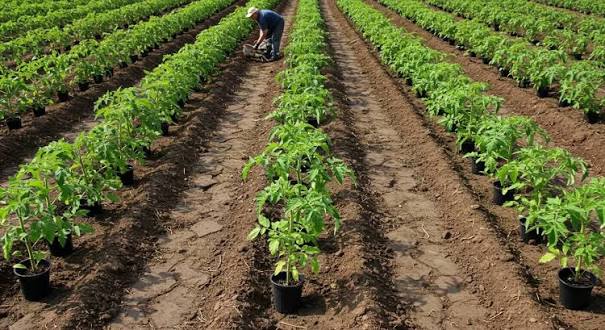
Step 1: Identify your tomato’s growth habit
First, you must determine if you are planting determinate or indeterminate tomatoes. This information is usually printed right on the seed packet or the nursery tag.
- Determinate tomatoes: Also known as bush tomatoes, these are genetically programmed to grow to a specific height (usually 3 to 4 feet), produce their fruit all at once, and then stop growing. Because they are more compact, they require less space.
- Indeterminate tomatoes: Also known as vining tomatoes, these will continue to grow, climb, and produce fruit until the first frost kills them. They can easily reach 8 to 10 feet long and require heavy trellising and much wider spacing.
Step 2: Decide on your garden layout
Are you planting in traditional, long rows in the ground, or are you utilizing intensive raised beds? Traditional rows require wider spacing to allow you room to walk between the plants with a wheelbarrow. Conversely, planting tomatoes in raised beds spacing allows you to pack them slightly tighter, as the soil is deeper, looser, and you never step on the root zones to compact them.
Step 3: Measure and mark your planting holes
Use a tape measure or a yardstick to mark out your holes before you start digging. It helps to place the seedling pots on top of the soil exactly where you plan to plant them so you can visualize the layout.
Use the original reference table below to determine exactly how many inches to leave between the center stems of each plant.
| Tomato Plant Type | In-Row Spacing (Distance between plants) | Row Spacing (Distance between rows) | Raised Bed Spacing (Intensive) |
|---|---|---|---|
| Determinate (Bush) | 24 inches | 36 inches | 18 to 24 inches |
| Indeterminate (Vining) | 36 inches | 48 inches | 24 to 30 inches |
| Patio / Dwarf | 18 inches | 24 inches | 12 to 18 inches |
| Container Growing | 1 plant per 5-gallon pot | N/A | N/A |
Step 4: Dig deep and plant
Once you know exactly how far apart to plant your tomatoes, dig your holes. Tomatoes have a unique biological ability to grow adventitious roots along their stems. Pinch off the bottom few sets of leaves and bury the seedling deeply—up to two-thirds of its total height. The buried stem will sprout additional roots, giving your perfectly spaced plant an incredibly strong foundation.
For a complete look at managing your crop from the day it goes into the dirt until harvest time, check out our complete growing overview.
Common mistakes to avoid
Even veteran gardeners can fall victim to “spring fever” and make poor spacing decisions. Avoid these frequent pitfalls to guarantee a bumper crop.

Ignoring the Trellis Footprint
When calculating your spacing, you must account for the physical structure that will hold the plant up. If you plan to use large, heavy-duty wire cages, you cannot place the plants 18 inches apart, because the metal cages will literally collide with one another. Always place your cages or stakes into the ground at planting time so you do not accidentally sever the growing roots later in the season.
The “Jungle” Effect (Not Pruning Tight Spaces)
If you decide to push the limits and use tight planting tomatoes in raised beds spacing, you are signing an unwritten contract that you will prune the plants rigorously. If you plant indeterminate vines 24 inches apart and fail to prune off the suckers (the secondary vines that grow out of the branch joints), they will rapidly weave together into an impenetrable, disease-ridden jungle. Tight spacing requires weekly pruning to maintain a single central stem.
Placing Small Plants in the Shade of Giants
If you are asking yourself, “plant tomatoes how far apart?”, you must also ask where to place them relative to the sun. If you plant a row of massive indeterminate cherry tomatoes directly south of a row of short determinate paste tomatoes, the tall vines will cast a shadow over the short bushes by mid-summer, severely stunting their yield. Always plant your tallest varieties on the north or east side of your garden beds.
Tools or products that help
You do not need heavy machinery to lay out your garden beds, but having a few specific supplies on hand will make the spacing process significantly easier and more precise.

- Standard Tape Measure or Yardstick: Do not guess the distance. A cheap wooden yardstick is the best tool for ensuring your spacing is mathematically sound. You can even cut a piece of scrap wood to exactly 24 or 36 inches and use it as a quick spacing jig.
- Heavy-Duty Tomato Cages: Flimsy, three-ring cone cages from the hardware store are rarely strong enough for garden tomatoes. Invest in heavy-gauge square folding cages or thick cattle panels to keep your spaced plants growing vertically rather than sprawling horizontally into each other’s territory.
- Trellising Twine and Clips: If you are spacing your plants tightly in raised beds, using heavy-duty garden twine and plastic tomato clips is the most efficient way to train the vines straight up a central support, minimizing their horizontal footprint.
- Hori Hori Soil Knife: A Japanese gardening knife features a serrated edge for digging and often includes a ruler etched right into the steel blade, making it the perfect two-in-one tool for measuring your spacing and digging deep planting holes simultaneously.
FAQ
How often does this need to be done?
- Spacing your plants is a one-time task that must be completed accurately on planting day in the spring. Once the tomatoes are in the ground and their root systems begin to expand, you cannot move or space them out again without severely traumatizing or killing the plants.
What happens if this step is skipped or delayed?
- If you skip measuring and plant your tomatoes haphazardly close together, you will almost certainly face a severe outbreak of fungal disease like early blight or powdery mildew by mid-summer. Overcrowding also restricts sunlight and creates fierce root competition, which guarantees a significantly smaller and lower-quality harvest.
Do I need special tools for this?
- No special tools are required to properly space your plants. A standard household tape measure, a piece of string, or even a piece of scrap wood cut to the desired length is all you need to perfectly measure the distance between your planting holes.
Can beginners handle this without professional help?
Yes, absolutely. Properly spacing tomato plants is incredibly simple and is one of the easiest, highest-impact gardening techniques a beginner can master to instantly improve their garden’s overall yield and health.
Heavy-Duty Galvanized Steel Tomato Cages
Ultimate Support • Folds Flat for Storage
The ultimate solution for sprawling indeterminate tomatoes. These heavy-gauge square folding cages won’t topple over in high winds, keeping your perfectly spaced plants growing vertically and disease-free.
✓ Rust-Resistant & Heavy-Gauge
