

Best Adjustable Garden Hose Nozzles
Affiliate Disclosure: HomeGardenExpert.net participates in affiliate programs. If you buy through a link on this page, we may earn a commission at no extra cost to you. This does not affect our selection criteria.
An adjustable nozzle promises one thing above everything else: enough range in a single tool that you’re not swapping attachments between watering the garden and rinsing off a patio chair. Whether that promise holds up depends less on how many settings are printed on the dial and more on whether the mechanism switching between them still works smoothly after a season of use.
Best Adjustable Hose Nozzle
A metal-bodied nozzle with a thumb-slide or rotating dial offering four to six genuinely distinct spray patterns — not nine marginal variations — is the sweet spot for most households. Prioritize a smooth, positive click between settings over a longer feature list; a dial that gets sticky or vague after a few months defeats the purpose of buying adjustable in the first place.
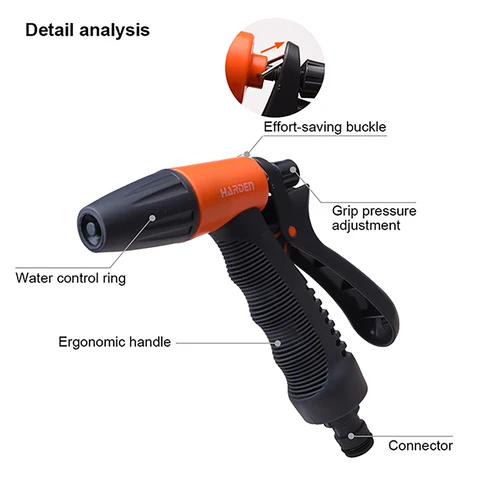
What to Evaluate on an Adjustable Nozzle
- 🎯 Genuinely Distinct Patterns: Look closely at what each setting actually does, not just how many are listed. A shower, a mist, a fan, and a jet cover nearly every task; extra settings between those four are often minor variations rather than new capabilities.
- ⚙️ Mechanism Durability: The switching mechanism — whether a rotating collar, a dial, or a thumb slide — is the first thing to wear out on a lower-quality adjustable nozzle. A metal mechanism with a positive, clicking action tends to hold its settings longer than a loose plastic dial.
- 💧 Consistent Flow Across Settings: Some adjustable nozzles lose pressure noticeably on their firmer settings compared to a dedicated single-pattern nozzle. This is a reasonable trade-off for versatility, but check reviews for complaints about weak jet or shower modes specifically before buying.
- 🔒 Lock or Hold Function: A lock button or hold switch that keeps a chosen setting active without continuous trigger pressure is worth prioritizing if you use more than one pattern in a single session — switching between watering and rinsing off your hands, for instance.
Our Editorial Evaluation
Our editorial evaluation draws on manufacturer specifications, verified retailer listings, and independent product coverage that specifically addresses pattern-switching reliability over time — a common weak point this category is prone to. We have not conducted our own long-term wear test of every nozzle referenced here, and we’re direct about that rather than implying testing we haven’t done.
Recommendations
1. Best Overall: Metal Thumb-Slide Adjustable Nozzle
A metal-bodied nozzle with a thumb-slide switch covering a well-chosen set of patterns — typically mist, shower, fan, cone, and jet — hits the balance most households are looking for. The slide mechanism tends to hold up better over time than a rotating dial, since it has fewer small internal teeth that can wear down.

Pros & Cons
- Pros: Well-rounded pattern selection covers watering and cleaning; Thumb-slide mechanism is comfortable and durable; Metal body resists cracking under regular use.
- Cons: Costs more than a basic two-setting nozzle; Individual settings may not match a dedicated single-purpose nozzle’s peak performance.
Best For & Skip If
Best For: Households that want one nozzle to reasonably cover both watering and light cleaning without a lot of switching between tools.
Skip If: You have a clear single primary use — a dedicated nozzle for that specific job (see our watering or jet nozzle guides) will likely outperform a generalist.
2. Best Budget Adjustable: Plastic Rotating-Dial Nozzle
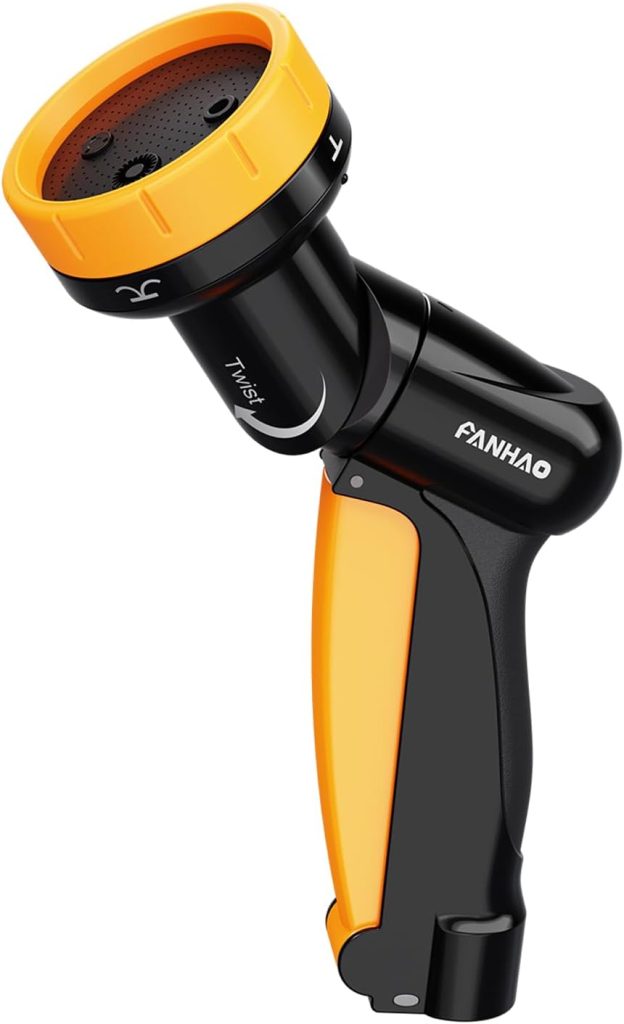
A basic rotating-dial nozzle with four or five settings remains a reasonable entry point if you’re not using it daily or storing it outdoors year-round. Stick to models with a reinforced or partially metal connector even at this price point, since that’s the more common failure point than the dial itself.
Pros & Cons
- Pros: Lowest price point for genuine pattern adjustability; Lightweight and easy to handle.
- Cons: Dial mechanism more prone to looseness over time than metal designs; Full-plastic models are vulnerable to UV cracking with prolonged outdoor storage.
Best For & Skip If
Best For: Occasional or seasonal users who want pattern variety without a big budget commitment.
Skip If: You’ll be using the nozzle daily or storing it outdoors year-round — the upgrade to metal pays off quickly under that kind of use.
Buying Advice: Don’t Shop by Pattern Count Alone
Marketing copy for this category leans heavily on pattern count — “9-pattern nozzle” sounds like more value than a “5-pattern nozzle,” but in practice, most gardeners settle into using two or three settings regularly and ignore the rest. It’s worth reading reviews for which specific settings people actually mention using, rather than assuming a higher number is automatically the better buy.
The switching mechanism itself deserves more attention than it usually gets. A dial or slide that feels loose or vague in a store display is a preview of how it’ll feel after a season of outdoor use — it typically gets worse, not better.
Frequently Asked Questions
How many spray patterns does a garden hose nozzle actually need?
Most gardeners regularly use two or three settings — typically a soft shower, a wide fan, and a firm jet. Extra patterns beyond that add convenience for specific tasks but aren’t essential for most households.
Do adjustable nozzles wear out faster than fixed-pattern nozzles?
The switching mechanism is the most common point of wear on adjustable nozzles, since fixed-pattern nozzles have one less moving part to fail. A metal mechanism with a positive click tends to hold up significantly better than a loose plastic dial.
Is an adjustable nozzle as strong as a dedicated jet nozzle?
Usually not quite. A dedicated single-pattern jet nozzle is built entirely around maximizing that one setting, while an adjustable nozzle’s jet mode is a compromise among several patterns. See our jet nozzle guide if cleaning power is your top priority.
What should I check before buying an adjustable nozzle?
Test the switching mechanism by hand if possible — it should feel smooth and click positively into each setting, not loose or vague. Also check the body material and connection quality, which matter more for long-term durability than pattern count.
Related Guides
Nozzle Types Explained
Best Garden Hose Nozzles: Full Buying Guide
Best Jet Hose Nozzles
Best Nozzles for Watering
