

Types of Garden Hose Nozzles, Explained
Affiliate Disclosure: HomeGardenExpert.net participates in affiliate programs. If you buy through a link on this page, we may earn a commission at no extra cost to you. This does not affect our selection criteria.
“Garden hose nozzle” covers a wider range of tools than the name suggests. Two nozzles can look similar on a store shelf and behave completely differently in your hand — one tires your grip after five minutes, the other doesn’t. This guide breaks nozzles down by how you control them, what they’re made of, and what each type is actually good at, so the differences are clear before you buy rather than after.
What Are the Main Types of Garden Hose Nozzles?
Garden hose nozzles are typically classified two ways: by control mechanism (pistol-grip trigger, fireman-style twist, thumb-slide, or dial/rear-throttle) and by body material (brass, zinc alloy, or plastic). The control mechanism determines comfort and one-handed operability; the material determines how long the nozzle lasts under regular use.
Types by Control Mechanism
1. Pistol-Grip Trigger Nozzles
The most familiar style: squeeze a trigger to release water, let go to stop. The mechanism is simple and inexpensive to manufacture, which is why it’s the most common type at every price point.

Pros & Cons
- Pros: Instant on/off with no separate lock step; Widely available at every price point; Familiar, intuitive operation.
- Cons: Requires continuous grip pressure, which tires the hand on longer sessions; Lower-end models often pair the trigger with a plastic body prone to cracking.
Best For
Short watering or rinsing sessions, occasional use, budget-conscious buyers.
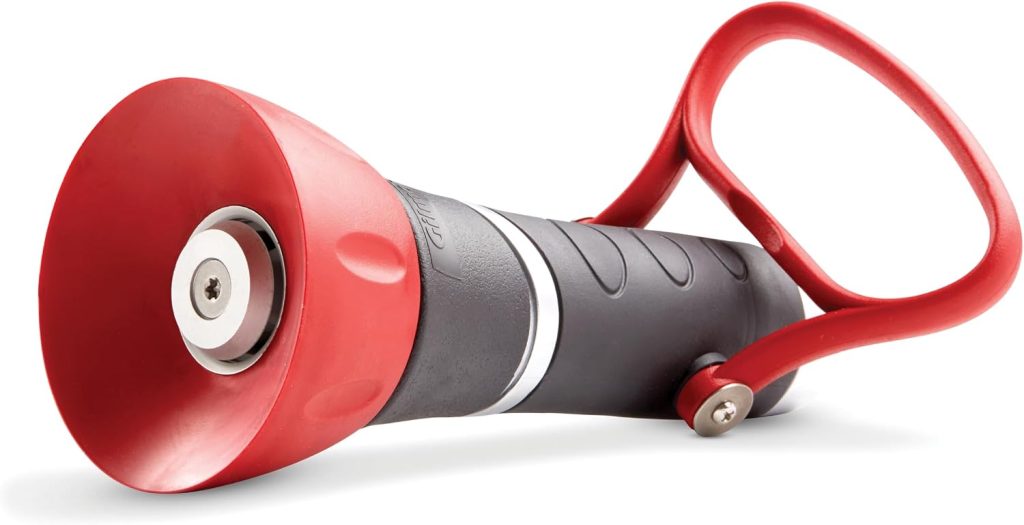
2. Fireman-Style Twist Nozzles
Named for their resemblance to firefighting equipment, these use a rotating collar to move between a wide cone spray and a tight jet. Fewer moving parts than a trigger mechanism generally means fewer failure points over time, which is part of why this style shows up so often in heavy-duty and high-pressure nozzles.
Pros & Cons
- Pros: Simple mechanism with excellent long-term reliability; Typically produces one of the stronger jet streams available; No trigger fatigue — twist to a setting and it stays there.
- Cons: Fewer dedicated gentle settings for delicate plants; Twist collar can be stiff when new.
Best For
Cleaning, car washing, and frequent heavy-duty use. See our full pistol-grip vs. fireman-style comparison.
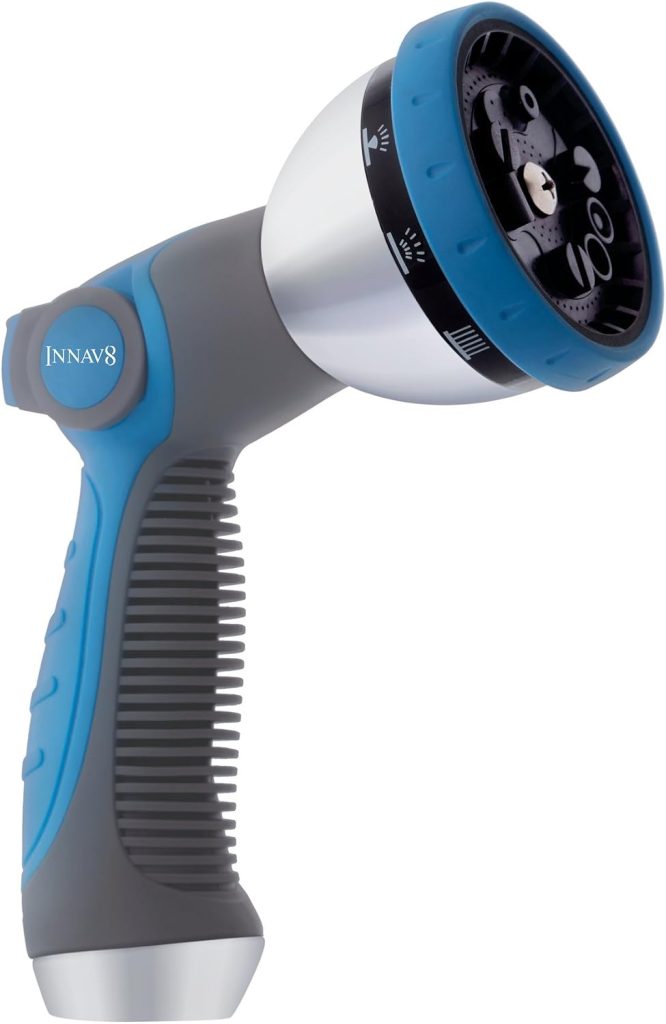
3. Thumb-Control Slide Nozzles
A sliding thumb switch turns on the water and adjusts flow in a single motion, without requiring continuous squeeze pressure. This is generally considered the most ergonomic option for extended use, and many models let you lock the slide in place at a chosen flow rate.
Pros & Cons
- Pros: Most comfortable option for long watering sessions; Often lockable, so you don’t have to hold a position; Usually paired with multiple spray-pattern options.
- Cons: Slightly more complex mechanism than a basic trigger, which can mean more to go wrong on lower-quality models; Usually priced above basic pistol-grip nozzles.
Best For
General-purpose use, extended watering sessions, and anyone who finds trigger squeezing uncomfortable, including gardeners managing arthritis or grip fatigue.
4. Dial / Rear-Throttle Nozzles
A rotating dial selects between a small number of spray patterns — often just two or three — while a rear thumb throttle controls flow independently. The simplicity is the point: fewer settings mean less to fumble with when your hands are already busy holding a pot or steadying a hose.

Pros & Cons
- Pros: Very simple, intuitive operation; Rear throttle allows fine flow control without switching patterns; Fewer parts to wear out.
- Cons: Limited pattern variety compared to multi-mode nozzles; Not typically built for heavy cleaning tasks.
Best For
Watering containers, beds, and general garden use. See our watering-specific nozzle guide.
Types by Body Material
| Material | Durability | Weight | Typical Price |
|---|---|---|---|
| Brass | Highest — resists corrosion and cracking for years | Heaviest | Highest |
| Zinc Alloy | High — substantially more durable than plastic | Moderate | Mid-range |
| Plastic (ABS) | Lowest — prone to cracking from UV and cold exposure | Lightest | Lowest |
Material matters most for buyers who use their nozzle frequently or store it outdoors year-round. Occasional, seasonal use is far more forgiving of plastic than daily car washing or cleaning is. See our full brass vs. plastic comparison for a closer look.
Types by Pattern Range
- Multi-Pattern Nozzles: Offer anywhere from four to nine or more spray settings on a single dial or switch. Versatile, but not every pattern on a long list is equally useful — check that jet, shower, and fan are all genuinely distinct rather than slight variations of the same spray. See our adjustable nozzle guide.
- Single-Pattern Jet Nozzles: Built around one strong, narrow jet rather than a range of settings. Less versatile, but often more durable and effective at their one job than a multi-pattern nozzle’s jet setting. See our jet nozzle guide.
Watering Wands: A Different Category Entirely
A watering wand isn’t a nozzle in the traditional sense — it’s a long, rigid tube with a shower or rose head attached, designed to extend your reach rather than change spray pattern in the same way a nozzle does. Wands and nozzles solve different problems and are often best owned together rather than as a replacement for one another. See our full nozzle vs. watering wand comparison.
Which Type Should You Choose?
Start with how you’ll hold it, not what it sprays. If you water for more than a few minutes at a stretch, a thumb-slide or dial-and-throttle design will be noticeably more comfortable than a squeeze trigger over time. If your main use is quick, occasional bursts — rinsing hands, filling a bucket, quick spot-cleaning — a basic trigger nozzle is perfectly adequate and the cheapest way into the category.
Then factor in frequency and storage conditions. A nozzle left outdoors year-round in a sunny climate benefits far more from a metal body than one that’s stored in a shed and only used seasonally.
Frequently Asked Questions
What’s the most durable type of garden hose nozzle?
Fireman-style twist nozzles made of brass or zinc alloy are generally the most durable, thanks to a simple mechanism with few moving parts combined with a corrosion-resistant metal body.
What’s the most comfortable garden hose nozzle to use?
Thumb-control slide nozzles are typically the most comfortable for extended use, since they don’t require continuous squeeze pressure the way pistol-grip trigger nozzles do.
Is a watering wand a type of nozzle?
Not exactly. A watering wand is a separate category built primarily to extend reach, usually paired with a gentle shower or rose head rather than a full range of spray patterns. See our full comparison for more detail.
Are more spray patterns always better?
Not necessarily. What matters more is whether the patterns you actually use — usually a soft shower, a wide fan, and a firm jet — are genuinely distinct and well executed, rather than how many total settings a nozzle offers.
Which nozzle type is best for someone with arthritis?
A thumb-slide or lockable dial/throttle design is generally easier to manage than a squeeze trigger, since it doesn’t demand continuous grip strength. Our arthritis-friendly nozzle guide covers specific recommendations.
Related Guides
Garden Hose Nozzles: The Complete Guide •
Pistol Grip vs. Fireman-Style Nozzle •
Brass vs. Plastic Nozzles
Nozzle vs. Watering Wand •
How to Choose a Garden Hose Nozzle
