
Tomato Fertilizer
The best tomato fertilizer is one with a balanced or slightly lower nitrogen ratio, such as 5-10-5, 5-10-10, or 8-8-8, applied correctly throughout the growing season. Tomatoes are incredibly heavy feeders that require high phosphorus and potassium to encourage strong root development, prolific flowering, and healthy fruit set. For best results, conduct a soil test, amend the planting hole with a slow-release starter fertilizer, and supplement with side-dressings or liquid feeds when the first tomatoes appear.
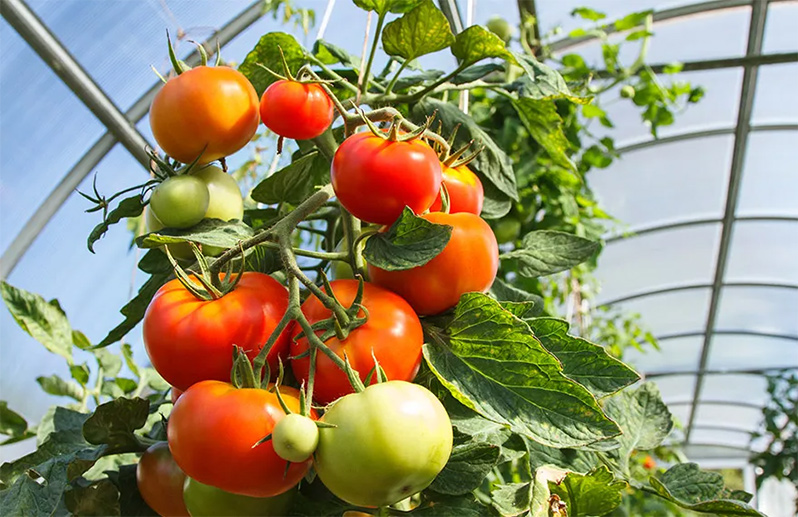
Growing tomatoes is often the highlight of a home gardener’s summer, but nurturing a plant from a tiny seedling into a towering vine loaded with juicy, sun-ripened fruit takes more than just water and sunshine. Tomatoes, like many annual vegetables, are heavy feeders. They extract massive amounts of nutrients from the soil in a very short period. Understanding which fertilizer to use, exactly when to apply it, and the precise methodology of feeding will give you the best chance of nurturing robust plants and a record-breaking harvest.
This comprehensive guide covers everything from decoding the NPK ratio and balancing soil pH to utilizing homemade organic fertilizers and diagnosing complex nutrient deficiencies.
Do Tomatoes Really Need Fertilizer?
Yes, absolutely. To fuel rapid leaf, root, and fruit development all in a single growing season, tomato plants demand a massive intake of macronutrients and micronutrients. While a pristine, deeply composted garden bed might support a modest crop on its own, maximizing your yield—and preventing heartbreaking diseases—requires supplemental feeding.
Before you blindly pour fertilizer into your garden, however, the most crucial first step is to test your soil. You can purchase a cheap and easy-to-use soil test kit from any local garden center or online retailer. A soil test removes the guesswork, telling you exactly what your soil is lacking and what you need to supply. Applying a high-nitrogen fertilizer to soil that is already nitrogen-rich is a surefire way to ruin your harvest.
Understanding Tomato Plant Nutritional Needs (The NPK Ratio)
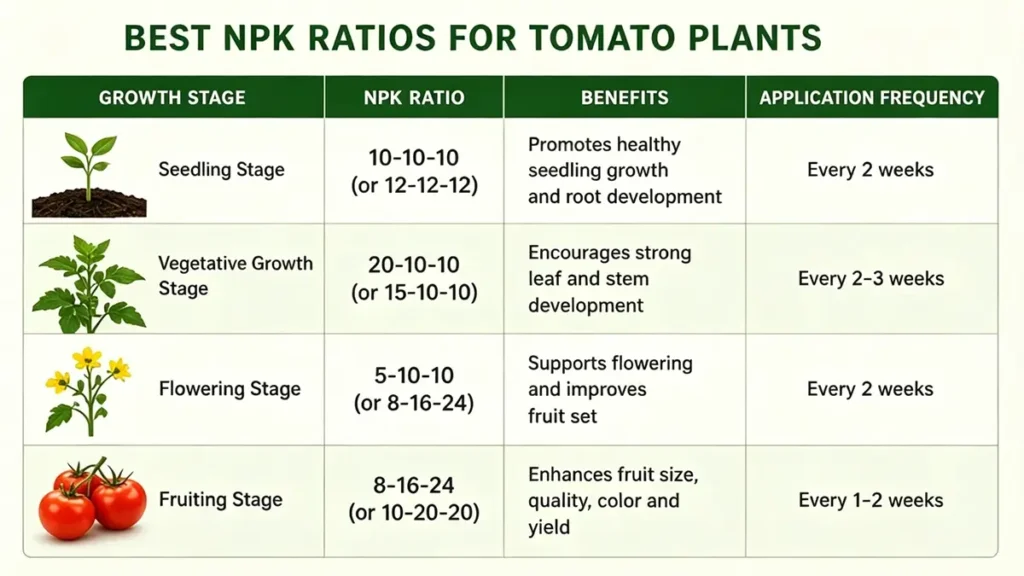
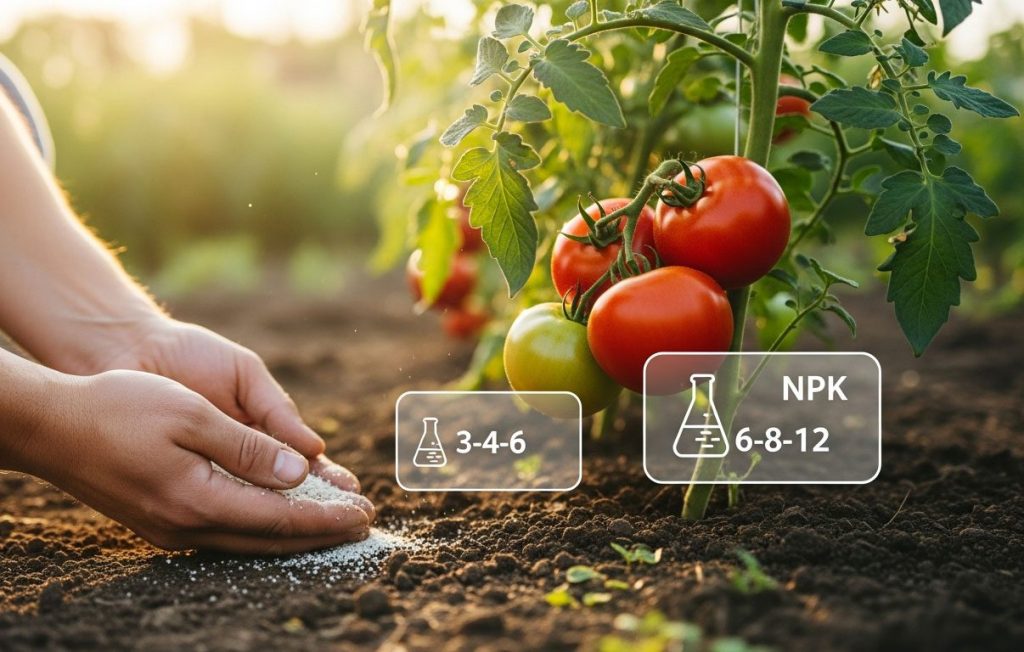
All commercial fertilizers list a three-number sequence on their packaging (e.g., 5-10-5 or 10-10-10). This is the NPK ratio, indicating the percentage by weight of Nitrogen (N), Phosphorus (P), and Potassium (K) inside the package.
Nitrogen (N): The Green Engine
Nitrogen fuels vegetative growth. It is responsible for the vibrant green color of the leaves and the rapid extension of the vines. However, nitrogen is a double-edged sword for tomato growers. If your soil test shows balanced or high nitrogen levels, you must use a feed that is lower in nitrogen (like a 5-10-5 or 5-10-10). High amounts of nitrogen will lead to excess production of foliage at the absolute cost of fruit production. You will end up with a massive, beautiful green bush that produces zero tomatoes.
Phosphorus (P): The Root and Bloom Builder
Phosphorus is the second number in the ratio and is heavily utilized during the early and reproductive stages of the plant’s life. When transplanting tomatoes, a starter food high in phosphorus is highly recommended. Phosphorus spurs rapid cell formation, deep root system growth, and aggressive shoot and blossom formation. Without adequate phosphorus, your plant will struggle to set flowers.
Potassium (K): The Fruit Enhancer
Potassium, the third number, is the primary driver of plant health and fruit quality. Potassium helps the plant uptake water and move nutrients through its vascular system. During the fruiting stage, a heavy dose of potassium ensures your tomatoes grow to their maximum potential size, develop firm textures, and achieve their peak flavor.
The Essential Role of Micronutrients (Calcium and Magnesium)
The best tomato fertilizers do not stop at NPK; they also include a robust profile of trace elements and micronutrients. The two most critical for tomatoes are calcium and magnesium.
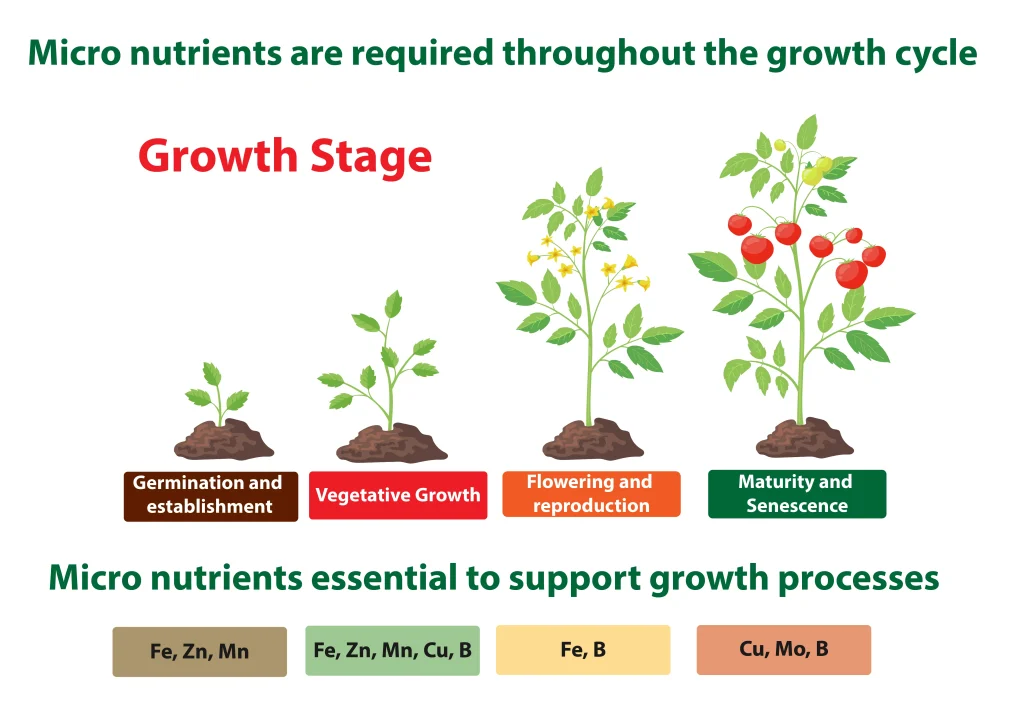
Calcium: Calcium is the structural glue that holds plant cell walls together. A lack of calcium directly leads to the most feared tomato problem: Blossom End Rot (BER). This condition causes the bottom of your developing tomatoes to turn into a black, sunken, leathery patch. A good tomato-specific fertilizer will always include a calcium source, or you can side-dress with calcium nitrate several weeks after planting.
Magnesium: Magnesium is the central atom in the chlorophyll molecule. Without it, the plant cannot photosynthesize properly. A magnesium deficiency usually presents as yellowing leaves with the veins remaining starkly green (interveinal chlorosis). Foliar applications of magnesium (often via Epsom salts) can quickly remedy this issue.
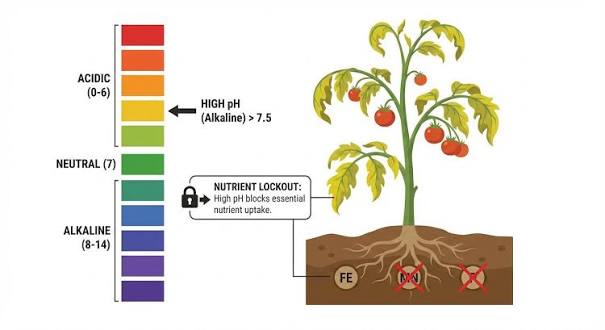
The Hidden Factor: Soil pH and Nutrient Lockout
Even if you apply the most expensive, high-quality organic fertilizer on the market, your tomato plants will starve if your soil pH is incorrect. The pH level of your soil dictates the chemical availability of nutrients to the plant’s root system.
Tomatoes thrive in slightly acidic soil, with an ideal pH range between 5.5 and 7.0. If your soil is too acidic (pH below 5.5), crucial macronutrients become locked in chemical bonds and are entirely unavailable to the roots, dramatically increasing the risk of blossom end rot and stunted growth. Conversely, in highly alkaline soils (pH above 7.0), trace minerals like iron and manganese become inaccessible. Perform a pH test prior to the season’s planting and amend with garden lime to raise the pH, or elemental sulfur to lower it, several weeks before your tomatoes go into the ground.
Organic vs. Synthetic Tomato Fertilizers
When choosing a fertilizer, you will broadly decide between organic and synthetic options. Both can successfully grow productive plants, but they interact with the soil ecosystem in fundamentally different ways.
Organic Fertilizers
Organic options include well-rotted manure, compost, bone meal, blood meal, worm castings, and kelp. A highly recommended practice is to work a thick layer of compost or aged manure into the soil to a depth of at least 6 inches (15 cm) several weeks prior to planting. This gives the organic matter time to begin breaking down and releasing gentle nutrients.
- Pros: Organic fertilizers feed the soil food web, encouraging earthworms and beneficial microbes. They improve long-term soil structure, increase water retention, and have a virtually non-existent risk of causing fertilizer root burn.
- Cons: They rely on biological activity to break down, meaning they are slower-acting. In cold early-spring soils, microbes are sluggish, and organic nutrients may not be immediately available to the plant.
Synthetic Fertilizers
Synthetic fertilizers are chemically manufactured to deliver exact, immediate nutrient ratios in the form of water-soluble salts.
- Pros: They provide an instant, readily available nutrient injection to the plant. This makes them ideal for quickly correcting a severe, diagnosed nutrient deficiency or giving a fast boost to heavy-fruiting container tomatoes.
- Cons: They do nothing to improve soil health, organic matter, or structure. Over-application can easily chemically burn delicate roots, and long-term exclusive use can lead to a toxic salt buildup in the soil profile.
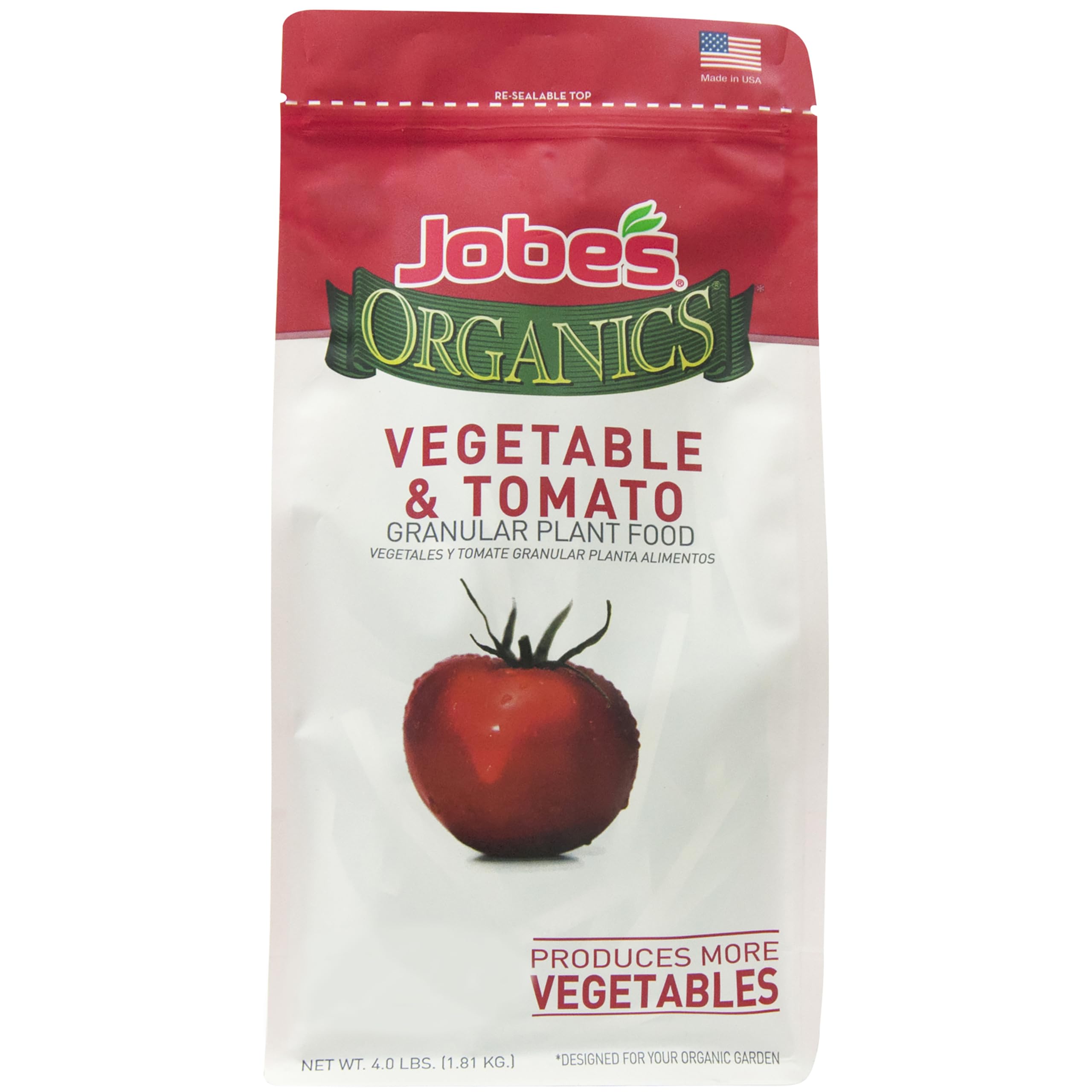
Jobe’s Organics Granular Garden Fertilizer
Best Homemade Tomato Fertilizers (DIY Recipes)
If you prefer an organic approach, there are many common household items that can enhance growth and fruit production. However, it is important to understand how these items work:
- Coffee Grounds: Used coffee grounds contain roughly 2% nitrogen by volume. They are a gentle, slow-release delivery mechanism for this necessary macronutrient that fuels leaf development. They are best composted first or scratched very lightly into the surface.
- Crushed Eggshells: Eggshells are almost entirely calcium carbonate. Using them can help prevent blossom end rot, but because they break down incredibly slowly, you must blend or crush them into a very fine powder to help plants absorb the calcium within the current growing season.
- Banana Peels: Chopped up banana peels provide a natural boost of potassium, which aids in fruit sizing and disease resistance.
- Epsom Salt: Using Epsom salt (magnesium sulfate) on tomatoes will provide a fast-acting magnesium boost to stave off yellowing leaves. It can be applied as a soil drench or a foliar spray.
- Wood Ashes: A dusting of hardwood ashes is an excellent source of potassium and trace minerals. However, wood ash is highly alkaline; only use it if your soil pH is on the acidic side.
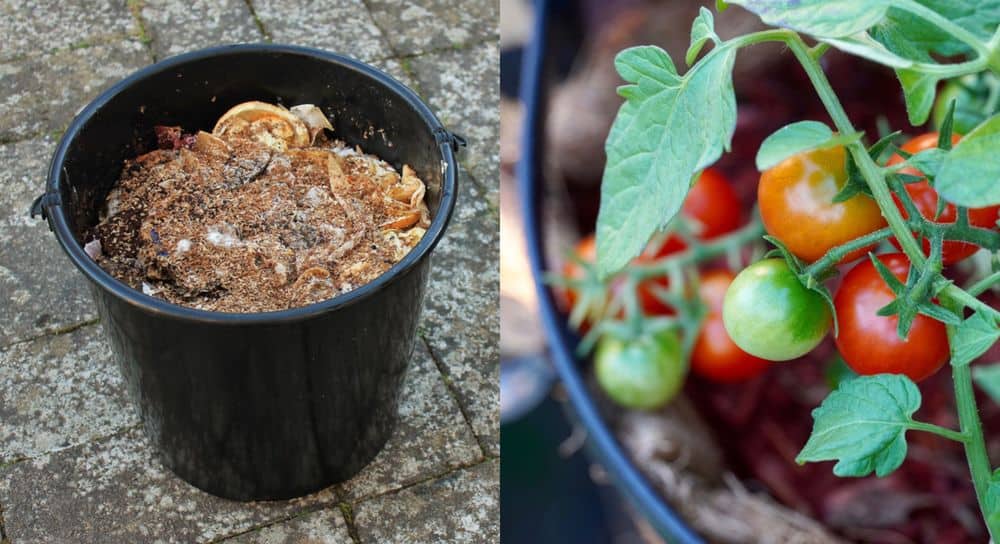
Pro Tip: While applying these directly to the soil works, the absolute best way to enhance the nutrition of these items is to use them to make compost at home. A dedicated compost pile creates “black gold” that balances these nutrients perfectly.
Formats: Granular, Water-Soluble, and Time-Release Spikes
Tomato food comes in several physical formats, each suited to different gardening styles and stages of plant growth.
- Granular Fertilizers: These look like small pellets or coarse sand. Most granular fertilizers are slow-release. You apply them by mixing them into the topsoil (side-dressing). They break down gradually with watering and microbial action, providing a steady feed over several weeks.
- Water-Soluble Fertilizers: Sold as powders or concentrated liquids, these are diluted in a watering can. Because the nutrients are already dissolved, they are immediately absorbed by the roots. They are perfect for a mid-season energy boost.
- Time-Release Formulas (Spikes/Coated Pellets): A time-release fertilizer is ideal for forgetful gardeners who do not want to stick to a strict feeding schedule. The nutrients slowly leach out over 2 to 3 months every time it rains or you water.
The Complete Tomato Fertilizing Schedule
Timing is everything. Applying the right nutrients at the right physiological stage of the tomato plant’s life will dramatically increase your harvest.
| Growth Stage | Timing | Recommended Action & Fertilizer Type |
|---|---|---|
| Seedling (Indoors) | 2-4 weeks after germination | Use a 1/4 strength balanced water-soluble fertilizer once the first true leaves appear to encourage early vigor. |
| Transplanting | When moving to the garden | Incorporate a starter food high in phosphorus (like 5-10-5) into the planting hole to stimulate root and shoot formation. |
| Early Vegetative | 3-4 weeks after planting | Side-dress with calcium nitrate (applied 6 inches from the stem) to build strong cell walls and prevent future blossom end rot. |
| First Fruit Set | When the first tomatoes appear | Apply a high-potassium, lower-nitrogen granular side-dressing. If magnesium is poor, apply a foliar Epsom salt spray to prevent leaf yellowing. |
| Peak Harvest | Every 2-3 weeks during fruiting | Supplement with a water-soluble tomato feed to sustain the heavy nutrient demand of continuous flower and fruit production. |
Container Tomatoes vs. In-Ground Tomatoes
If you grow tomatoes in containers, pots, or grow bags, your fertilizing strategy must change. You need to fertilize container plants much more frequently. Every time you water a potted tomato, soluble nutrients leach out of the soil through the drainage holes. To counteract this, use a high-quality potting mix pre-loaded with organic matter, incorporate a time-release granular fertilizer at planting, and supplement with a half-strength water-soluble fertilizer every 7 to 10 days.
How to Fertilize Tomatoes Correctly (Step-by-Step)
Applying fertilizer incorrectly can do more harm than good. Follow these expert rules to protect your plants:
- The Soil Buffer Trick at Planting: When fertilizing at transplanting, mix the granular fertilizer in with the soil at the very bottom of the planting hole. Then, place a 1-inch layer of unfertilized soil on top of this mixture before placing the tomato root ball into the hole. If raw, concentrated fertilizer comes into direct contact with the delicate seedling roots, it will cause severe fertilizer burn.
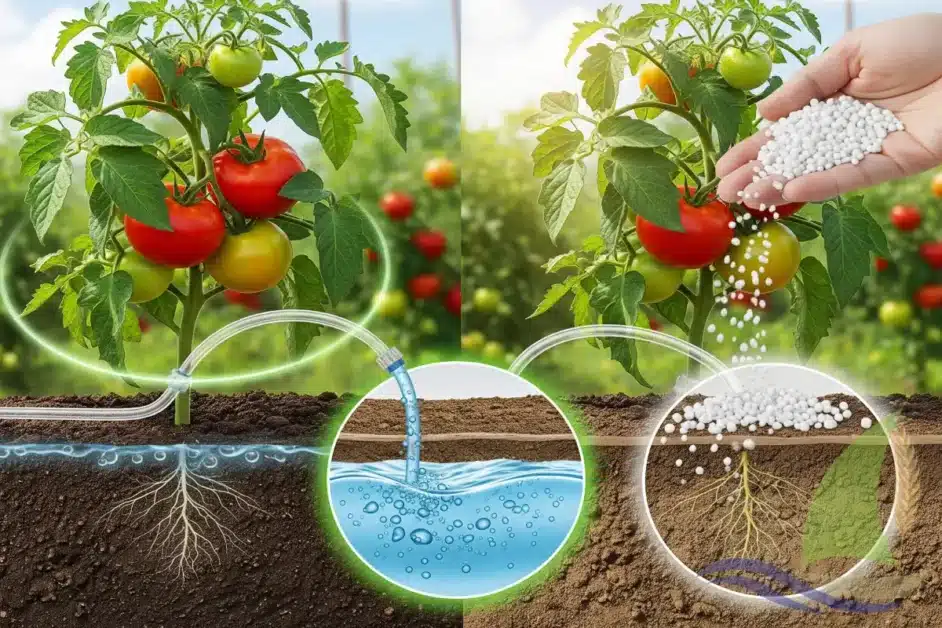
- Always Water First: When fertilizing established tomato plants after the fruits have set, make sure to water the garden deeply first. If your tomato plant is drought-stressed and not watered well before being fed, it will rapidly suck up the liquid fertilizer salts and get burned.
- The 6-Inch Rule: After watering, spread your granular fertilizer on the ground starting approximately 6 inches (15 cm) away from the base of the main stem, working outward to the drip line. Fertilizing too close to the stem can result in chemical runoff that burns the main stalk.
- Wash the Leaves: If you broadcast granular fertilizer by hand and dust gets all over your garden beds, immediately use a hose to gently rinse the fertilizer dust off the plant leaves to prevent foliar chemical burns.
- Timing the Application: The absolute best time to fertilize is in the early evening as the sun goes down, or immediately after a light rain, which helps move the nutrients down into the root zone without the stress of the midday sun.
Diagnosing Common Nutrient Deficiencies
Learning to “read” your tomato plant’s leaves will help you intervene before your harvest is compromised.
- Yellowing Lower Leaves (Nitrogen Deficiency): If the oldest leaves at the bottom turn pale yellow while the top growth remains green, the plant is cannibalizing its own nitrogen. Fix: Apply a quick-acting, balanced water-soluble fertilizer.
- Purple Tinge on Leaves (Phosphorus Deficiency): Often seen in early spring when the soil is too cold for roots to uptake phosphorus. Fix: Apply a liquid fertilizer high in phosphorus, or wait for the soil to warm up.
- Brown, Scorched Edges (Potassium Deficiency): If the leaf edges look burnt and fruits ripen unevenly with hard yellow shoulders, the plant is starved for potassium. Fix: Apply kelp meal or a high-potassium tomato feed.
- Blossom End Rot (Calcium/Water Issue): A black, sunken rot on the bottom of the fruit. Fix: Ensure consistent, deep watering so roots can access soil calcium, and side-dress with a fast-acting calcium liquid or bone meal.
Frequently Asked Questions (FAQ)
When should you stop fertilizing tomato plants?
You should dramatically reduce or stop fertilizing indeterminate tomato plants about 3 to 4 weeks before your first expected fall frost. Pushing new growth late in the season forces the plant to waste energy on blossoms that will never have time to mature into ripe fruit. Let the plant focus its remaining energy on ripening the existing tomatoes.
Can I use an all-purpose vegetable fertilizer on tomatoes?
Yes, an all-purpose vegetable fertilizer (like a 10-10-10 or 8-8-8) is perfectly fine, especially if your soil test indicated a lack of nitrogen. However, once the plant begins setting fruit, a specialized tomato formula with lower nitrogen and higher potassium and calcium will yield far better results and prevent foliage overgrowth.
Are coffee grounds good for tomato plants?
Yes, coffee grounds are an excellent, mild organic amendment. They provide a slow-release source of nitrogen (about 2%) and help improve soil tilth. However, they should be used in moderation or composted first. A thick, uncomposted layer of coffee grounds on the soil surface can dry out and form a crust that repels water and prevents oxygen from reaching the roots.
What is the absolute best fertilizer for tomatoes?
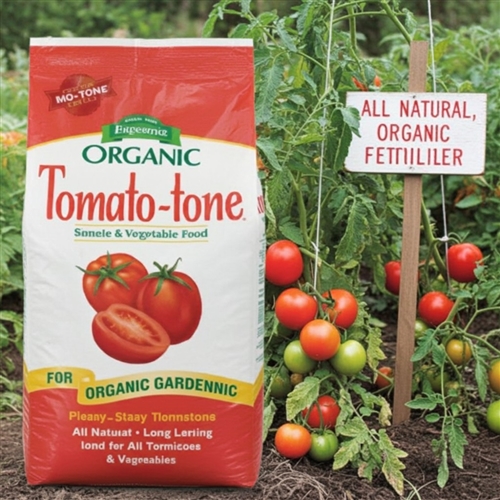
There is no single “best” brand, as it depends entirely on your soil’s baseline health. However, generally speaking, an organic, slow-release granular fertilizer formulated specifically for tomatoes (such as Espoma Tomato-Tone or Jobe’s Organics) applied at planting, supplemented by a high-potassium water-soluble feed during peak fruiting, is the most reliable strategy for home gardeners.